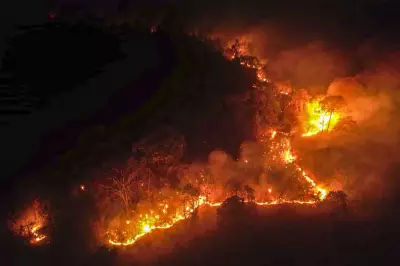
The India Meteorological Department (IMD) has declared December 2025 as a month of exceptional dryness, marking it as the driest December for the country in nearly a quarter of a century. The national capital, Delhi, witnessed a complete absence of rainfall, a phenomenon observed only twice in the last decade.
Record-Breaking Dryness Across India
According to the IMD's rainfall data, the all-India average precipitation for December 2025 stood at a mere 4.9 mm. This figure represents a staggering 69 per cent deficit compared to the long-period average. This makes last month the fifth driest December since 1901 and the driest since 2001.
Regions that typically receive winter precipitation, namely Northwest and North India, experienced an exceptionally dry spell. Central India faced its lowest December rainfall in over 124 years, while East and Northeast India recorded their sixth lowest. The frequency of heavy rainfall events was drastically reduced, with only 14 very heavy rainfall incidents reported, compared to 146 in 2024.

Delhi's Rainless December and the Fog Consequence
Delhi's weather story was particularly stark. The city did not receive a single drop of rain throughout December 2025. In the period from 2016 to 2025, a completely dry December has occurred only once before, in 2023.
Mrutyunjay Mohapatra, the Director General of IMD, explained the confluence of factors behind this unprecedented dry spell. He cited feeble western disturbances, the absence of strong easterly winds, lack of wind interactions over central India, and an unfavourable phase of the Madden-Julian Oscillation (MJO), a key global weather driver.
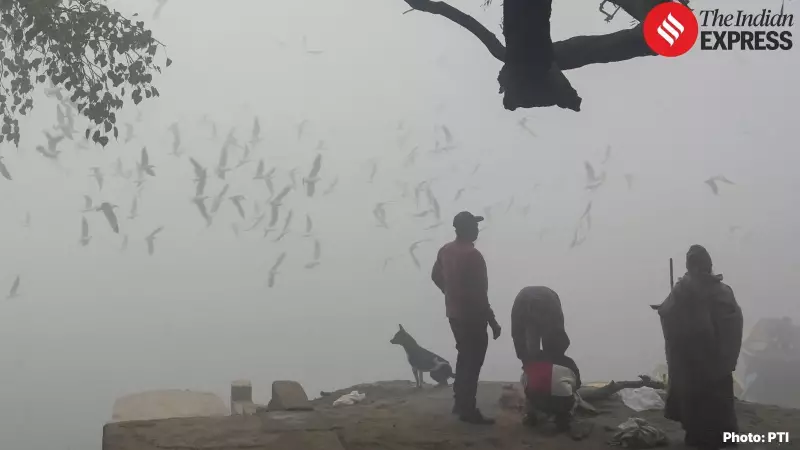
The lack of rain had a direct and visible impact: dense fog. IMD officials reported that above-average fog conditions prevailed for 15 to 26 days in December. Dense fog affected vast areas for up to 15 days, reducing visibility in distant states like Odisha and Tripura.
Winter Forecast and the Looming El Nino
Looking ahead, the IMD's monthly forecast paints a concerning picture for the winter months. Below-normal rainfall is predicted for January to March over Jammu & Kashmir, Uttarakhand, Ladakh, Punjab, and Haryana. This is critical as winter rainfall and snowfall are vital for water recharge in higher altitudes.
However, some regions may see relief. The forecast indicates above-normal rainfall for central India and Uttar Pradesh during the same period. For January alone, the Met department predicts normal rainfall activity for the country, including northwest India. Mohapatra assured that the rabi crop is not expected to be majorly impacted due to good rainfall the previous year and existing irrigation support.
On the global climate front, models suggest a significant shift. The current La Nina conditions are expected to last until March 2026, followed by neutral ENSO conditions until July. Importantly, El Nino conditions are likely to emerge in the latter half of 2026. Mohapatra cautioned that it is too early to confirm its emergence or predict its intensity, with a clearer picture expected after the spring barrier in February.