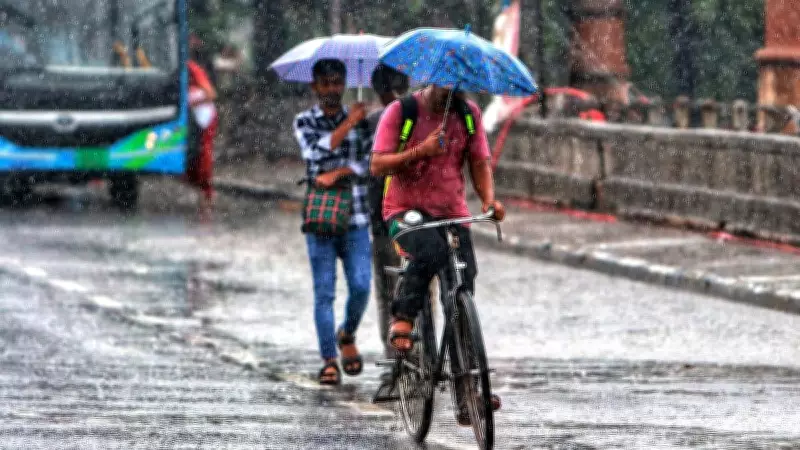
India's 2026 Monsoon Forecast: A Return to Below-Average Rainfall Pattern
After experiencing two consecutive years of abundant and above-average rainfall, India is now preparing for a significant shift in weather patterns. The latest meteorological projections indicate that the 2026 monsoon season is expected to be sub-par, reaching only 92% of the long-period average. This forecast marks a notable departure from the recent trend of surplus precipitation that has characterized the nation's primary rainy season.
The Annual Monsoon Cycle and Its Critical Timeline
The Indian monsoon is a vital climatic phenomenon that governs agricultural cycles, water resources, and economic stability across the subcontinent. It follows a well-established annual pattern, typically making its initial landfall over the southern state of Kerala around June 1. From there, it progresses northward, covering the entire country by early July and providing the majority of annual rainfall. The monsoon season traditionally concludes with its retreat, which usually occurs by mid-September.
This predictable cycle is crucial for India's agriculture-dependent economy, as nearly 60% of the country's net sown area relies entirely on monsoon rains for irrigation. The timing, distribution, and quantity of rainfall directly impact crop yields, groundwater recharge, and hydroelectric power generation.

Analyzing the 2026 Forecast: Implications and Context
The projection of 92% of the long-period average for the 2026 monsoon season suggests a deficit rainfall scenario. While not classified as a drought, this level indicates below-normal precipitation that could have widespread consequences. Meteorological experts emphasize that even a slight deviation from the average can significantly affect regional water availability and agricultural productivity.
This forecast comes after India enjoyed two successive years of above-average monsoon performance, which had boosted reservoir levels, improved soil moisture, and supported robust agricultural output. The anticipated decline to sub-par levels in 2026 represents a return to more challenging weather conditions that require careful water management and agricultural planning.
Regional Variations and Preparedness Measures
Historical data shows that monsoon performance is rarely uniform across India's diverse geographical regions. Some areas might experience near-normal rainfall while others face more pronounced deficits. The 92% national average forecast masks potential significant regional variations that could emerge as the season progresses.
Government agencies and agricultural departments are already beginning to develop contingency plans based on this early forecast. These preparations typically include:
- Water conservation initiatives in vulnerable regions
- Promotion of drought-resistant crop varieties
- Enhanced irrigation management strategies
- Early warning systems for farmers
The accuracy of monsoon forecasts typically improves as the season approaches, with updated projections issued in May and June providing more detailed regional outlooks. However, this early April forecast serves as an important preliminary indicator for policymakers, farmers, and water resource managers across the country.