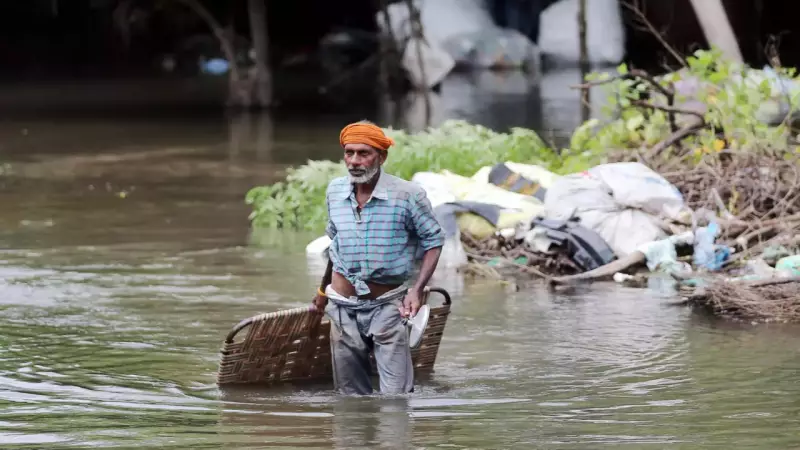
The true cost of a disaster is measured not just in collapsed bridges or economic figures, but in the silent grief of shattered lives and communities forever divided into a 'before' and an 'after'. For India, one of the world's most disaster-prone nations, the year 2025 served as a brutal reminder of this reality, exposing deep vulnerabilities as extreme weather became a relentless part of daily life.
2025: A Year of Relentless Calamity
The statistics from 2025 paint a grim picture of a nation under constant siege from nature's fury. Extreme weather events were recorded on most days of the year, with floods, landslides, heatwaves, and storms crippling regions across the subcontinent. The monsoon was particularly devastating for North India.
Punjab, India's breadbasket, endured one of its worst flood episodes in decades. In August, rainfall measuring 253.7 mm—74% above normal and the highest in 25 years—swelled the Sutlej, Beas, and Ravi rivers. The deluge inundated thousands of villages, claimed at least 57 lives, and affected over 20 lakh people across all 23 districts. Preliminary estimates pegged economic losses at a staggering more than Rs 13,800 crore, with over 4 lakh acres of farmland destroyed.

The fragile Himalayan ecosystem in Uttarakhand was brutally tested. A cloudburst-triggered flash flood in Dharali village (Uttarkashi) sent torrents of mud and debris down the Kheer Gad stream, wiping out homes and markets in minutes. Neighbouring Himachal Pradesh suffered one of its most destructive monsoon seasons in decades, with over 400 lives lost and official losses exceeding Rs 4,000 crore from hundreds of landslides and flash floods.
Beyond the mountains, rising Yamuna levels forced mass evacuations in Delhi-NCR, paralyzing transport. Simultaneously, intense heatwaves gripped more than half of India's districts, creating a public health crisis. The year underscored a sobering shift: extreme weather is no longer an episodic shock but a recurring test of national resilience.
Why India is Exceptionally Vulnerable
India's high risk is no accident. It results from a dangerous collision of geography, climate, and development patterns. According to the World Population Review, India ranks as the third most disaster-prone country globally. Official assessments reveal the scale: 58.6% of India's landmass is earthquake-prone, over 12% is vulnerable to floods, and around 68% of cultivable land is drought-prone.
Climate change acts as a potent threat multiplier, intensifying rainfall variability and heatwaves. This natural risk is compounded by human activity. "In the name of development and urbanisation, human activities are clearing forests and burning fossil fuels... thereby raising global temperatures," warns Delhi-based environmentalist Kavita Ashok. Rapid urban expansion into floodplains and deforestation have stripped away natural buffers, turning extreme weather into guaranteed disasters.
The Critical Gap: Preparedness vs. Response
A persistent flaw in India's approach, according to experts, is the imbalance between visible relief and invisible preparedness. M. Shashidhar Reddy, former Vice Chairman of the NDMA, highlights this gap. "Whenever there is a disaster, everybody focuses on response and relief," he says. "But very little is being done on the pre-disaster phases... Preparedness does not get that attention."
The transformative power of preparedness is best illustrated by Cyclone Phailin (2013). Despite being stronger than Hurricane Katrina at landfall, accurate forecasts and rehearsed protocols enabled Odisha to execute one of history's largest evacuations, moving over one million people to safety. The death toll was minimized, a stark contrast to the over 10,000 lives lost in the 1999 Paradip cyclone. The World Bank hailed it as a global benchmark in disaster management.
Conversely, states like Bihar, where nearly 74% of north Bihar is flood-prone, endure a painful annual cycle of evacuation and relief without long-term risk reduction, highlighting the cost of inaction.

Learning from Global Examples and the Path Forward
Nations like Japan demonstrate that high exposure need not mean high catastrophe. Japan's culture of regular nationwide drills, strict building codes, and technological innovations like dynamic seawalls show how preparedness becomes a shared civic responsibility. Similarly, the devastating 2023 Turkey earthquakes, which caused over 50,000 deaths and $34 billion in losses, underscore the catastrophic cost of weak building standards and inadequate preparedness.
For India, the lesson is clear. Reddy emphasizes the need for systematic learning: "Unfortunately, our disaster events are not properly documented... We need the same kind of seriousness as in investigating a plane crash." Integrating robust urban planning, community drills, and early warning systems into development policy is not optional. Preparedness is a moral, economic, and developmental imperative.
Disasters will strike. But whether they result in national tragedy or managed resilience depends entirely on the work done before the first warning siren sounds. For India, building a culture of preparedness is the most critical investment it can make in its future.