

Five Indians Killed, One Missing in Middle East Conflict; Government Confirms Details
In a somber update from New Delhi, the Indian government announced on Saturday that five Indian nationals have lost their lives, with one individual still missing, amid the ongoing conflict in the Middle East. The disclosure came during an inter-ministerial briefing, where officials also provided reassuring news about the safe transit of two Indian-flagged LPG carriers through the volatile Strait of Hormuz.
Government Provides Updates on Casualties and Assistance Efforts
Additional Secretary (Gulf) Aseem Mahajan, speaking at the briefing, detailed the tragic toll on Indian citizens. "We have five Indians who have lost their lives and one who is missing in an earlier incident," Mahajan stated. He emphasized that Indian missions in Oman, Iraq, and the United Arab Emirates are working tirelessly, maintaining round-the-clock operations to assist affected nationals and coordinate with local authorities for the repatriation of mortal remains and resolution of the missing person case.
Mahajan highlighted the extensive support being extended to Indian seafarers in the region, with the Ministry of External Affairs collaborating closely with the Ministry of Ports, Shipping and Waterways. For Indian nationals stranded in Bahrain and Kuwait, where direct flights are currently suspended, authorities are facilitating visa extensions and transit visas to enable travel back to India via Saudi Arabia.

Specific Incidents: Oman Attack and Safesea Vishnu
Providing further specifics, Mahajan addressed two critical incidents:
- Oman Attack: In Sohar city, Oman, two Indians were killed and ten others injured, though none of the injuries are reported as serious. The Indian Embassy is actively assisting on the ground, coordinating with Omani authorities, local companies, hospitals, and families to facilitate the early return of the deceased's remains to India.
- Safesea Vishnu Incident: Officials are working to ensure the early return of 15 crew members who were safely evacuated and are currently staying at a hotel in Basra, Iraq. Efforts are also underway for the repatriation of the mortal remains of an Indian national involved in this incident.
Breakthrough in Shipping: Two LPG Carriers Safely Transit Strait of Hormuz
In a positive development for India's energy security, Rajesh Kumar Sinha, Special Secretary in the Shipping Ministry, announced that two Indian-flagged LPG carriers—Shivalik and Nanda Devi—have successfully crossed the Strait of Hormuz. These vessels are now en route to India, carrying approximately 92,700 metric tonnes of LPG, a crucial fuel supply.
"Shivalik is expected to reach Mundra port in Gujarat on March 16, while Nanda Devi is likely to dock at Kandla on March 17," Sinha said. This transit marks the third Indian vessel to safely navigate the conflict-hit shipping lane, offering a glimmer of hope amid widespread disruptions.
Significance for India's Energy Imports
The safe passage of these carriers is particularly vital given India's heavy reliance on LPG imports. India imports around 60% of its LPG requirements, with 85-90% of these imports sourced from Gulf countries such as Saudi Arabia and the UAE via the Strait of Hormuz. Shipping disruptions in this region pose significant risks to India's energy supply chain.
Challenges Persist: Many Vessels Still Stranded
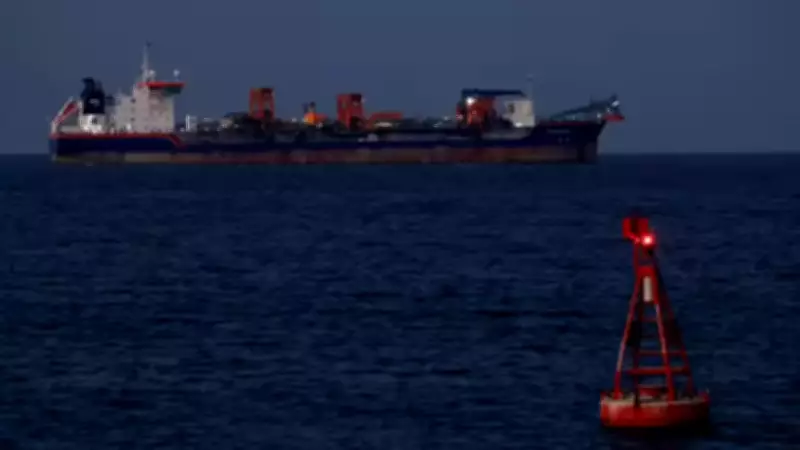
Despite this breakthrough, the situation remains precarious. Twenty-two Indian-flagged vessels are stranded on the western side of the Strait of Hormuz, with three more on the eastern side. These vessels carry a total of 687 seafarers and include various types such as LPG vessels, an LNG carrier, crude oil tankers, container ships, bulk carriers, and other cargo vessels.
MEA spokesperson Randhir Jaiswal underscored the ongoing efforts, stating, "Several of our ships remain on standby in the Gulf region. We propose to continue to remain in touch and coordinate with all the concerned countries to ensure a safe and unimpeded transit for them in our effort to ensure our energy security."

Broader Context: Middle East Conflict Enters 15th Day
These developments unfold as the war in the Middle East enters its 15th day, characterized by continued exchanges of fire and escalating fears over potential closure of the Strait of Hormuz. The conflict has raised global concerns about energy supplies and regional security, with India actively navigating these challenges to protect its citizens and secure critical resources.





