

India Could Lead in Sustainable Textiles by Combining Respect for Tradition with Creative Innovation
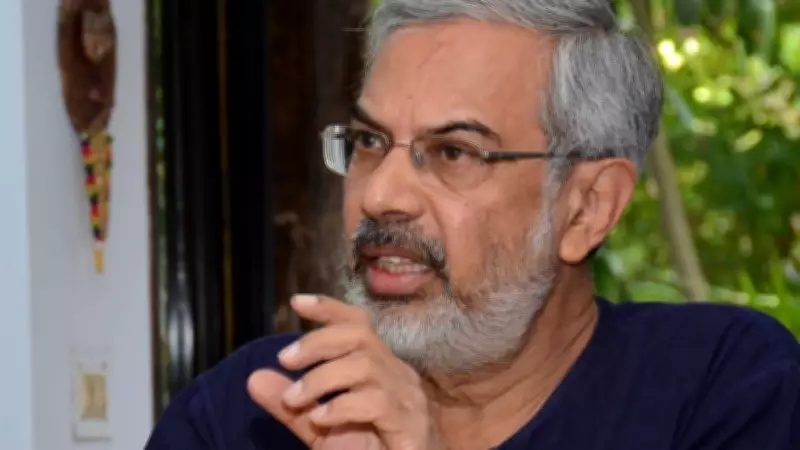
Karthikeya V Sarabhai, the founder-director of the Centre for Environment Education (CEE), emphasized on Friday that blending traditional knowledge with innovation is key to reducing the environmental impact of India's textile sector. Speaking at the inaugural session of Research Confluence 2026, organized by NIFT Gandhinagar, Sarabhai highlighted how this fusion could position India as a global leader in sustainable textiles.
Tradition and Innovation Must Go Hand-in-Hand
During his address on the theme 'Tradition, Innovation, and Rising India,' Sarabhai stressed that sustainable practices—such as solar drying or mindful washing—could significantly reduce the environmental footprint of the textile industry. He reflected on key lessons from environmental and textile experiences, noting that tradition and innovation must work together to drive meaningful change.
Sarabhai shared an inspiring example from Gujarat, where a textile factory implemented 95 per cent water recycling after receiving guidance from the government. This case demonstrated that sustainable solutions often require innovative thinking and can lead to substantial improvements in resource efficiency.

Revitalizing India's Textile Heritage
Sarabhai pointed out that India's textile industry, once a global leader, had declined under colonial policies, with traditional fabrics transitioning into luxury products. However, he highlighted innovations such as repurposing coarse cotton and creating denim, showing how heritage materials could find new applications in modern contexts.
"By combining respect for tradition with creative innovation, India could lead in sustainable textiles, empower artisans, preserve heritage, and create globally competitive products," he added. This approach not only supports environmental sustainability but also boosts economic opportunities for millions involved in the sector.
Research Confluence 2026: A Platform for Dialogue
The day-long Confluence brought together academicians, researchers, industry leaders, alumni, artisans, and creative practitioners for meaningful dialogue on India's traditional knowledge systems, contemporary innovations, and the vision of a rising India. Participants like Jakir Hussain, known for bone and horn craft, and Rohan Vishwakarma, specializing in Gulabi Meenakari, shared their personal journeys, showcasing the resilience of indigenous knowledge systems and their relevance today.
Textiles as a Key Employer and Economic Driver
Sameer Sood, Director of NIFT Gandhinagar, emphasized that textiles should not only be seen as industrial output but also as India's second-largest employer, supporting nearly 10 crore livelihoods across 500 districts. This underscores the sector's critical role in the nation's economy and social fabric.
Focus on Sustainability and Technology
A total of 42 research papers were presented across six thematic tracks, covering indigenous practices, cross-cultural management, and positioning local craft in the global market. Discussions emphasized ethics, equity, social responsibility, circular design, sustainable supply chains, green technologies, and carbon-conscious management aligned with Sustainable Development Goals (SDGs) and ESG frameworks.
Emerging technologies such as artificial intelligence (AI), blockchain, extended reality (XR), and the metaverse were explored, highlighting techno-textile convergence for sustainable, future-ready solutions. This integration of technology with traditional practices aims to enhance efficiency and reduce environmental impacts further.
In summary, the Research Confluence 2026 underscored that by merging respect for tradition with creative innovation, India has the potential to lead the global sustainable textiles market, fostering environmental stewardship and economic growth simultaneously.






