

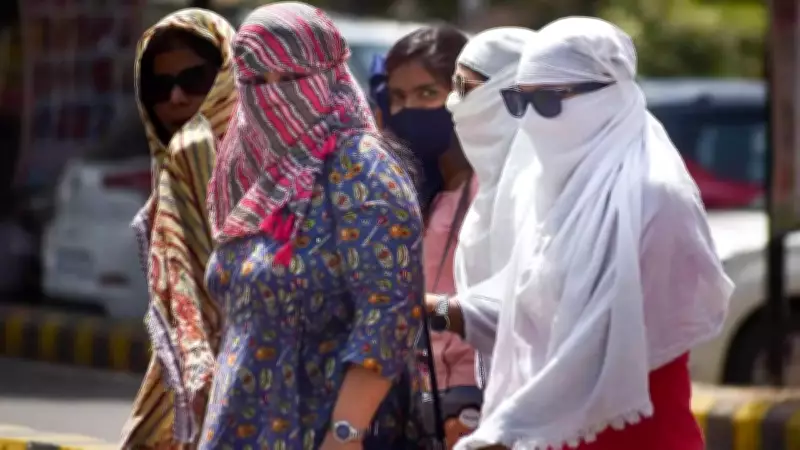
The India Meteorological Department (IMD) has warned that heatwave to severe heatwave conditions are likely to persist across large parts of Central and Northwest India for the next four to five days, and over East and adjoining Peninsular India for the next three to four days. However, a gradual reduction in maximum temperatures is forecast from May 29 onwards in most regions, except parts of Rajasthan.
Red Alert Areas
The IMD has issued a red alert for severe heatwave conditions in isolated to some pockets over Punjab, Haryana, Chandigarh, Delhi, Uttar Pradesh, West Rajasthan, East Madhya Pradesh, and Vidarbha during this period. Under the red alert, there is a very high likelihood of heat illness and heat stroke across all age groups, and extreme caution is advised, especially for vulnerable populations.
Orange Alert Areas
Regions under orange alert include parts of Rajasthan, Madhya Pradesh, Vidarbha, Chhattisgarh, Odisha, Jharkhand, Telangana, and Coastal Andhra Pradesh & Yanam. The IMD said orange alerts indicate high temperatures with an increased likelihood of heat-related illness, particularly for people exposed to prolonged heat or engaged in heavy outdoor work. People are advised to avoid heat exposure, remain hydrated, and take preventive measures.

Yellow Alert Areas
A yellow alert has been issued for other areas where temperatures are expected to remain above normal, posing moderate health concerns, especially for infants, the elderly, and those with chronic illnesses. The public is advised to stay alert, avoid unnecessary heat exposure, and follow basic heat-safety precautions.
Current Temperature Conditions
Maximum temperatures recorded as of May 24 ranged between 43°C and 47°C over parts of Northwest India, Central India, adjoining Uttar Pradesh, and east and north Peninsular India. In most other regions, temperatures ranged between 40°C and 43°C, except in Northeast India, the Western Himalayan region, and parts of west south Peninsular India. The highest maximum temperature of 47.2°C was reported at Brahmpuri in Vidarbha. Night temperatures were also appreciably above normal over several regions, leading to warm night conditions in isolated pockets of Uttar Pradesh, Vidarbha, Madhya Pradesh, and Odisha.
Forecast and Relief Outlook
The IMD stated that no significant change in maximum temperatures is likely over many parts of Northwest and Central India until May 28, followed by a gradual fall of 6–8°C over Northwest India and 2–4°C over Central and East India between May 29 and May 31. However, heatwave conditions are expected to persist over parts of Rajasthan even as temperatures ease elsewhere.
Rainfall and Severe Weather Warnings
The IMD also forecast isolated heavy to extremely heavy rainfall over Northeast India for the next six to seven days, with extremely heavy rainfall very likely at isolated places over Assam and Meghalaya on May 25. Heavy rainfall is also likely over Kerala and Mahe, Tamil Nadu, Puducherry, and Karaikal during the next few days, accompanied by thunderstorms, lightning, and gusty winds reaching speeds of 40–60 kmph, with thundersqualls gusting up to 70–80 kmph in some regions. Hailstorm activity has been forecast at isolated places over Jammu-Kashmir, Himachal Pradesh, Punjab, Haryana, Chandigarh, Delhi, Uttarakhand, Uttar Pradesh, and North Interior Karnataka.
The IMD said conditions are favorable for the further advance of the southwest monsoon into parts of the southwest and southeast Arabian Sea, Comorin Area, Bay of Bengal, and remaining parts of the Andaman Sea during the next two to three days.
Advisories
The department advised people to avoid prolonged heat exposure, wear lightweight cotton clothing, stay hydrated, and follow local advisories. It also issued agrometeorological advisories warning of potential stress to crops and livestock due to heat, heavy rainfall, and strong winds. Fishermen have been advised not to venture into specified areas of the Arabian Sea and Bay of Bengal during the forecast period due to adverse marine conditions. The IMD said it will continue to monitor the situation and update warnings as required.






