

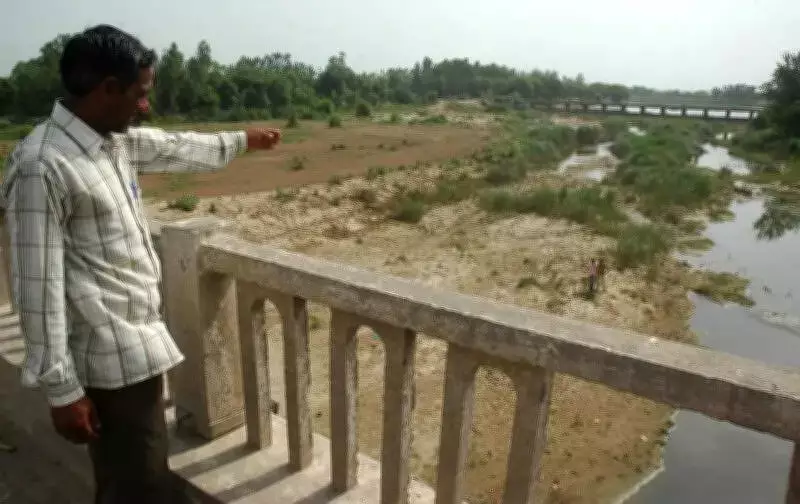
The Himachal Pradesh government has acknowledged before the National Green Tribunal (NGT) that untreated wastewater from the state is flowing into neighboring Haryana through the Jattanwalan Nallah near the industrial area of Kala Amb in Sirmaur district. In an affidavit submitted on behalf of the state chief secretary, Sirmaur Deputy Commissioner Priyanka Verma stated that approximately 11.62 million liters per day (MLD) of wastewater is discharged through this drain into Haryana.
Details of the Affidavit
The affidavit describes the Jattanwalan Nallah as a drainage channel carrying mixed wastewater, primarily comprising domestic sewage and discharge from commercial and industrial establishments. About 500 meters of the drain falls within Himachal Pradesh's jurisdiction. The document admits that gaps in sewer connectivity and incomplete interception arrangements allow untreated wastewater to enter the drain network, which subsequently pollutes the Markanda river after merging with it.
Action Plan for Wastewater Treatment
The Deputy Commissioner submitted an action plan focusing on interception, diversion, and treatment of wastewater before it enters the Nallah. The state government proposes diverting intercepted sewage to the existing sewage treatment plant (STP) at Kala Amb, which has a capacity of 1.7 MLD. According to the affidavit, around 85% of sewer connectivity in the area is already complete, with the remaining connections under progress. The Jal Shakti department has been tasked with completing these connections, plugging visible discharge outlets, diverting wastewater into the sewer network, and ensuring full operationalization of the STP.

Additional measures include identification and mapping of all discharge points along the drain, installation of screens and trash traps to prevent solid waste from entering the Nallah, and regular desilting and cleaning operations. Local authorities have been directed to remove accumulated garbage from drain banks, install waste collection centers, and prevent illegal dumping through fencing, signage, and awareness drives.
Industrial Discharge and Monitoring
On the industrial front, the affidavit identifies M/s Ruchira Papers Mills as the only major highly polluting industry connected to the drain system. The unit has an 11 MLD effluent treatment plant (ETP)-cum-STP, which recycles a substantial portion of wastewater and discharges treated effluent in compliance with prescribed norms. The Himachal Pradesh State Pollution Control Board (HPSPCB) has been directed to conduct continuous inspections, verify ETP functioning, and take action against non-compliant units.
Background of the Case
The Deputy Commissioner's response came after the NGT, in March, ordered the Himachal government to stop the outflow of effluents from the Kala Amb industrial area into neighboring Haryana districts. The tribunal also sought a detailed action plan after reviewing a report by the Haryana State Pollution Control Board (HSPCB) on pollution in the Markanda river. According to the HSPCB report, the main cause of pollution in the Markanda—a tributary of the Ghaggar originating in the Shivalik hills on the Himachal-Haryana border—is the Jattanwalla Nallah, which carries domestic and industrial effluents from houses and industries in Kala Amb. This significantly increases the biochemical oxygen demand (BOD) level of the Markanda river after merging.
Petition and Concerns
A letter petition was filed in 2022 by Dharamvir, a resident of Naraingarh in Ambala district, Haryana, stating that industrial units in Kala Amb have been discharging wastewater into the Markanda. The petition noted that the river, which flows for about 24 km in Himachal and another 125 km in Haryana, is regarded as holy and that the pollution is causing serious diseases among villagers and cattle downstream.






