

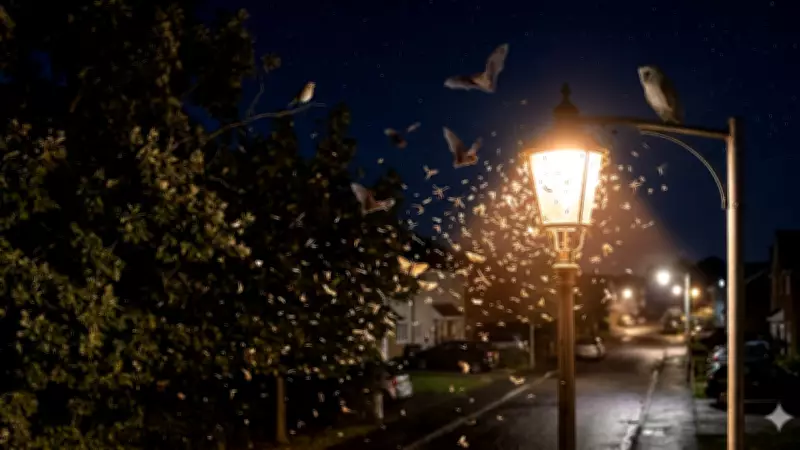
The link between artificial light at night, street lights, light pollution, biodiversity destruction, nocturnal fauna, bats, insects, and birds is becoming increasingly evident in modern environmental science. It has been suggested that excessive nighttime illumination not only provides comfort for humans but also poses a serious threat to the environment. Research concerning artificial light at night (ALAN) indicates that street lights interfere with migratory patterns, food gathering, reproductive activity, and sleep of many creatures. Examples such as bees hovering around streetlights or migrating birds failing to find their way due to city lights often go unnoticed by people.
How Artificial Street Lighting Disrupts Animal Behaviour
While street lamps are associated with safety, visibility, and modernity for humans, they pose a danger to wildlife. Animals have adapted to the natural rhythm of day and night, which helps them hunt, navigate, and avoid predators. However, artificial lighting can disrupt all these natural rhythms and alter entire ecosystems.
According to a comprehensive study conducted by the Department of Neuroscience at the Wexner Medical Centre, The Ohio State University, artificial light influences the circadian clock, hormone secretion, daily routines, and reproductive cycles in various species. Experts noted that natural darkness, vital for wildlife, is rapidly disappearing due to urbanisation.

Nocturnal animals are especially vulnerable to artificial light sources. Not only are they exposed to potential predators due to the lack of darkness, but they also need to find other habitats to stay safe. As explained by NASA Earth Observatory in 2019, nocturnal animals tend to be less active around bright light because it makes them feel unsafe while moving or feeding at night.
Beyond affecting individual organisms, artificial light can impact the entire food chain. Predators gather around illuminated spaces because insects become easier to catch, while prey species often abandon these areas completely. Over time, this imbalance changes local biodiversity and ecosystem stability.
Why Are Insects, Bats, and Migratory Birds Heavily Affected by Light Pollution?
Out of all wildlife, insects are believed to be the most affected by artificial light pollution. Naturally, insects navigate using moonlight and stars; however, artificial street lighting confuses their navigation capabilities. Moths, beetles, and flies tend to keep circling lights until exhaustion and death.
Scientists at the School of BioSciences, University of Melbourne, noted that pollination in the dark near street lamps has been substantially reduced since insects prefer to fly towards artificial light sources and neglect natural pollination processes. Consequently, night-time pollinators such as moths contribute less than they used to.
Bats are also heavily affected by increased nighttime artificial light pollution. Some species show aversion to illuminated areas as they attract predators and reduce protection against threats. The paper 'Artificial lighting reduces the effectiveness of wildlife crossing structures for insectivorous bats' indicates that artificial lighting has a detrimental effect on bat activity near roads. Additionally, artificial lighting placed beneath wildlife crossings prevents bats from passing through.
Migrating birds face a different but equally dangerous problem. They depend heavily on natural sky lights to guide their path. Bright city lights attract migrating birds, leading them to collide with buildings or become exhausted due to lack of energy. Scientists have discovered that certain birds start their songs and eating too early under artificial lights.

When Should Street Lights Be Turned Off to Reduce Environmental Harm?
There is mounting evidence that limiting artificial street lighting after midnight can assist in wildlife conservation. However, scientists advise that it is difficult to determine a specific time when all lights should be turned off, as wildlife activity varies by location. As reported in a recent study discussed by the Centre d'écologie et des sciences de la conservation (CESCO), Muséum national d'Histoire naturelle, CNRS, "part-night lighting," which involves turning off street lighting during quiet nighttime hours, might minimise ecological disturbances in certain regions. Nonetheless, scientists emphasised that turning off street lights would not be beneficial where buildings, signage, and residential lights continue to brighten the area.
Scientists suggest that instead of keeping streets illuminated throughout the night, it would be better to use lighting systems that target specific regions. These systems include motion sensors, warmer LED lights, and downlighting to decrease artificial illumination without compromising visibility. Sensitive habitats such as forests, wetlands, and other protected areas may see the best benefits from part-night lighting.
Balancing Public Safety with Biodiversity Conservation
Street illumination plays an important role in transportation and human activity. According to scientists, better-designed street illumination can serve both human safety and animal survival. Several communities across Europe have decided to turn off or even remove some streetlights to save energy and preserve the natural environment.
New research results show that nights are an important element of nature. Dark nights for many species play the same role as their habitat because they have developed specific adaptation processes necessary for survival during the night.
About the Author
The TOI Science Desk stands as an inquisitive team of journalists, ceaselessly delving into the realms of discovery to curate a captivating collection of news, features, and articles from the vast and ever-evolving world of science for the readers of The Times of India. Consider us your scientific companion, delivering a daily dose of wonder and enlightenment. Whether it's the intricacies of genetic engineering, the marvels of space exploration, or the latest in artificial intelligence, the TOI Science Desk ensures you stay connected to the pulse of the scientific world. At the TOI Science Desk, we are not just reporters; we are storytellers of scientific narratives. We are committed to demystifying the intricacies of science, making it accessible and engaging for readers of all backgrounds. Join us as we craft knowledge with precision and passion, bringing you on a journey where the mysteries of the universe unfold with every word.





