Hornbill Nest Adoption Programme: A Community-Led Conservation Triumph in Northeast India
In the lush forest reserves of Northeast India, a quiet yet profoundly successful effort to conserve biodiversity is unfolding. This initiative marks a significant shift from traditional conservation methods to an alternative approach rooted in mutual trust, respect, and collaboration. The core philosophy driving this process is the belief that local communities living in proximity to wildlife can serve as its most effective advocates.
The Hornbill Nest Adoption Programme: A Beacon of Conservation Excellence
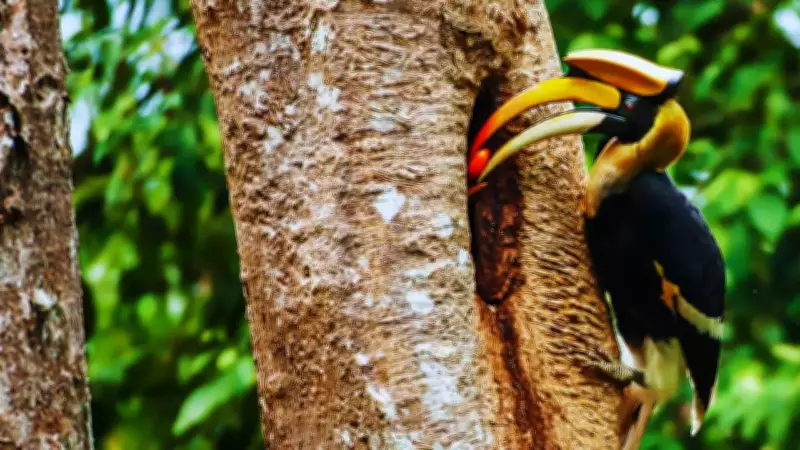
One of the most exemplary models of this community-centric conservation is the Hornbill Nest Adoption Programme (HNAP), recognized as one of India's premier conservation programs. The surrounding forest areas of Pakke Tiger Reserve have been pivotal in highlighting the urgent need for hornbill protection. These birds, often dubbed "forest engineers," play a crucial role in tropical ecosystems by dispersing seeds over vast distances, thereby rejuvenating forests and maintaining biodiversity.
However, the breeding cycle of hornbills renders them exceptionally vulnerable. A fascinating yet perilous aspect of their reproduction is the female's behavior: she seals herself inside a tree cavity using mud, fruit pulp, and dung, leaving only a small opening to receive food from the male. While this strategy is remarkable, it comes with a high cost. In environments like Pakke and its adjacent forests, if the nest tree is felled or the male is hunted, the entire family, including the mother, perishes.

By the late 2000s, rampant hunting and logging in Pakke had escalated to levels that placed hornbills under severe threat, necessitating immediate intervention.
The Genesis of a Community-Led Model
Against this backdrop, the Nature Conservation Foundation, in partnership with the Arunachal Pradesh Forest Department, launched the Hornbill Nest Adoption Project around 2011-2012. The concept was elegantly simple yet innovative: individuals from across India could "adopt" a hornbill nest by contributing approximately INR 6,000 annually. These funds were directly channeled to local residents, particularly members of the Nyishi community, who assumed roles as "Nest Protectors."
These protectors embarked on critical tasks such as identifying nests, monitoring breeding cycles, and safeguarding hornbills from harm or hunting activities. This initiative marked a transformative step in conservation, leveraging local expertise and economic incentives to foster protection.
Transforming Hunters into Guardians
Historically, hunting was a common practice in the villages surrounding Pakke, with hornbills—valued for their distinctive casques and plumage—often targeted. Rather than imposing forceful bans, the program offered a dignified alternative centered on economic benefits and community engagement. Many of the initial Nest Protectors were former hunters, whose intimate knowledge of the forest made them ideal candidates for locating nests, often situated high in ancient trees.
Motivated by financial rewards and a growing sense of responsibility, these individuals have become pivotal to the program's success, particularly within the buffer zones of Pakke Tiger Reserve. This shift from hunter to guardian stands as one of the program's most significant achievements, demonstrating how conservation can align with local livelihoods.
Expanding Beyond Protected Boundaries
While Pakke Tiger Reserve remains a focal point, the Hornbill Nest Adoption Programme has extended its reach to areas like Papum Reserve Forest. This expansion is vital, as many hornbill nests exist outside protected zones, within forests managed by local communities. The Pakke landscape comprises a mosaic of protected and community-managed forest areas, and the program ensures conservation efforts transcend artificial boundaries.
By adopting a landscape-wide approach, the initiative acknowledges that hornbills traverse freely between these areas, necessitating comprehensive protection across their entire habitat. This holistic strategy has proven effective in safeguarding these birds beyond the confines of traditional reserves.

Measurable Success and Environmental Impact
The program's success in the Pakke landscape is evident through consistent monitoring and positive outcomes. Annually, dozens of nests are tracked, with increasing reports of successful chick fledging. According to the Nature Conservation Foundation, nearly 220 hornbill chicks had successfully fledged by 2024, underscoring the program's efficacy.
Additionally, hunting incidents around Pakke have declined significantly. The persistent presence of Nest Protectors and heightened community awareness have reduced vulnerabilities during the critical breeding period. In regions where enforcement alone might falter, community ownership has yielded more fruitful results, fostering a sustainable conservation ethos.
Pakke and its environs are home to diverse hornbill species, including the Great hornbill, Wreathed hornbill, Oriental pied hornbill, and the rare Rufous-necked hornbill. Preserving their nesting sites has far-reaching environmental implications, given their role in sustaining forest biodiversity through seed dispersal.
Challenges and Future Prospects
Despite its achievements, the program faces ongoing challenges, such as habitat destruction from tree felling. However, the success in Pakke serves as a powerful testament to the potential of community-driven conservation. The Hornbill Nest Adoption Programme exemplifies how empowering local communities can lead to substantial conservation impacts, with these birds now better protected by the very people who live alongside them.
This model not only safeguards a keystone species but also reinforces the importance of collaborative, respectful approaches in biodiversity conservation, setting a precedent for similar initiatives worldwide.