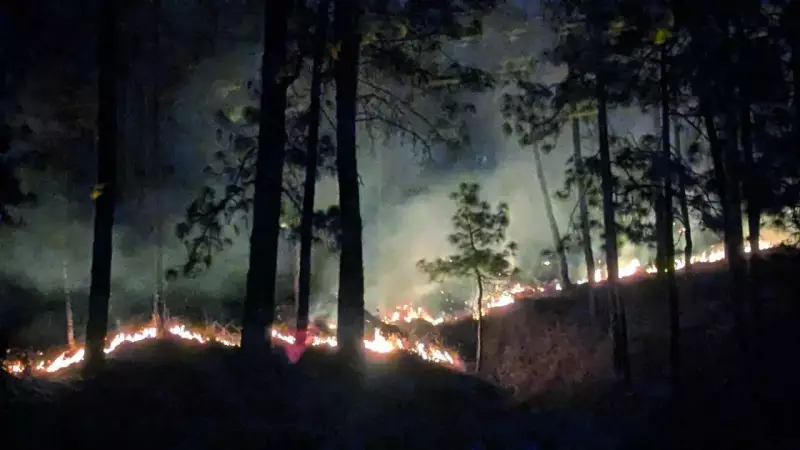
Himalayan Winter Forest Fires Shatter Decades of Predictable Patterns
For many years, forest fires in the Himalayas followed a clear and predictable calendar. They typically began simmering in late spring and early summer. Rising temperatures, dry winds, and accumulated leaf litter combined to turn the forests highly combustible during those months.
Winter, in stark contrast, was a season of snow, moisture, and relative calm. The forests remained quiet and damp, offering a respite from the fire threat. That long-standing rhythm has been breaking down over the past several years.
A New and Intense Winter Reality
This winter, forests across Uttarakhand have been burning with alarming intensity and frequency. The phenomenon is increasingly observed in Himachal Pradesh and Jammu & Kashmir as well. Forest officials and scientists now say this is no longer a simple anomaly. They view it as clear evidence of a shifting ecological pattern.

"Forest fires are part of a natural cycle, but climate variability is compressing and intensifying that cycle," explained Amit Kumar Verma, a senior scientist at Dehradun's Forest Research Institute. Verma is involved in a crucial five-year study aimed at understanding these changing forest fire regimes across India.
Uttarakhand Tops National Fire Alert Charts
Data from the Dehradun-based Forest Survey of India provides hard numbers to support these observations. Since the winter wildfire season began on November 1, Uttarakhand has recorded the highest number of fire alerts in the entire country.
The state registered 1,756 alerts, surpassing states traditionally known for being more prone to forest fires. The comparative figures are striking:
- Maharashtra: 1,028 alerts
- Karnataka: 924 alerts
- Madhya Pradesh: 868 alerts
- Chhattisgarh: 862 alerts
Officials are quick to note that not every satellite alert translates into a large, active forest fire. Some may be smaller incidents or even false positives. However, the overall pattern is too significant and consistent to dismiss.
December Emerges as an Unlikely Fire Month
Perhaps the most telling detail is the activity in December. This month is typically a period of low fire risk due to colder temperatures and moisture. Yet, this past December emerged as the most active fire month in Uttarakhand in nearly three years.
This shift from a predictable, seasonal event to a year-round threat underscores the profound changes underway in the Himalayan ecosystem. The data from Uttarakhand, Himachal Pradesh, and Jammu & Kashmir collectively point to a new, more dangerous normal for the region's forests.