

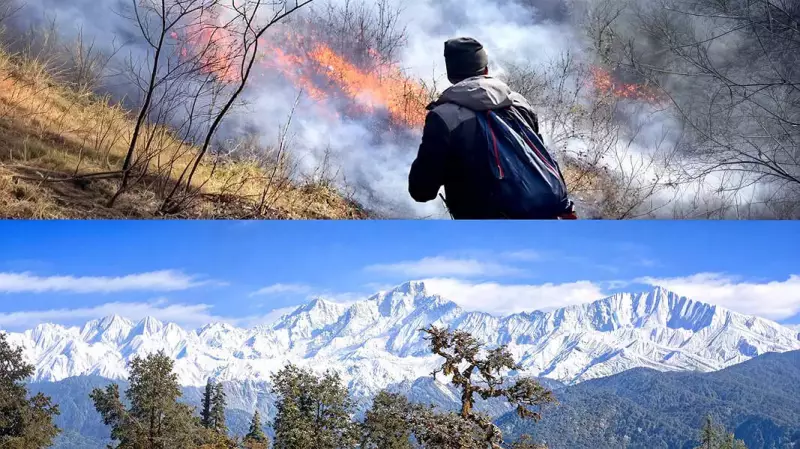
The Himalayan Snow Crisis: Vanishing Seasonal Cover Poses Grave Threat
While global attention has focused on the retreat of glaciers in the Himalayan region, a new and equally alarming phenomenon is emerging: the rapid decline of seasonal snow cover. This critical environmental shift, occurring across the vast Himalayan expanse, threatens the very lifelines of South Asia – the mighty river systems of the Indus, Ganga, and Brahmaputra.
A Vast and Vital Frozen Reservoir
The Himalayan region represents one of the planet's most significant frozen freshwater reservoirs. It encompasses over 42,000 square kilometers of glacier-covered areas and a staggering 1.6 million square kilometers of seasonal snow cover. This seasonal snow acts as a natural water bank, slowly releasing meltwater throughout the warmer months to sustain rivers, agriculture, and billions of people downstream.
The Overlooked Crisis: Seasonal Snow in Retreat
Scientific consensus has firmly established that Himalayan glaciers are retreating due to anthropogenic climate change and pronounced regional warming. However, the parallel and rapid decline in the area and duration of seasonal snow cover has received disproportionately less attention from researchers, policymakers, and the media. This oversight is critical, as the consequences of diminished snowpack are profound and immediate.

The hydrological impact is twofold: reduced snow accumulation means less stored water is available for gradual release, leading to altered river flow patterns. This can result in water scarcity during crucial dry periods and paradoxically, increased risk of flash floods during intense melting events.
Uttarakhand's Snowfall: A Temporary Respite Amid a Long-Term Trend
Recent snowfall events in states like Uttarakhand, while providing temporary relief and winter tourism opportunities, should not mask the overarching long-term trend. These sporadic snowfalls are becoming less reliable and insufficient to compensate for the overall reduction in snow cover extent and longevity across the entire Himalayan arc.
The decline in seasonal snow carries consequences that are equally serious, if not more immediate in some aspects, than glacier retreat. It directly affects water availability for irrigation, hydropower generation, and domestic use for a vast population spanning multiple nations.
Implications for River Systems and Regional Security
The health of the Indus, Ganga, and Brahmaputra basins is inextricably linked to the Himalayan snowpack. A sustained reduction in seasonal snow cover jeopardizes:
- Agricultural Sustainability: Millions of farmers depend on predictable snowmelt for crop irrigation.
- Energy Security: Hydropower projects, a key renewable energy source for the region, rely on consistent river flows.
- Ecosystem Stability: Alpine and downstream ecosystems are adapted to specific hydrological cycles driven by snowmelt.
- Geopolitical Stability: Transboundary water sharing agreements could face unprecedented stress as flows become more variable and unpredictable.
Addressing this crisis requires urgent, coordinated action on climate mitigation and the development of adaptive water management strategies. The vanishing snow of the Himalayas is not just an environmental indicator; it is a pressing threat to water, food, and energy security for one of the world's most populous regions.






