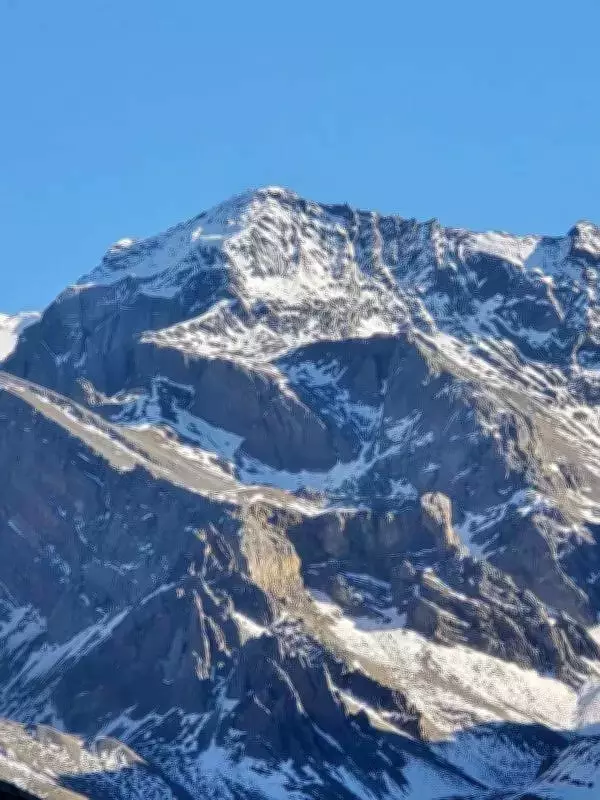
Himalayan Snow Cover Faces Catastrophic Decline: 68% Could Vanish by 2100
A groundbreaking peer-reviewed study has issued a dire warning: nearly 68% of the snow cover in the Himalayas could disappear by the end of this century if current global warming trends persist. This alarming projection raises profound concerns over water security, glacier hazards, and escalating climate risks across South and Central Asia, regions heavily dependent on Himalayan meltwater.
Research Details and Regional Variations
The research, published in the prestigious journal Earth Science Reviews, was conducted by Vishwambhar Prasad Sati and Surajit Banerjee of Mizoram University. It provides a comprehensive examination of climate-driven changes across the vast Hindu Kush–Himalaya region, often referred to as the "Third Pole" and the "Water Tower of Asia" due to its immense stores of snow and ice that feed Asia's major river systems.
Interestingly, the study projects a more moderate loss of about 26% of snow cover in the Karakoram region by 2100. This area has historically demonstrated greater stability compared to the rest of the Himalayan system, a phenomenon scientists term the "Karakoram anomaly." This stability is largely attributed to winter precipitation from westerly weather systems, which has helped buffer some effects of warming.

Accelerated Warming and Glacier Retreat
The researchers found that the Himalayan region has been warming at an alarming rate of 0.2–0.3°C per decade between 1980 and 2020. This is nearly twice the global average, with certain parts of the eastern Himalaya experiencing even more rapid temperature increases. This accelerated warming, combined with shifting precipitation patterns, is driving a dramatic reduction in snow cover and accelerating glacier retreat across extensive sections of the mountain chain.
Key findings on glacier mass loss include:
- Himalayan glaciers lost mass at an average rate of 0.37 ± 0.15 metres water equivalent per year between 2000 and 2016.
- This indicates a sharp and concerning increase in melting rates compared to previous decades.
- Snow cover decline has been especially severe in the central and eastern Himalaya, where nearly 30% has vanished since the 1990s, primarily due to declining snowfall.
Environmental Transformations and Hazards
The warming climate is triggering dangerous transformations across the Himalayan landscape. As glaciers melt at unprecedented rates, glacial lakes are expanding rapidly, significantly increasing the risk of catastrophic Glacial Lake Outburst Floods (GLOFs).
Alarming statistics reveal:
- In the central Himalaya alone, the number of glacial lakes surged from 1,160 in 1977 to 2,168 by 2010.
- Across the wider region, 697 GLOF events were recorded between 1833 and 2022.
- Researchers have documented increasing avalanche activity and thawing permafrost, which destabilize mountain slopes and heighten risks of landslides and rockfalls.
- Between 1982 and 2022, at least 681 major avalanche events were recorded, resulting in over 3,100 fatalities.
Downstream Impacts on Water Security
The implications of this cryospheric decline extend far beyond the mountains, threatening the livelihoods of hundreds of millions downstream. Glacier and snowmelt contribute a critical 33–42% of the annual flow in major river systems, including the Indus, Ganga, and Brahmaputra. These rivers sustain approximately 869 million people across South and Central Asia.
The study warns that many river basins could reach "peak meltwater" around the year 2050. After this point, river flows may begin a steady decline as glaciers continue to shrink and snow cover diminishes further. This poses a severe long-term threat to agriculture, drinking water supplies, and hydropower generation across the continent.

Calls for Action and Regional Cooperation
In light of these findings, the researchers urgently call for enhanced monitoring of the region's cryosphere, the development of climate-resilient infrastructure, and greater regional cooperation. Managing the risks in one of the world's most critical high-mountain water systems requires coordinated international efforts to mitigate climate impacts and adapt to the changing hydrological reality.
The study underscores that despite local variations like the Karakoram anomaly, the broader trend across the Himalayan region points unequivocally toward a steadily shrinking cryosphere, with profound consequences for global climate stability and regional water security.