

Himachal's Vanishing Snow: A Six-Decade Shift
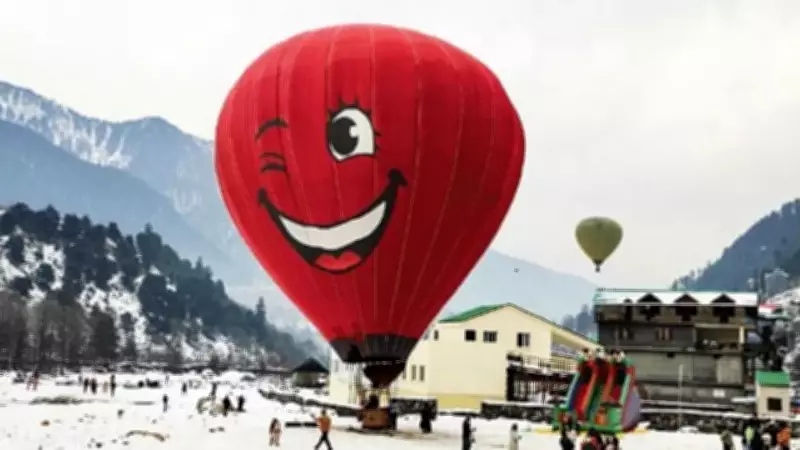
Pravesh Jassal has witnessed six decades of Shimla's winters, giving him a unique perspective on the region's changing climate. "We haven't had a decent snowfall spell in Shimla in years, ever since it started expanding uncontrollably in the late 1990s and early 2000s," he observes with concern. When snow finally arrived in Manali, Shimla, and other parts of Himachal Pradesh on January 23 this year, breaking a three-month dry spell, the relief was palpable. Hotels advertised white vistas, tourists flocked with cameras, and social media overflowed with reels of falling snow. However, scientists and residents alike caution that this single spell cannot reverse a deeper, long-term decline unfolding across the mountains.
No 'Him' in Himachal: A Snow Cover Crisis
"I remember in my school and college days, we would get 2-3 feet of snow during winters in our village," recalls Sohan Lal Verma, a 62-year-old apple grower from Raison near Manali. "Now, it's a big deal if we even get six inches. The first casualty of this decline has been our apple crop. It has never been the same—neither in quality nor quantity." Data from the State Centre on Climate Change (SCCC) confirms these concerns, revealing a shrinking snow cover in Himachal Pradesh over the past six years.
Satellite mapping of the Chenab, Beas, Ravi, and Satluj river basins shows the total snowfall area decreased from 20,210 square kilometers in the winter of 2018-19 to 17,437 square kilometers in 2023-24—a decline of nearly 14%. The Satluj basin retains the highest snow cover, followed by Chenab, Beas, and Ravi, but the overall trend is downward. While some recovery occurs between February and April, winters now feature delayed snowfall rather than sustained early-season accumulation.

Altered Rhythms and Rising Temperatures
This shift has disrupted the traditional rhythm of hill life. Winters start later, snowfall days are fewer, and precipitation increasingly falls as rain or not at all. According to the India Meteorological Department (IMD), snowfall days in Shimla dropped from 20-30 annually in the 1970s to five or fewer by 2008, driven by rising temperatures. IMD data indicates Himachal Pradesh has warmed by 1.5 degrees Celsius in average mean temperature since 1901, with a sharp 2.18-degree Celsius rise in maximum temperatures.
Even high-altitude regions like Lahaul-Spiti and Kinnaur remained barren until late January this winter. Rohtang Pass, which used to close by November 15 due to heavy snow, stayed open until January 1—a scenario unthinkable two decades ago. Environmentalist Guman Singh of Himalaya Niti Abhiyan notes, "Earlier, snowfall would begin in November and continue till March. Now, snow often arrives only after January and sometimes stretches into April. This shift is unnatural and may cause ecological problems."
Apple Farming at a Crossroads
Apple farming, the backbone of Himachal's rural economy, is among the worst affected. Apple trees require 1,200 to 1,600 chilling hours below 7 degrees Celsius to flower and fruit properly, but warmer, shorter winters are reducing these hours. "Apple belts in the state have already shifted upwards by nearly 1,000 feet," says Sunil Sharma, a Kullu-based grower. "Areas that thrived at 5,000 feet now struggle, while orchards move above 6,000 feet."
The apple belt along the Beas river—from Nagwain in Mandi to Bajaura, Bhuntar, and Bashing near Kullu—has vanished entirely. Farmers have uprooted trees for vegetables or relocated to higher altitudes. Classic varieties like Royal Delicious and Red Delicious have disappeared from low-lying areas, with diseases like scab and canker thriving in warmer conditions. "The orchards were repeatedly hit by disease, yields dropped, and farmers had no choice but to move," explains Om Prakash Sharma of Bhuntar.

This winter's dry spell pushed some farmers to desperate measures, using water sprinklers overnight to create artificial snow. However, experts warn this could harm trees long-term. "Farmers are trying to create artificial cold, but this is risky," cautions Sharma. "Apples need sustained cold, not just ice." Newer varieties like Gala require fewer chilling hours, but even these thresholds were unmet this season, affecting flowering, fruit quality, and antioxidant properties.
Tourism's Dilemma and Environmental Impact
Tourism, both a victim and alleged contributor to the crisis, faces challenges. Shimla, Manali, and Dharamshala have seen unprecedented construction over two decades, with hotels, roads, and parking lots replacing forests. "There has been a significant rise in air pollution, especially in Manali," says travel operator Vinay Soni. "Tourists want snowfall, but mass tourism, traffic, and construction are among the reasons snowfall has declined." Rising pollution affects cloud formation, while deforestation reduces moisture retention and temperature regulation.
Rainfall trends add to the worry. Himachal received just 1mm of precipitation in November 2025—95% below normal—and only 0.1mm in December, the sixth-lowest since 1901. By mid-January, the deficit stood at 92%. Reduced snowpack threatens river flows in summer, water availability downstream, and has triggered forest fires even in cold months. Rabi crops like wheat and vegetables are at risk, with up to 10% of wheat production potentially affected by inadequate rainfall.
The SCCC attributes the snow cover decline to climate change, citing rising winter temperatures, altered precipitation patterns, and extreme weather events. It calls for monitoring and integrated climate adaptation strategies to protect the Himalayan ecosystem, emphasizing the urgent need for action to preserve Himachal's natural heritage and livelihoods.





