Himachal Pradesh Grapples with Unusual Dry Winter
An unusually long dry weather period in Himachal Pradesh is causing multiple problems across the state. This extended spell without significant precipitation is negatively impacting horticulture and rabi crops. It has also led to an unexpected increase in forest fires during the winter months, harming wildlife and resulting in substantial losses.
Severe Rainfall and Snowfall Deficit
The state has received almost no rain for over three months since early October. Snowfall has been extremely scarce in key apple-growing regions including parts of Kullu, Mandi, Shimla, and Chamba districts.
Data from the Meteorological Centre in Shimla reveals alarming statistics. In November, Himachal recorded just 1 mm of rainfall, which is 95% below the normal average of 19.7 mm. December brought only 0.1 mm of rain, marking the sixth-lowest December rainfall since 1901 and representing a 99% deficit compared to the normal 38.1 mm.

The dry conditions have continued into January. From the start of the month until January 15, the state received merely 2.7 mm of rain, which is 92% less than the expected 32.1 mm.
Apple Farmers Resort to Artificial Solutions
The prolonged dry spell has forced apple farmers to take unusual measures. To provide necessary chilling hours for their trees, farmers are creating artificial snow-like conditions in their orchards. They run water sprinklers overnight, allowing the water to freeze and form ice layers around tree branches.
Apple trees require specific chilling hours to flower and fruit properly. Classic varieties like Royal Delicious need between 1,200 and 1,600 chilling hours at temperatures below 7 degrees Celsius. Newer varieties such as Gala require 300 to 500 chilling hours.
Kushal Mehta, an official with the state Horticulture Department and an apple farming expert, expressed concern. "Not only has snowfall decreased over the years, but weather patterns have shifted. For several years now, significant rain and snow have been occurring in February instead of earlier winter months. This dry weather can seriously affect both the quality and quantity of apple varieties, particularly Royal Delicious which requires more chilling hours."
Forest Fires Rage During Winter Season
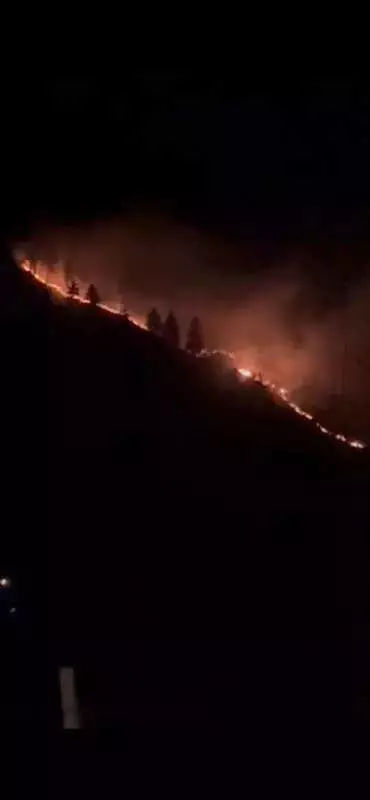
The dry conditions have created perfect circumstances for forest fires to ignite and spread rapidly. According to state Forest Department figures, 104 fire incidents have been reported from eight forest circles during the current winter season.
The Shimla forest circle has been hardest hit with 62 fires, followed by Rampur with 16, Mandi with 8, the Great Himalayan National Park in Kullu with 6, Chamba and Kullu with 4 each, and Bilaspur and Wildlife (South) circle with 2 each.
Kulbhushan Upamanyu, a veteran environmentalist based in Chamba, explained the fire risk. "Dry leaves and grass become highly combustible material in forests. When there has been no rain or snow for an extended period, any fire—whether deliberate or accidental—can quickly become uncontrollable."
Upamanyu identified two primary causes of forest fires. "First are accidental fires sparked by small mistakes like discarding a lit cigarette or biri. Second are deliberate fires set by villagers who burn pasture lands or ghasini near forests, hoping this will encourage more grass growth for livestock fodder. Unfortunately, these fires often spread to nearby forests."
He added that some villagers even torch forests during dry spells, believing this might bring rain. In rare instances, fires start due to sparking from electric wires, particularly those associated with hydro power projects located in forest areas.
Pine Forests Particularly Vulnerable
Forest Department officials note that pine forests in Himachal's lower hills are especially susceptible to fires during dry conditions. Mritunjay Madhav, Deputy Conservator of Forests, explained, "Pine or chir trees shed highly combustible needles rich in resin content. A small spark in dry weather can ignite massive fires. We register police cases against arsonists, but controlling forest fires remains a major challenge for the Forest Department."

During the 2024-25 fire season, Himachal recorded a staggering 2,582 fire incidents—2,428 during summer and 154 during winter.
Human Activity Drives Most Fires
Pushpendra Rana, Additional Principal Chief Conservator of Forests, stated that human activity causes approximately 99% of forest fires in Himachal. "Most fires result from the age-old practice of burning pasture lands. We employ various initiatives including controlled burning of flammable material, digging trenches, and using modern technology like satellite imagery to detect fires and respond in real time. However, preventing and controlling fires in forests is extremely difficult given their vast area across the state and the substantial funding required."