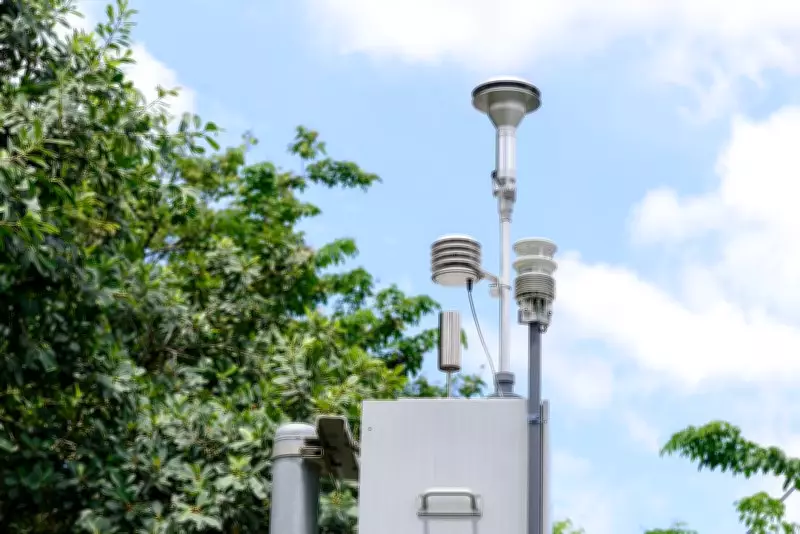
The Haryana government has announced the establishment of 23 new air quality monitoring stations in the National Capital Region (NCR) to enhance pollution monitoring and data accuracy. This initiative aims to address the growing concerns over air pollution in the region, which often sees hazardous levels during winter months.
Expansion of Monitoring Network
The new stations will be set up across districts including Gurugram, Faridabad, Sonipat, Panipat, and Jhajjar. Currently, Haryana has a limited number of monitoring stations, and the expansion is part of a broader plan to cover more areas and provide real-time data to authorities and the public.
Each station will be equipped with advanced sensors to measure particulate matter (PM2.5 and PM10), nitrogen dioxide, sulfur dioxide, carbon monoxide, and ozone levels. The data collected will be integrated with the central monitoring system of the Central Pollution Control Board (CPCB).

Funding and Implementation
The project is estimated to cost around INR 15 crore and will be implemented by the Haryana State Pollution Control Board (HSPCB) in collaboration with the CPCB. The timeline for completion is set for the next six months, with the first stations expected to be operational by early next year.
Officials have emphasized that the new stations will help in better identification of pollution sources and formulation of targeted action plans. The move comes in response to the Supreme Court's directives and the Commission for Air Quality Management's recommendations to strengthen the monitoring network in the NCR.
Public Access and Awareness
Real-time data from these stations will be made available on a public portal and mobile app, allowing residents to check air quality in their areas. This transparency is expected to encourage community participation in pollution control efforts.
Environmental experts have welcomed the decision, stating that dense monitoring is crucial for effective policy-making. However, they also stressed the need for strict enforcement of emission norms and reduction of vehicular pollution.
The Haryana government has also announced plans to set up additional stations in other parts of the state in the future, as part of its commitment to improving air quality and public health.