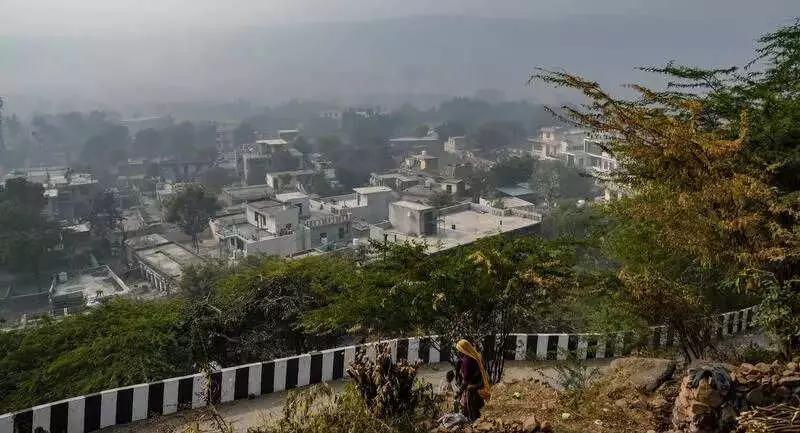
Haryana's Aravali Strategy Targets Invasive Species in High-Risk Zones
Gurgaon's Mangar Bani and Bhondsi have been officially designated as high-risk zones for invasive plant species, positioning them as priority sites for Haryana's proposed Aravali species management strategy. The state government plans to launch pilot removal and restoration initiatives in these areas as part of a comprehensive effort to combat ecological degradation.
Ambitious Targets for Ecosystem Restoration
The draft policy outlines specific objectives, including reducing invasive plant cover by fifty percent in identified high-risk zones within five years. Furthermore, the strategy aims to restore at least five hundred acres of native Aravali ecosystems by the sixth year of implementation. These targets represent a significant commitment to ecological rehabilitation in one of India's critical biodiversity regions.
Biodiversity Benefits and Wildlife Protection
Sustained removal and restoration efforts are expected to enhance biodiversity by facilitating the recovery of native species such as Acacia nilotica. Improved habitat conditions will benefit various wildlife species, including leopards and sambar deer. The policy also anticipates reduced human-wildlife conflicts through systematic habitat improvement, creating safer environments for both animals and local communities.

Alarming Invasive Species Statistics
Recent data reveals the severity of the invasive species problem in Haryana's forests. Invasive plants currently dominate approximately twelve and a half percent of the state's forest areas, covering more than two hundred and one square kilometers. Lantana camara emerges as the most aggressive invader, infesting about eighty-nine square kilometers of reserved forest territories. Other problematic species include:
- Saccharum spontaneum (thirty-one square kilometers)
- Ageratum houstonianum (eleven point six square kilometers)
- Leucaena leucocephala (eight point five square kilometers)
Scientific Monitoring and Adaptive Management
A central component of the strategy involves establishing long-term monitoring systems to replace sporadic removal campaigns. The draft recommends creating permanent monitoring plots in high-risk areas like Mangar Bani and Bhondsi, utilizing multiple assessment methods:
- Phyto-sociological surveys to study plant communities
- Camera traps for wildlife monitoring
- Remote sensing technology to track invasive spread
Subhash Yadav, Conservator of Forest for South Haryana, emphasized that the plan institutionalizes continuous monitoring and employs field evidence to refine interventions. The approach promotes adaptive management, with control strategies regularly updated based on monitoring outcomes and emerging scientific research.
Research Collaboration and Database Development
To strengthen scientific foundations, the draft proposes partnerships with prominent research institutions including the Wildlife Institute of India and Centre for Ecology Development and Research. These collaborations will focus on studying invasive species ecology and genetics. Additionally, the strategy recommends developing a regional invasive species database aligned with the Indian Alien Flora Information system to standardize reporting and track occurrences across the Aravali landscape.
Community Engagement and Task Force Formation
Community participation represents a core pillar of the proposed strategy. The policy advocates engaging local residents in removal and restoration activities while providing training and employment opportunities in nursery management and monitoring. A dedicated task force comprising multiple stakeholders is proposed:
- Haryana Forest Department
- Municipal Corporation of Gurgaon
- Non-governmental organizations
- Research institutions
This collaborative body would coordinate planning, implementation, monitoring, and outreach efforts. Schools and citizen groups would participate in awareness programs to foster local stewardship of Aravali ecosystems.
Phased Implementation Timeline
The strategy outlines a detailed phased approach to implementation:

- Year 1: Baseline surveys, invasive distribution mapping, hotspot prioritization, detailed action plan preparation, and task force formation
- Years 2-3: Pilot removal projects in priority zones like Mangar Bani and Bhondsi, testing integrated control methods, nursery establishment, and reforestation initiation
- Years 4-6: Scaling up efforts across the Aravali region and expanding restoration in degraded wildlife corridors
- Year 7 onward: Long-term monitoring to prevent resurgence and periodic updates based on data and feedback
Integration with Broader Conservation Efforts
The plan emphasizes integrating invasive species management into multiple government working plans and schemes, including forest working plans, wildlife sanctuary management plans, national park management strategies, and Tiger Conservation Plans. This integration recognizes that parts of the Aravali landscape fall within important leopard corridors, making comprehensive management essential for both ecological and human safety considerations.
The draft strategy concludes that Haryana's Aravali landscape, recognized as a biodiversity hotspot, requires sustained, science-based, and community-driven responses to control invasive species, restore native ecosystems, and strengthen long-term ecological resilience. Implementation is expected to begin once compensatory afforestation funds for the Nicobar case are received, marking a significant step forward in regional environmental conservation.