

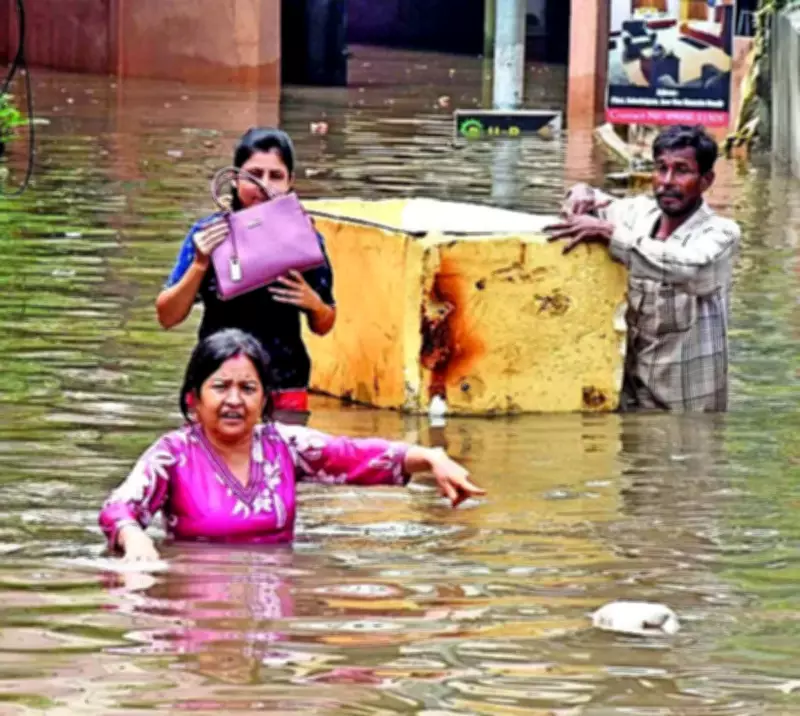
Guwahati Grinds to a Halt as Torrential Rainfall Triggers Widespread Flooding
Guwahati, the bustling capital of Assam, was brought to a standstill by relentless rainfall that commenced on Sunday night and persisted through Monday. The downpour not only disrupted the daily routines of its residents but also laid bare significant weaknesses in the city's urban planning and drainage systems.
Severe Inundation Cripples Key Neighborhoods
Multiple flood-prone districts across the city experienced severe waterlogging, transforming streets into rivers and making commuting an arduous challenge. Affected areas included:
- Hatigaon
- Beltola
- Rukminigaon
- Rajgarh
- Anil Nagar
- Jorabat
- Maligaon
- Bhangagarh
In particularly vulnerable zones like Rukminigaon and Hatigaon, where flooding has become a recurrent nightmare, office-goers and residents were compelled to rely on rubber boats deployed by the State Disaster Response Force (SDRF) for basic mobility.

Residents Grapple with Soaring Costs and Property Damage
The crisis escalated as many individuals reported water intrusion into their homes, causing substantial property damage. Jyoti Kumar Bhattacharya, a resident of Rukminigaon, recounted the ordeal: "We were unable to reach our workplaces. Floodwaters invaded our residence, requiring hours of effort to remove. The volume was so overwhelming that we had to relocate to an upper floor. Our furniture and cabinetry have suffered significant harm."
Transportation became a luxury, with rickshaw fares skyrocketing to Rs 300-500 for distances that typically cost around Rs 50. Many who had ventured out on Sunday found themselves stranded, unable to navigate the submerged roads to return home.
Monideep Gogoi, from the Six Mile area, shared his experience: "I had gone out with relatives to enjoy the weekend's final day, but returning became impossible. We were forced to spend the night in a hotel."
Administrative Response and Systemic Criticisms
Despite relief efforts by the Kamrup (Metropolitan) district administration, including using bulldozers to transport packaged drinking water, residents expressed frustration over the slow recession of accumulated water. Muktar Rehman, a Jalukbari resident, highlighted systemic failures: "This transcends mere rainfall; it reflects a pattern of systemic unpreparedness. Every precipitation event reveals the same issues: clogged drains and inadequate water management."
Kamrup (Metropolitan) Deputy Commissioner Swapneel Paul conducted inspections of the impacted zones. Addressing the media on Monday, Paul stated: "Numerous localities were affected within two to three hours of the rainfall. We have deployed boats in critical areas and have been responding to SOS calls since Sunday, continuing to provide essential relief measures."
The incident underscores urgent needs for infrastructure upgrades and proactive disaster management strategies in Guwahati, as climate variability intensifies urban challenges.






