

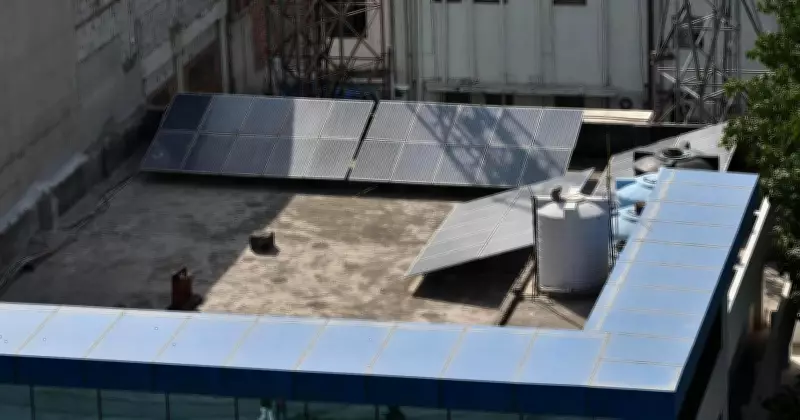
Gurgaon is experiencing a decisive shift towards renewable energy, with an unprecedented surge in rooftop solar installations. In just five months, the city received approximately 7,497 applications for rooftop solar systems, reflecting a changing mindset among urban households eager to cut rising electricity bills and adopt cleaner power.
Record Applications Across Administrative Circles
According to a Dakshin Haryana Bijli Vitran Nigam official, Circle-1 recorded 4,142 applications until May 13. Of these, connections were provided to 2,560 consumers, while subsidies were disbursed to about 2,360 applicants. In Circle-2, around 3,355 applications were filed, with 1,646 rooftop systems already activated. Together, Gurgaon now has over 4,200 operational rooftop solar connections, a significant jump for a city historically dependent on the conventional grid supply.
Housing Societies Lead the Charge
The push is most visible in upscale and densely populated housing societies, including DLF, South City, Sector-31, Sector-56, and Sushant Lok. Resident welfare bodies are installing solar systems for lifts, common lighting, and water pumps. The momentum is directly linked to the Pradhan Mantri Surya Ghar Muft Bijli Yojana, a national rooftop solar scheme offering financial support to households aiming to generate their own electricity.

Benefits for Residents
A typical 1-3 kW rooftop system, the most common size, can generate 250-300 units per month, enough to significantly reduce or even eliminate monthly power bills for many families. Sharad Mehta, a resident of South City-1 who recently installed a rooftop solar panel, reported that his electricity bills have dropped drastically. Despite using air conditioners for long hours, his bill remains very low. As temperatures climb, electricity generation from the rooftop panel also increases.
Government Buildings Going Solar
Meanwhile, the Haryana government is planning to convert all government buildings, autonomous educational institutions, and registered gaushalas into fully solar-powered premises by 2026-27. This move aims to reduce government expenditure on electricity while accelerating the state's transition to a decentralised energy model. A survey of 4,523 government buildings identified a total solar potential of 122 MW.
State's Renewable Energy Progress
As of early 2026, Haryana's energy profile shows significant progress in both large-scale and decentralised solar projects. The state currently requires around 15,076 MW of power, of which 6,264 MW comes from renewable energy, including 2,513 MW of solar power. Under the PM Surya Ghar: Muft Bijli Yojana, the state is pursuing a target of 2.22 lakh rooftop solar installations by March 31, 2027. Approximately 80,000 households have already completed installations as of April 2026, and the state aims to reach a cumulative rooftop capacity of 1.6 GW by 2030.






