Gulf Neighbors Contemplate Alliance in US-Israel War Against Iran
Iran's largest neighbors in the Gulf region are seriously evaluating the possibility of entering the United States-Israeli war against the Islamic Republic. According to informed sources, this move could be accelerated if Tehran proceeds with its threats to attack their critical infrastructure, escalating regional tensions.
Growing Impatience Among Gulf Powers
The most influential states in the Gulf, particularly Saudi Arabia and the United Arab Emirates, are reportedly "losing patience" with repeated Iranian strikes. These attacks have already targeted vital assets such as ports, energy facilities, and airports, as reported by Bloomberg, citing anonymous sources. A European diplomat noted that while most Middle Eastern nations are leaning toward involvement, they remain "cautious" about formally joining the conflict due to fears of Iranian retaliation.
These countries are also concerned about US President Donald Trump potentially negotiating a separate deal with Tehran, which could leave them exposed to a "wounded and angry regime." However, staying out of the war does not guarantee safety, as many governments worry Iran might still escalate attacks against them.

Oman's Unique Stance and Regional Dynamics
Oman stands out as the only Gulf state unlikely to participate in the conflict. Prior to the current hostilities triggered by US and Israeli strikes on February 28, Oman had been mediating between the US and Iran. Trump has repeatedly claimed that Iran seeks a deal, a statement Tehran has firmly rejected.
Iran has justified its assaults on neighboring countries by citing the presence of US military bases and alleging that Washington used their airspace for strikes—claims these nations deny. Iranian Foreign Minister Abbas Araghchi suggested that the Islamic Revolutionary Guard Corps launched attacks after being left without clear leadership following the death of Supreme Leader Ayatollah Ali Khamenei in targeted strikes.
Succession and Apology from Iran
Khamenei's son, Mojtaba, has been named as his successor, though his whereabouts are unknown, and he is believed to be seriously injured. In a subsequent development, Iranian President Masoud Pezeshkian "apologised" for the attacks, stating that Iran would only retaliate if attacked first.
Kharg Island Threat and Regional Backlash
A potential US attempt to seize Kharg Island, through which approximately 90% of Iran's crude exports pass, could provoke an "even bigger backlash" from Tehran, according to a senior Iranian official close to the security establishment. The official warned that if Emirati territory were used in such an operation, Iran would respond with a "severe attack." He added that Iran "would not hesitate" to strike the island, even at significant economic cost, and might lay mines in the Strait of Hormuz and Persian Gulf.
If Iran continues targeting Gulf states and obstructing the Strait of Hormuz, it could push regional countries to form a coalition against Tehran's "state terror," potentially mirroring the alliance formed against ISIS in Iraq and Syria.
Escalating Attacks and Diplomatic Moves
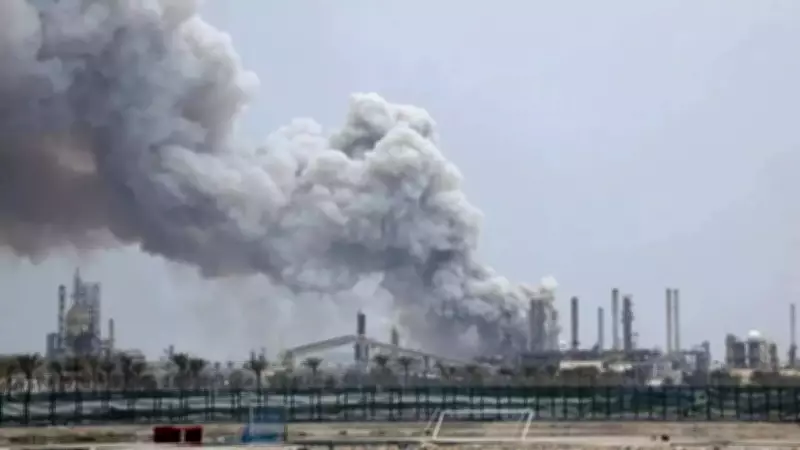
Since the conflict began, Iran has launched nearly 5,000 missiles and drones at Gulf states, targeting oil and gas infrastructure, US bases, residential areas, diplomatic zones, and tourist sites. The UAE has suffered the most, with at least 20 fatalities across Arab Gulf nations.
On Monday, Trump warned that Washington could target Iran's power plants if it failed to reopen the Strait of Hormuz, though he later paused this threat for five days to allow diplomatic efforts. Tehran quickly identified power and water desalination plants in Bahrain, Jordan, Kuwait, Qatar, Saudi Arabia, and the UAE as potential retaliation targets.
Toward a Coordinated Regional Response
These developments are leading Gulf states to recognize the need for a more coordinated response, both among themselves and with American and European allies, as stated by a senior Gulf official. While individual nations have been mobilizing militarily, discussions are ongoing about a collective approach to counter Iran.

Such possibilities were discussed during a recent meeting of foreign ministers in Riyadh, attended by all Gulf states except Oman, along with Egypt, Pakistan, and Turkey. Although Saudi Arabia continues to prefer diplomacy, it is prepared to take military action if its power and water facilities are targeted. The UAE has been particularly vocal, signaling that collective military action against Iran may become "unavoidable."