For the second year in a row, the state of Gujarat has not experienced any cold wave conditions during the traditional winter months of November and December. Data from the India Meteorological Department (IMD) confirms that minimum temperatures remained at normal or above-normal levels across the entire state during this period.
City-Wise Temperature Analysis
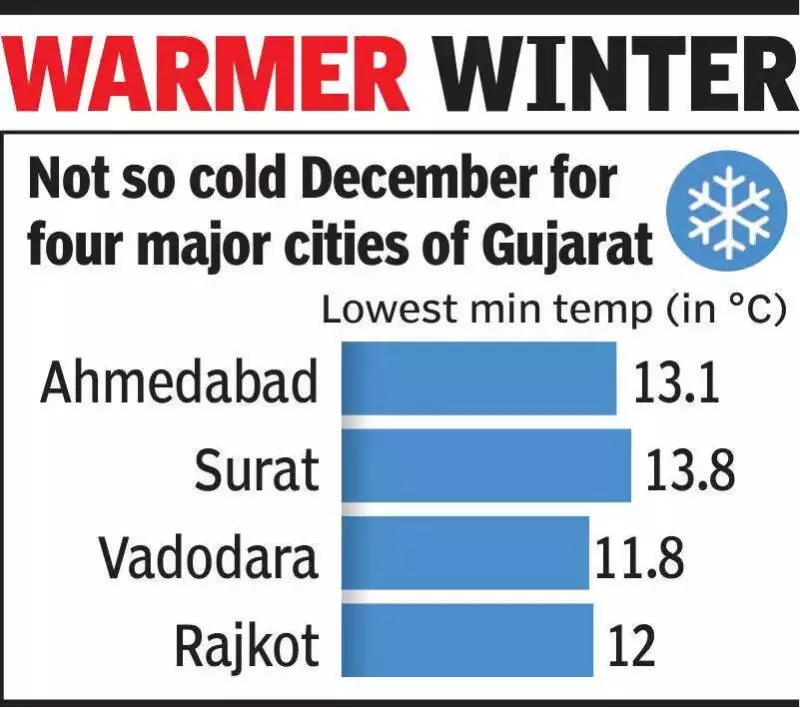
Ahmedabad, the state's major metropolis, recorded an average minimum temperature of 15.4°C in December, which is a significant 1.9°C above the normal average. The city's average maximum temperature was 30°C, marking a 0.6°C rise above the usual. The mercury dipped to its lowest point of 13.1°C on December 12, while the highest minimum recorded was 17.5°C on the first day of the month.
This warmer trend was mirrored in other key urban centers of Gujarat:

- Surat and Rajkot reported relatively higher average minimum temperatures.
- Vadodara recorded temperatures that were at par with seasonal norms.
- The lowest minimums recorded in December were 13.8°C in Surat, 11.8°C in Vadodara, and 12°C in Rajkot.
Defining the Absence of a Cold Wave
The IMD has specific criteria to declare a cold wave. In the plains, conditions are classified as a cold wave when the minimum temperature is 10°C or less and is between 4.5°C to 6.4°C below the normal minimum. A departure of more than 6.4°C is considered a severe cold wave. The data from Gujarat clearly shows these thresholds were not met.
Even Naliya, typically one of the coldest spots in the state, saw temperatures fall to 10°C or below on only five days during the 61-day period from November 1 to December 31. This is notable as December is historically Gujarat's coldest month.
Expert Insight on the Warming Trend
Ashok Kumar Das, director of IMD Gujarat, explained the meteorological reasons behind the persistent above-normal minimum temperatures. He linked the phenomenon to prevailing wind patterns. "The cold generally arrives in the state with northerly winds. In the past two months, it was mostly easterly to northeasterly winds," Das stated. He added that such deviations are not extremely unusual in the climatic record.
The pattern was set earlier in November. Ahmedabad recorded an average minimum temperature deviation of 0.6°C above normal, while maximum temperatures were 2°C below normal. This was partly due to changing weather conditions and unseasonal rain in parts of Gujarat. A striking instance was on November 3, when the minimum temperature in Ahmedabad was a high 25.5°C, representing a deviation of 6.5°C above normal.
The consecutive years of warmer winter months, devoid of classic cold wave conditions, highlight a shifting weather pattern that residents and authorities in Gujarat are now observing closely.