Greenland's Icy Reality: A Land of Frozen Contradictions
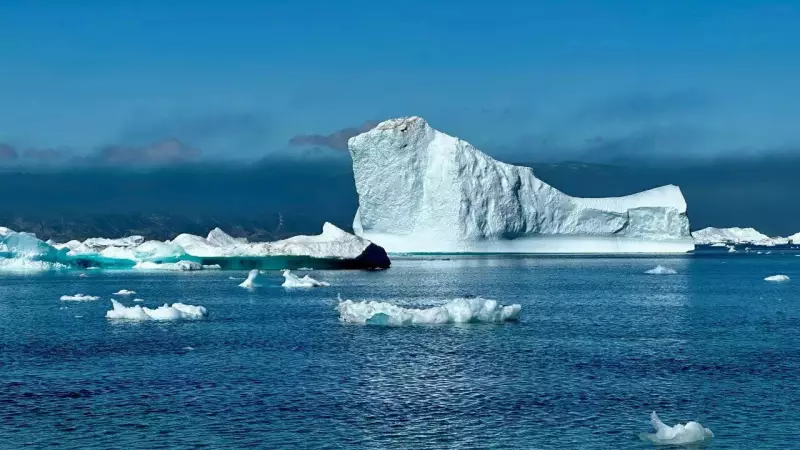
Greenland stands as the largest island on our planet. This massive landmass spans over 836,000 square miles. Yet its name presents a fascinating contradiction. Most of Greenland remains buried under ice. In fact, a full 80% of the island wears a permanent icy coat.
The climate here proves exceptionally harsh. Ice in certain regions reaches astonishing depths. Some areas feature ice approximately two miles thick. According to USA Today, Greenland consists primarily of ice, frozen fjords, and ice caps. Only occasional ice-free zones break the frozen landscape.
Extreme cold and geographical isolation define Greenland. These factors make it the coldest habitable area worldwide. The island's name offers more than geographical labeling. It provides a compelling case study spanning history, culture, and modern climate shifts.

Viking Marketing: The Story Behind the Name
The tale of Greenland's name begins around 1000 AD. Viking explorer Erik the Red arrived here after exile from Iceland. Historical Icelandic Sagas reveal his deliberate naming strategy. Erik called this frozen land "Greenland" to attract settlers.
He understood the power of appealing language. Despite the island's icy reality, his branding worked effectively. This strategic naming helped draw Norse settlers to coastal areas. It demonstrates Viking realism about colonization in extreme environments.
Indigenous Perspectives and Sustainable Living
The Inuit people know Greenland as Kalaallit Nunaat. This translates to "Land of the Kalaallit." For countless centuries, Inuit communities have thrived along western coasts. They developed deep knowledge of ice, marine life, and local geography.
While Vikings used names for marketing, Inuit practiced subsistence living. They hunted and fished sustainably. Limited farming occurred in rare ice-free zones. Their understanding allowed survival in one of Earth's most challenging environments.
Historical Greening and Modern Melting
Greenland experienced brief periods of relative greening. The Medieval Warm Period from 900 to 1300 AD brought glacial retreat. Slight warming permitted some plant growth in regional areas.
Small pasturelands and agricultural plots emerged during this time. These supported Viking settlement activities. However, even during this warmer phase, 80% of Greenland remained ice-covered.
Today, climate change accelerates ice loss dramatically. Recent 2024 research reveals startling data. Over the past thirty years, ice covering 11,000 square miles has disappeared. This area slightly exceeds Massachusetts in size.
Melting ice exposes land unseen for nearly a millennium. Shrubs, marshes, and rock surfaces emerge where ice once dominated. Scientists view these changes as critical indicators. They signal coming sea level rise, shifting ocean currents, and polar region transformations.
The Iceland-Greenland Naming Paradox
Greenland's name becomes even more ironic alongside Iceland's. Iceland received its name around 850 AD from Viking explorer Flóki Vilgerðarson. He named it for icy landscapes despite its relatively temperate climate.
Greenland remains much colder and more ice-covered than Iceland. Yet it carries the "green" name. This paradox highlights how perception and historical context shape naming conventions. Early settlers manipulated language to encourage migration.
Mapping Misconceptions and True Dimensions
Many maps distort Greenland's actual size. The Mercator projection enlarges polar regions disproportionately. Greenland appears far larger than reality in typical atlas depictions.
In truth, Greenland measures about three times Texas's size. Accurate geographical understanding matters greatly today. Climate scientists and policymakers need precise measurements. They monitor ice loss rates, sea-level changes, and regional climate impacts.
Global Consequences of Melting Ice
The retreat of Greenland's ice sheet carries planetary significance. Melting ice directly contributes to rising sea levels worldwide. Coastal communities everywhere face increasing threats from these changes.

Reduced ice affects ocean currents and climate patterns. These shifts influence weather systems far beyond the Arctic region. Greenland's ice serves as a sensitive climate change indicator. It provides scientists crucial data for tracking environmental transformations.
Researchers use this information to forecast future ecosystem changes. Understanding Greenland's true nature helps humanity prepare for coming challenges. The island's story continues evolving as climate patterns shift.