

Government Sets Ambitious Target to Slash Air Pollution in Delhi-NCR by 15-20% Within One Year
In a significant announcement, Union Minister for Environment, Forest and Climate Change Bhupender Yadav has revealed that the Central government is actively working to reduce air pollution levels in the Delhi-National Capital Region (NCR) by an impressive 15-20 per cent within the next year. This ambitious target comes with the collaborative support of various state agencies and local bodies, marking a coordinated effort to tackle one of India's most pressing environmental challenges.
Minister Outlines Comprehensive Strategy During Idea Exchange Session
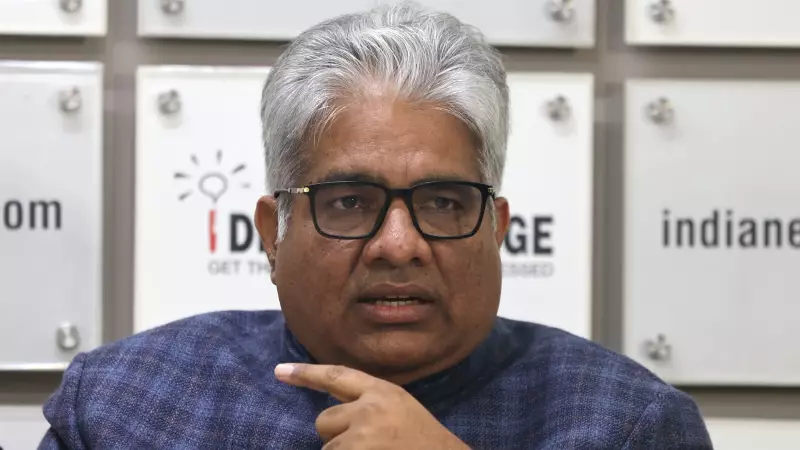
Speaking at an Idea Exchange session organized by The Indian Express on Tuesday, just before the commencement of the Budget session of Parliament, Minister Yadav emphasized the government's unwavering commitment to addressing air pollution concerns. He expressed disappointment over the Opposition's disruption of parliamentary proceedings when the issue was scheduled for debate during the winter session, stating that the government remains fully prepared to engage in constructive discussions on this critical matter.
"We are taking concerted efforts to slash air pollution by 15-20 per cent by next year," Yadav declared. "However, I must be honest that the situation will not transform overnight. We need to sustain this effort consistently, aiming for similar reductions each subsequent year to achieve lasting improvements."

Multi-Pronged Approach to Tackle Pollution Sources
The Environment Minister highlighted that air pollution affects every citizen and outlined the ministry's comprehensive strategy that combines both short-term interventions and long-term sustainable solutions. The government's approach encompasses:
- Addressing traffic congestion hotspots through improved urban planning
- Implementing stricter controls on industrial emissions
- Accelerating the transition to electric vehicles across transportation sectors
- Managing construction dust and solid waste more effectively
Yadav specifically identified vehicular pollution, industrial emissions, construction dust, and improper solid waste management as the primary contributors to the region's deteriorating air quality.
Current Pollution Status and Measurable Improvements
While acknowledging that current pollution levels remain unsatisfactory, the minister pointed to marginal improvements in recent years based on official data from the Central Pollution Control Board:
- PM 2.5 concentrations decreased from 98 in 2022 to 97 in 2025
- PM 10 levels dropped from 211 in 2022 to 198 in 2025
- Delhi's average Air Quality Index (AQI) improved from 209 in 2022 to 201 in 2025
"I accept this issue with full responsibility and want to assure everyone with complete sensitivity that there isn't a single day when we're not following up on pollution control measures," Yadav stated regarding health concerns related to air pollution. "Although we function as a regulatory ministry, we're actively coordinating with stakeholder ministries and local bodies to implement effective solutions."
Specific Action Plans and Regulatory Measures
The Union Minister elaborated on several concrete steps being implemented to combat air pollution in Delhi-NCR:
Vehicular Pollution Control: Yadav highlighted the Supreme Court's directives on phasing out older vehicles as a crucial intervention. He revealed that Bharat Stage-I compliant vehicles emit approximately 31 times more pollutants compared to BS-IV and BS-VI vehicles, with around 1,12,000 such older vehicles still operational. Additionally, he announced that Delhi's entire public transport bus fleet is expected to transition to electric vehicles by next year.
Industrial Emission Monitoring: Regarding industrial pollution, the minister disclosed that out of 3,500 industries in the region, approximately 1,200 have already installed online emission monitoring systems. The remaining industries will complete installation this year. For non-compliant and unregulated industries, the Centre plans to issue strict closure orders to ensure environmental compliance.

Waste Management Reforms: Yadav emphasized ongoing reforms in waste management, including time-bound remediation of legacy waste sites, as part of the comprehensive pollution control strategy.
Collaborative Governance and Future Planning
The Environment Minister cited recent meetings with Delhi's Chief Minister and local bodies across NCR cities and towns as evidence of the government's collaborative approach. The Centre is currently overseeing the preparation of comprehensive annual plans with clearly defined targets to address specific pollution sources systematically.
This multi-dimensional strategy represents the government's most determined effort yet to combat the persistent air quality crisis in India's capital region, combining regulatory measures, technological interventions, and inter-governmental coordination to achieve measurable environmental improvements.





