Goa's Olive Ridley Turtle Conservation Efforts in Full Swing
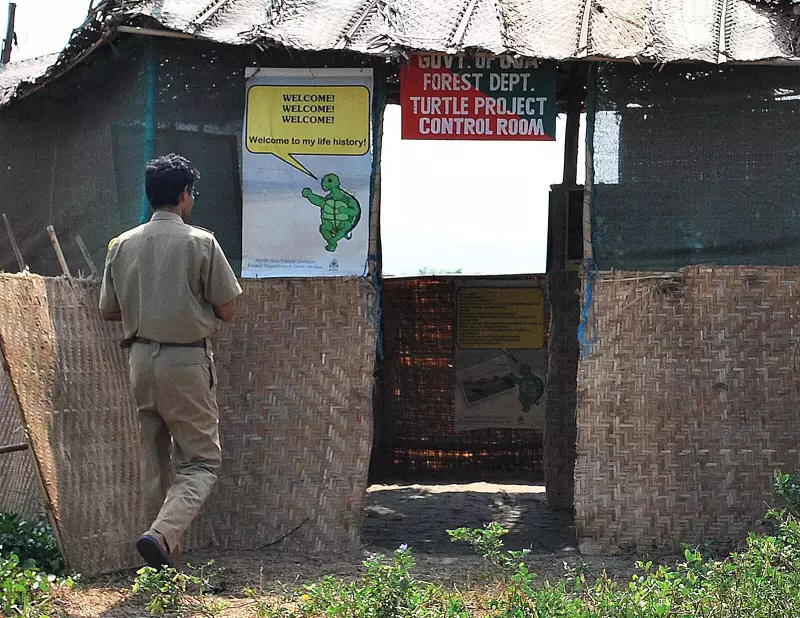
In a significant boost to marine conservation, two hatcheries have been established in Canacona, Goa, to incubate around 1,500 olive ridley turtle eggs. These eggs were laid on Agonda beach last month, marking a promising start to the nesting season. With favourable weather conditions prevailing, forest officials anticipate an increase in turtle arrivals next month, highlighting the ongoing efforts to protect this endangered species.
Nesting Trends and Egg Incubation Details
According to Rajesh Naik, the Range Forest Officer (RFO) of the South Marine Range, recent patterns indicate that nesting primarily occurs in February. The first turtle of the season arrived on December 11, 2025, at Agonda beach, where it laid 145 eggs. Currently, the Agonda hatchery is nurturing 1,172 eggs across ten nests, while the Galgibaga nursery holds another 421 eggs in four nests, all awaiting hatchlings. The most recent turtle arrival was recorded at 2 am on January 22, underscoring the active nesting period.
Expanded Nesting Sites and Egg Relocation
Beyond Agonda and Galgibaga, olive ridley turtles are expected to nest on various South Goa beaches. To ensure their safety, eggs from these locations will be transferred to the protected hatcheries at Agonda and Galgibaga. This strategy has proven effective in previous years; for instance, last season saw 19 nests relocated from other beaches to these nurseries. This year, the first nest was already moved from Talpona beach to the Galgibaga hatchery on Thursday, with similar transfers anticipated throughout the season.

Dedicated Patrolling Staff: The Backbone of Conservation
The success of Goa's turtle nesting programme relies heavily on a committed team of patrolling staff. These individuals tirelessly monitor beaches and relocate eggs to the hatcheries, safeguarding them from predators. At the Agonda nursery, the team includes Ajay Pagi, Yesu Pagi, Sandip Pagi, and Sukash Pagi. Meanwhile, Samir Bhandari, Sham Bhandari, Tukaram Metri, and Ram Bhandari are responsible for protecting eggs at the Galgibaga hatchery. RFO Rajesh Naik praised their efforts, noting that these staff members perform round-the-clock duties to ensure the eggs' safety.
As the nesting season progresses, these conservation initiatives highlight Goa's proactive approach to preserving olive ridley turtles. With continued patrolling and community involvement, the region aims to enhance hatchling survival rates and contribute to global biodiversity efforts.