

Goa Faces Critical Water Shortage as Reservoir Levels Plummet Below 50% Mark
As the summer season intensifies, Goa is confronting a severe water scarcity crisis with most of the state's major reservoirs recording water levels below 50% of their total capacity by mid-April. With more than 45 days of peak summer heat still ahead, the situation has raised significant concerns among authorities and residents alike.
Critical Reservoir Levels Across Key Water Sources
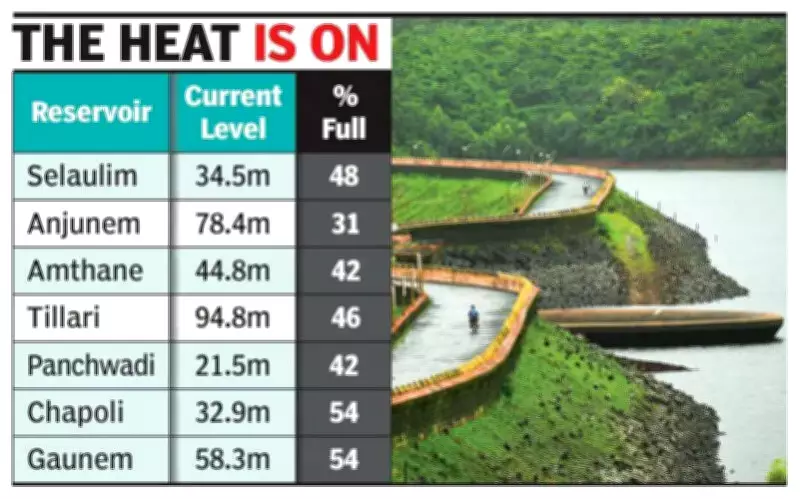
The Selaulim reservoir, which serves as the primary water supply source for most of South Goa, registered water levels at just 48% of its capacity on Monday. This critical infrastructure is essential for meeting the daily water requirements of thousands of households and businesses throughout the southern region of the state.
Even more alarming is the situation at the Anjunem reservoir located in Sattari taluka, where water levels have dipped to their lowest point among all monitored facilities. The Amthane reservoir, responsible for supplying water to treatment plants that provide drinking water to Bardez taluka, currently stands at a concerning 42% capacity.

Delayed Pre-Monsoon Rains Exacerbate Water Crisis
Compounding the reservoir depletion is the unusually delayed and insufficient pre-monsoon rainfall this year. Typically, by mid-April, Goa experiences more intense pre-monsoon showers, particularly in Sattari taluka, which help rejuvenate water bodies and replenish groundwater reserves. However, this year has seen only short, sporadic spells of rainfall, insufficient to make any meaningful impact on water levels.
The Tillari reservoir, which supplements drinking and irrigation water supplies to both Bardez and Pernem talukas, is currently operating at just 46% capacity. Similarly, the Panchwadi reservoir that meets the needs of Shiroda and surrounding areas recorded water levels at 42% full on Monday.
Alternative Water Sources and Infrastructure Delays
During summer months when reservoir water becomes scarce, authorities traditionally tap into water stored in approximately 300 bandharas (small dams) across rivers for raw water supply. Additionally, water is pumped from abandoned mining pits wherever necessary to supplement the dwindling supplies.
The only relatively positive readings come from the two reservoirs in Canacona taluka at Chapoli and Gaunem, both of which stand at 54% capacity—still concerning but slightly better than other facilities across the state.
Sal Barrage Commissioning Delayed Until May End
Adding to the water management challenges is the delayed commissioning of the Sal barrage project, which was expected to provide an additional 250 million liters per day (MLD) of raw water to the state. The project, which would particularly benefit Bardez taluka, is now projected to become operational only by the end of May, with approximately 80% of the work completed to date.
This delay means Goa will face the peak summer period without this crucial additional water source, putting further strain on already depleted reservoirs and alternative water supply systems.
As the state navigates this challenging period, water conservation measures and efficient distribution systems will become increasingly critical to ensure adequate supply for drinking, agricultural, and industrial needs throughout the remaining summer months.






