Germany's 364-Meter Wind Turbine: A Monumental Leap in Renewable Energy
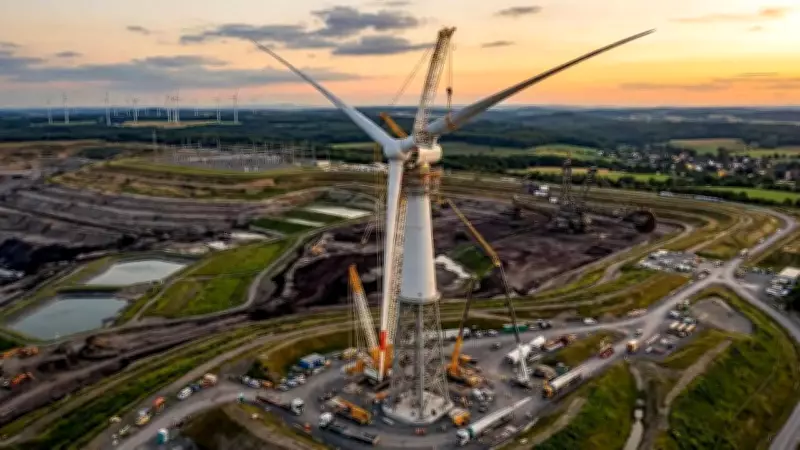
Germany is embarking on a historic industrial transformation, powerfully symbolized by the construction of a 364-meter-high wind turbine—now the tallest in the world. This engineering marvel is being built in a historically mined area, marking a monumental shift away from fossil fuels toward the creation of clean, renewable energy. By reaching this unprecedented height, the turbine will operate at higher elevations where winds are stronger and more consistent, enabling it to generate more electricity and better stabilize the clean energy grid.
Engineering Feat and Scientific Impact
Constructing a 364-meter-high structure demands specialized engineering to withstand atmospheric turbulence and structural loads. Technical evaluations from the Federal Ministry for Economic Affairs and Climate Action reveal that increasing turbine rotor heights allows access to 'low-level jets'—fast-flowing, stable winds. This elevation boost grants turbines a much higher capacity factor compared to ground-level installations, ensuring nearly continuous electricity generation even during low surface winds.
Not only will this project set a new record for the highest wind turbine, but it also provides scientific evidence that decommissioned carbon-intensive assets can be reclaimed and transformed into leaders in sustainable innovation.

Why Former Coal Mines Are Ideal Wind Hubs
Selecting a site in a historic coal mining area offers efficient grid integration. According to the International Renewable Energy Agency (IRENA), reusing 'brownfield' sites—former industrial locations—maximizes energy generation efficiency because they often already have the necessary electrical transmission lines and transformer stations to supply large quantities of electricity into the national grid.
Utilizing these previously impacted mining communities minimizes the environmental footprint of new transmission lines while providing economic redevelopment opportunities for traditional mining regions.
Advanced Materials for Extreme Altitudes
To ensure safe operation at extreme heights, the turbine employs cutting-edge material science. Studies by the National Renewable Energy Laboratory (NREL) indicate that as turbines grow larger, blade weight can hinder performance. To overcome this, carbon-fiber-reinforced polymer composites will be used for the 364-meter-high turbine blades, offering a superior strength-to-weight ratio over traditional fiberglass. This innovation allows the blades to capture more kinetic energy without imposing excessive loads on the main bearing or nacelle.
How One Giant Turbine Can Replace a Wind Farm
The success of this project serves as a blueprint for the European Environment Agency's (EEA) goal of achieving climate neutrality. Germany demonstrates how one ultra-tall turbine can replace multiple smaller units, reducing 'land-use intensity.' Scientific modeling suggests these tall turbines could generate up to twice the energy of conventional counterparts, making them crucial for meeting energy production needs in downstream industries without excessive land expansion.