Ganga River Fish Diversity Reaches Highest Level in Over 50 Years
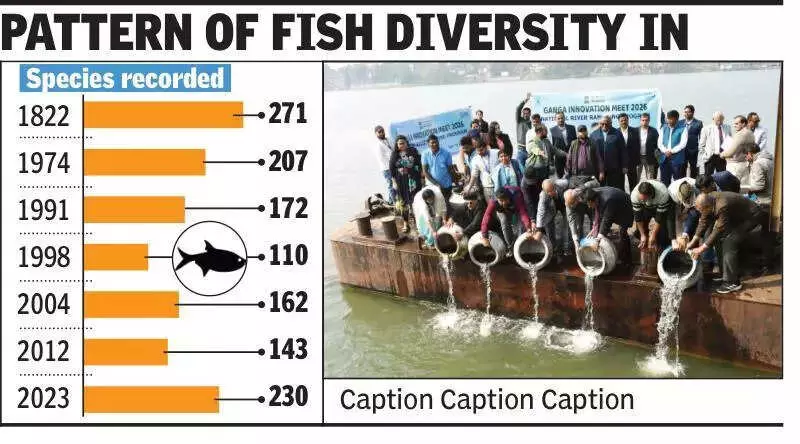
The ICAR Central Inland Fisheries Research Institute, based in Barrackpore near Kolkata, has documented a remarkable recovery in the Ganga river's aquatic life. Their latest study, completed in 2023, recorded 230 different fish species across various stretches of the river. This number represents the highest fish diversity observed in the Ganga in more than half a century.
Historical Decline and Recent Recovery
Historical data paints a concerning picture of the river's health over the past two centuries. The first known survey in 1822 identified 271 fish species in the Ganga. However, by 1974, that number had dropped sharply to just 207 species. The decline continued, reaching a low point of only 110 species in 1998.
Restoration efforts by CIFRI began showing positive results in the early 2000s. The fish count increased to 162 species in 2004, though it dipped again to 143 in 2012. The current figure of 230 species marks a significant turnaround, demonstrating the effectiveness of sustained conservation work.

Geographical Distribution of Species
The survey revealed interesting patterns in where fish species are most abundant. In Uttar Pradesh, Bijnor recorded the highest count with 109 species, followed closely by Narora with 93 species.
In West Bengal, Farakka showed the greatest diversity with 85 species. Other locations in the state recorded these numbers:
- Berhampore: 76 species
- Frazerganj: 70 species
- Balagarh: 66 species
- Tribeni: 63 species
Areas closer to the river's mouth showed lower diversity, with Diamond Harbour recording 38 species and Gadkhali just 32 species.
Comprehensive Survey Methodology
Researchers conducted an extensive survey covering the entire Gangetic basin. They collected fisheries and ecological data from 33 different tributaries and six floodplain wetlands. This comprehensive approach provided a detailed picture of the river's current ecological status.
Active Conservation Measures
To support fish population recovery, CIFRI implemented 167 separate ranching activities. These efforts focused on releasing juvenile fish into the river to boost natural populations.
The institute released 203.4 lakh fingerlings, including:
- Indian Major Carps (Rohu, Catla, and Mrigal)
- Mahseer species
Basanta Kumar Das, Director of CIFRI, highlighted the success of these interventions. "The impact of ranching is clearly visible in increased fish landings," he stated. "We've recorded rises of 24.7% at Prayagraj and 41% at Varanasi compared to 1959 levels, demonstrating how effective stock enhancement can be."
Special Focus on Hilsa Conservation
The conservation program paid particular attention to Hilsa, a culturally and economically important species. Since 2010, researchers have released 3.8 lakh adult Hilsa upstream of the Farakka barrage.
Of these released fish, 6,031 received special tags for tracking purposes. The recovery rate of tagged Hilsa reached 9%, with some fish traveling as far upstream as Ballia in Uttar Pradesh. This movement indicates a gradual expansion of the species' range over time.
To further support natural Hilsa populations, the institute released:
- 54.9 lakh fertilized Hilsa eggs
- 8.1 lakh Hilsa spawn
These releases occurred upstream of the Farakka barrage, aiming to improve breeding success and population stability.
Looking Forward
The Ganga river, originating in the Himalayas and flowing approximately 2,525 kilometers through multiple Indian states before entering Bangladesh and the Bay of Bengal, shows promising signs of ecological recovery. The increased fish diversity suggests improving water quality and habitat conditions along many stretches of the river.
Continued monitoring and conservation efforts will be essential to maintain this positive trajectory and ensure the long-term health of one of India's most important river systems.