

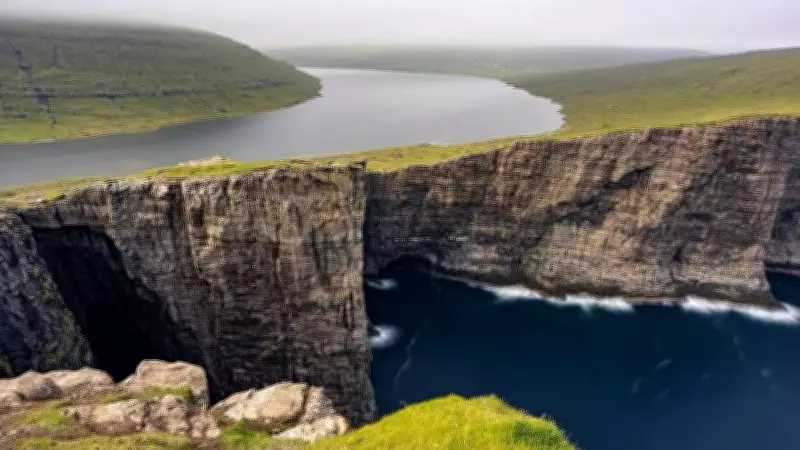
Sørvágsvatn's Floating Illusion: A Geological Marvel in the Faroe Islands
Sørvágsvatn, also known as Leitisvatn, stands as the largest lake in the Faroe Islands, presenting a breathtaking optical illusion that appears to defy gravity by hovering above the Atlantic Ocean. This natural phenomenon offers a masterclass in geology and forced perspective, captivating observers with its seemingly impossible elevation.
The Gravity-Defying Optical Illusion
The famous optical illusion generated by Sørvágsvatn challenges conventional perceptions of height and distance. Photographs taken from the Trælanípa cliff create a visual trick where the lake appears to sit hundreds of meters above the crashing sea waves. However, geological measurements reveal a different reality.
According to official sources from the Faroe Islands, Sørvágsvatn actually sits approximately 30 meters (100 feet) above sea level, nestled within a deep natural depression. The high cliffs of Trælanípa, rising to 142 meters (466 feet), create optical confusion when viewed from specific angles, distorting the true relationship between the lake surface and ocean below.

The Science of Forced Perspective
The floating effect results from sophisticated forced perspective techniques that occur naturally in this landscape. Similar methods are commonly employed in motion pictures to manipulate the apparent size and distance of objects. At Sørvágsvatn, the combination of cliff height and camera angle compresses the visual distance between the lake and Atlantic shoreline.
When observers reach the highest points on Trælanípa and view the scene through specific sightlines, their brains interpret the lake surface as being at the same elevation as the cliff edges. This perceptual trick creates the stunning illusion of water floating in mid-air above the ocean.
The Hidden 30-Meter Gap
Despite the visual deception, Sørvágsvatn's physical characteristics remain grounded in geological reality. Covering approximately 3.4 square kilometers, this freshwater body represents the largest water source in the Faroe Islands. The lake occupies a natural depression formed by ancient volcanic activity, with its surface appearing deceptively high while maintaining that crucial 30-meter elevation above sea level.
A narrow rock ledge creates this vertical separation, preventing lake water from draining directly into the Atlantic Ocean below. This geological feature maintains the lake's integrity while contributing to the optical illusion.
Bøsdalafossur Waterfall: The Reality Check
The Bøsdalafossur waterfall serves as the natural drainage point where illusion meets reality. This waterfall acts as Sørvágsvatn's outlet, carrying excess water over the 30-meter cliffs into the sea during heavy rainfall. Without this drainage system, the lake would gradually rise with precipitation, eventually obscuring the floating effect that makes this location so remarkable.
The waterfall's existence demonstrates how geological processes maintain balance in this unique ecosystem while preserving the optical phenomenon that draws visitors from around the world.
Geological Origins and Formation
The Sørvágsvatn anomaly originates from the Faroe Islands' distinctive basaltic rock structure. Approximately 11 million years ago, massive lava flows shaped the region that would become these islands. Subsequent glacial activity further sculpted the landscape, with glaciation carving the deep central basin that now holds Sørvágsvatn's freshwater.
Simultaneously, relentless Atlantic Ocean erosion sheared away the island's edges, creating the dramatic vertical cliffs of Trælanípa. These dual erosional forces acting on the same basaltic block produced the geological conditions necessary for both the lake's existence and its optical illusion.
The solid rock rim separating lake from ocean remains intact despite their proximity, a testament to the enduring geological processes that continue to shape this remarkable landscape. This combination of volcanic history, glacial carving, and oceanic erosion creates a unique environment where freshwater and saltwater maintain their separation while creating one of nature's most fascinating visual deceptions.






