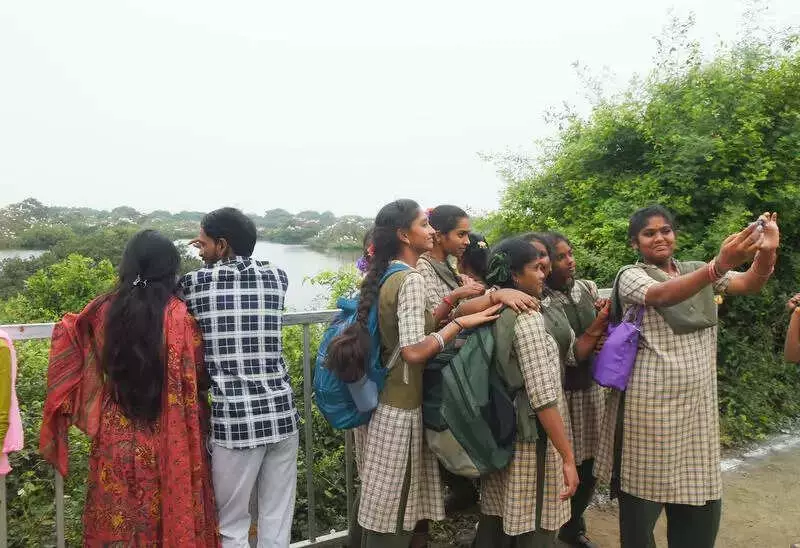
The second day of the Flamingo Festival-2026 witnessed an overwhelming response as tourists from various parts of India descended upon the Nelapattu Bird Sanctuary in Sullurpeta, Tirupati district, on Sunday. The sanctuary was brimming with enthusiastic visitors, with a significant presence of school students on educational trips organised by institutions from Tirupati, Nellore, and Chittoor districts.
A Sanctuary Alive with Activity
To facilitate bird watching, the tourism department and Tirupati district administration provided binoculars, allowing students and other visitors to observe the magnificent migratory birds from a safe distance of approximately one kilometre. The atmosphere was vibrant with curiosity and excitement as people engaged with the natural spectacle.
Parallel Symposium Highlights Conservation Crisis
While the sanctuary buzzed with tourist activity, a critical national symposium on wetlands conservation and sustainable eco-tourism was concurrently hosted by Krea University at Sri City. The event brought together conservationists, scientists, and policy experts who underscored the pressing need to safeguard wetland ecosystems.

A major focus was Pulicat Lake—India's second-largest brackish water lake. Experts advocated for its recognition as a wetland of international importance. Dr. Satya Selvam from the Bombay Natural History Society (BNHS) detailed that the lake, sprawling over 759 square kilometres, is already designated as an Important Bird Area by BirdLife International and BNHS. It serves as a crucial foraging and wintering ground for resident waterbirds, seasonal migrants, and winter visitors from the Palaearctic region.
Urgent Threats and Calls for Collaborative Action
Speakers at the symposium delivered a stark reminder that despite being declared a Ramsar site in 2002, Pulicat Lake continues to face severe threats. These include pollution, siltation, encroachments, increasing tourism pressure, and industrial growth in neighbouring towns. Dr. Selvam emphasised the necessity for a united front, urging policy experts, scientists, NGOs, and local communities to collaborate in raising awareness about the lake's immense ecological and socioeconomic value.
Echoing this sentiment, Dr. Ajit Kumar Patnaik of the Chilika Development Authority stressed the critical need for a tripartite state-industry-community collaboration to protect migratory bird habitats, including those of flamingos. He called for immediate eco-restoration of islands and comprehensive habitat improvement initiatives around Pulicat Lake to ensure its survival for future generations.