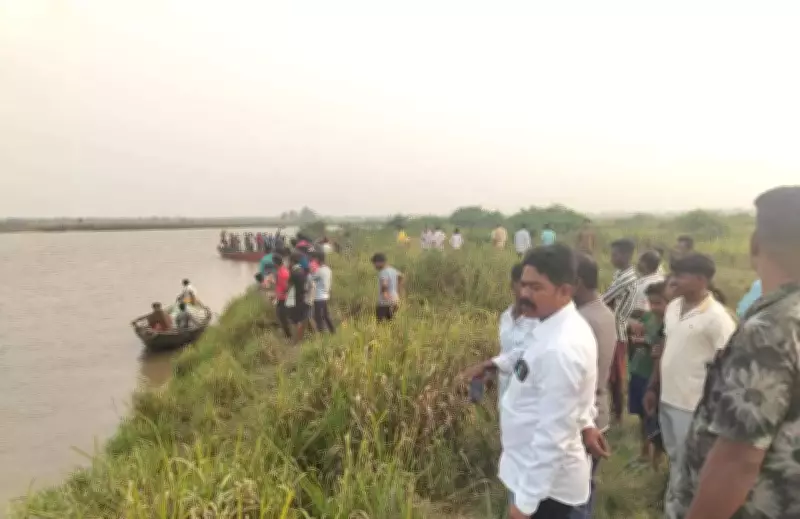
Fisherman Fatally Attacked by Saltwater Crocodile in Odisha's Bhitarkanika
A 54-year-old fisherman was killed in a tragic crocodile attack on Tuesday afternoon near Bhitarkanika National Park in Odisha, highlighting the escalating human-animal conflict in the region. The incident occurred around 4:30 pm in the Gobari river, where the victim, Devakumar Mandal of Kansapala village, was fishing.
Details of the Fatal Attack
According to eyewitness accounts, Devakumar Mandal was standing in knee-deep water and casting his fishing net when a saltwater crocodile suddenly emerged and dragged him into the river. "We raised an alarm and tried to save him, but the reptile pulled him into deep water before we could intervene," said Parikhita Mandal, a fellow villager who witnessed the harrowing event.
The forest department and fire brigade personnel launched a search operation and recovered the half-eaten body of Devakumar Mandal from the river on Wednesday morning. Forest Range Officer of Mahakalapada, Santanu Dalai, confirmed that the forest department will provide a compensation of Rs 10 lakh to the victim's family.

Series of Recent Crocodile Attacks in the Region
This incident is the latest in a disturbing pattern of fatal crocodile attacks around Bhitarkanika National Park. Just last month, on October 22, 2025, a 59-year-old woman named Soudamini Mahala of Kantia village was killed by a saltwater crocodile while washing clothes in the Kharosotra river.
Earlier, on September 19, 2025, 37-year-old Laxmi Dalei of Suniti village met a similar fate while catching fish in the Gobari river within the Mahakalapada forest range. These attacks underscore a growing crisis in human-crocodile coexistence in the area.
Escalating Human-Crocodile Conflict Statistics
The data reveals a troubling trend of increasing crocodile attacks in the Bhitarkanika region:
- Four people have been killed by estuarine crocodiles in the past 12 months
- Fourteen fatalities have occurred over the last three years
- Thirty people have lost their lives to crocodile attacks in the past 46 months
Bhitarkanika National Park, a vast expanse of mangrove forest and saltwater swamp, is home to approximately 1,858 saltwater crocodiles according to this year's reptile census. The dense crocodile population combined with human activities in riverine areas has created a dangerous environment.
Forest Department's Mitigation Measures
In response to the growing threat, the forest department has implemented several safety measures to reduce human-crocodile conflicts:
- Erection of protective barricades at 120 river ghats across Aul, Mahakalapada, Rajkanika, and Pattamundai blocks
- Extensive awareness campaigns using posters, pamphlets, and loudspeaker announcements
- Encouragement for villagers to use barricaded bathing areas instead of venturing into unprotected waters
"We do not think crocodiles pose a risk to public safety if people keep out of the waters. But if they enter these water bodies, their safety cannot be guaranteed," emphasized Manas Kumar Das, Assistant Conservator of Forests for Bhitarkanika.
Broader Context and Regional Impact
The recurring crocodile attacks have created fear and anxiety among local communities whose livelihoods depend on river-based activities like fishing and washing. While the forest department's compensation scheme provides some relief to affected families, the psychological impact on communities living near crocodile habitats remains significant.
Experts suggest that climate change, habitat alteration, and increasing human encroachment into traditional crocodile territories may be contributing factors to the rising conflict. The situation requires a balanced approach that protects both human lives and the conservation of saltwater crocodiles, which are an important part of the Bhitarkanika ecosystem.
As authorities continue their awareness campaigns and safety measures, local residents remain cautious while navigating the waters that have sustained their communities for generations but now present deadly risks from one of nature's most formidable predators.