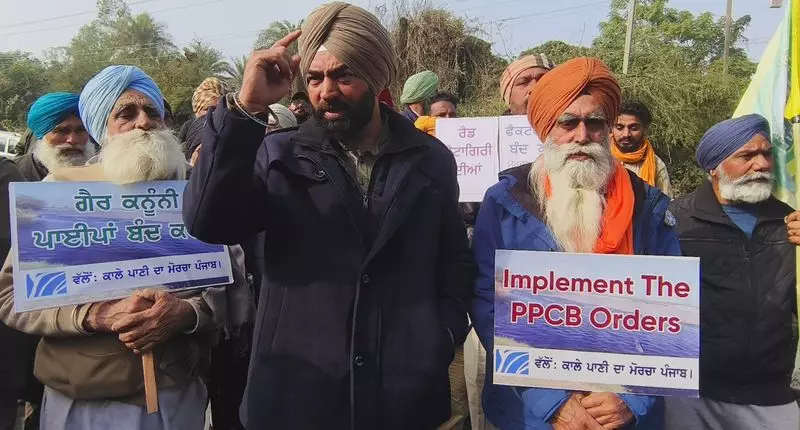
A group of determined farmers staged a loud demonstration outside the office of the Punjab Pollution Control Board (PPCB) in Patiala on Tuesday, voicing their anger over the severe pollution of a crucial irrigation canal. The protestors, representing the Kirti Kisan Union, are demanding immediate and concrete action to stop the flow of industrial effluents into the Kali Bein, locally known as 'Kale Pani' or black water.
The Core of the Contamination Crisis
The farmers' ire is directed at the unchecked discharge of toxic waste from factories and industrial units located in the focal points of Dhanansu and Bhankharpur. For a considerable time, this polluted water has been channeled into the Kali Bein, a canal that is a lifeline for agriculture in the surrounding villages. The protestors presented a memorandum to PPCB officials, outlining their grave concerns.
The contaminated water, they argue, is not just discolored but is actively destroying their crops and degrading the quality of their soil. This environmental damage translates directly into significant financial losses for the farming community, threatening their livelihoods. The memorandum served as a formal appeal to the pollution control authorities to enforce regulations and halt the illegal dumping.

Official Response and Farmers' Ultimatum
In response to the agitation, PPCB officials assured the protesting delegation that their complaints were being taken seriously. The board promised to conduct a thorough survey and inspection of the areas in question to identify the exact sources of the pollution. Officials stated that appropriate legal action would be initiated against any units found violating environmental norms.
However, the farmers remain skeptical of promises without visible action. The Kirti Kisan Union has issued a clear ultimatum: if the PPCB fails to take decisive steps to clean the Kali Bein and stop the pollution at its source within a short timeframe, they will be forced to intensify their agitation. The protest on Tuesday is being viewed as a preliminary warning, with the potential for larger, more disruptive demonstrations in the future if their demands are not met.
Broader Implications for Patiala's Agriculture
This protest highlights a persistent and critical issue at the intersection of industrial development and agricultural sustainability in Punjab. The contamination of water sources like the Kali Bein poses a long-term threat to food security and farmer welfare. The incident underscores the challenges faced by regulatory bodies like the PPCB in balancing economic activity with environmental protection.
The farmers' direct action at the PPCB office signals a growing impatience with bureaucratic processes when faced with immediate existential threats to their profession. The outcome of this confrontation will be closely watched by agricultural communities across the region facing similar problems. It sets a precedent for how environmental grievances are addressed by the state machinery.