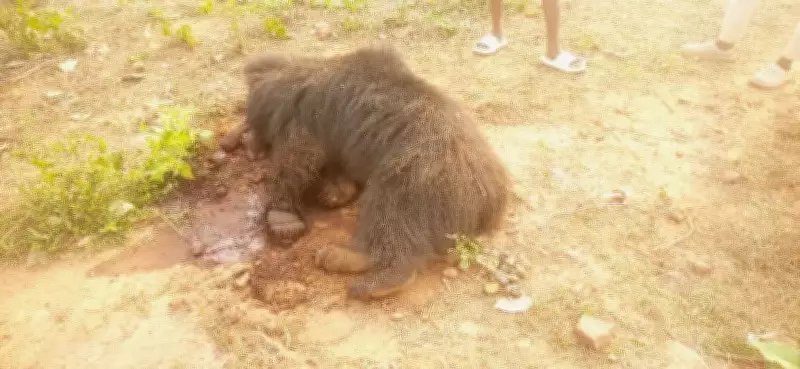
Farmer Arrested for Poisoning Sloth Bear in Odisha's Jajpur District
In a distressing incident highlighting the escalating human-wildlife conflict, a farmer was arrested on Wednesday for allegedly poisoning a male sloth bear to death in the Dalijoda forest range of Jajpur district, Odisha. Forest officials confirmed the arrest, noting that sloth bears are protected under Schedule I of the Wildlife (Protection) Act, 1972, which grants them the highest level of legal protection in India.
Discovery of the Bear's Body
The bear's carcass was discovered by local residents on Wednesday morning at the Nalita hillock under the Kaimatia gram panchayat. Upon receiving the alert, forest department personnel swiftly arrived at the scene and recovered the body for further investigation. Preliminary findings indicate that the sloth bear died after consuming poison-laced fruits that had been placed in the forest area.
Investigation and Arrest
Forest officials revealed that the poison-laced cashew apples, locally known as lankaamba, were intended to kill wild boars, which frequently damage standing crops in the region. The sloth bear mistakenly consumed one of these toxic fruits, leading to its tragic death. Tapan Lenka, a 45-year-old resident of Nalida village, has been arrested in connection with the incident under the provisions of the Wildlife (Protection) Act, 1972.

During interrogation, Lenka allegedly confessed to placing the pesticide-laced cashew apples to eliminate wild boars, aiming to protect his paddy fields and vegetable crops from destruction. Dalijoda forest range officer Satyananda Subudhi stated, "We are investigating the case thoroughly, and more individuals could potentially be arrested as the inquiry progresses."
Postmortem and Ongoing Concerns
The bear's body has been sent to the veterinary hospital at Bair for a postmortem examination to determine the exact cause of death. Subudhi emphasized that the final confirmation will rely on the autopsy report. Officials expressed concern over the increasing use of poison-laced bait, which not only targets wild boars but also poses a significant threat to other wildlife species, leading to unintended fatalities.
Human-Wildlife Conflict and Ecological Impact
Sudhanshu Parida, secretary of the district unit of People For Animals, described the incident as deeply concerning. He noted that sightings of bears in villages adjacent to forest areas are not uncommon, as these forests serve as habitats for several bear populations. "Killing a bear through poisoning is extremely disturbing. All creatures, regardless of size, play an integral role in maintaining the ecosystem's balance," Parida remarked.
He further highlighted that inadequate patrolling and monitoring by forest officials contribute to such incidents, exacerbating the risks to wildlife. Parida explained that human-wild boar conflict remains a complex and persistent issue in villages surrounding forested regions, with crop raiding being a primary trigger. "Many agricultural fields are situated close to forest habitats, leading wild boars and sloth bears to stray into farmlands in search of food such as paddy, sugarcane, and vegetables. This often results in significant crop losses, human injuries or deaths, and retaliatory killings of animals," he added.
The arrest underscores the urgent need for enhanced conservation efforts and conflict mitigation strategies to protect endangered species like the sloth bear while addressing the legitimate concerns of local farmers. Forest authorities are continuing their investigation to ensure justice and prevent similar tragedies in the future.