In the scenic Kumaon region of Uttarakhand, a powerful ancient practice is experiencing a remarkable revival. Local communities are turning to their deep-rooted spiritual beliefs to protect their fragile Himalayan forests. They are formally dedicating forest tracts to revered local deities, transforming acts like tree felling from mere legal violations into serious spiritual offences.
The Divine Guardians: Kotgadi Bhagwati and Haat Kalika
This faith-based conservation model hinges on dedicating forests to the most powerful deities in the local pantheon. Among the most revered are Kotgadi Bhagwati and Haat Kalika in Pithoragarh district. Environmentalists and activists observe that the fear of divine retribution often holds a stronger deterrent power than the threat of legal punishment. Activist Ishwar Joshi emphasized this point, noting that communities have historically relied on such traditions to safeguard natural resources.
Social activist Anand Ballabh Bhatt provided historical context, explaining, "Kotgadi Bhagwati has been worshipped for centuries as the goddess of justice. The act of dedicating forests to her emerged organically as a community-led response to widespread forest degradation." This practice represents a sophisticated indigenous system where environmental stewardship is woven into the fabric of spiritual life.

Van Panchayats Lead the Sacred Charge
While reserved forests are managed by the state forest department, the van panchayat forests in districts like Pithoragarh, Bageshwar, and Almora are governed directly by village communities. It is within this framework that the deity-dedication practice is being renewed. Typically, forests across Kumaon are consecrated for periods of five to ten years. At the end of each term, rituals are performed to renew the community's commitment to protection.
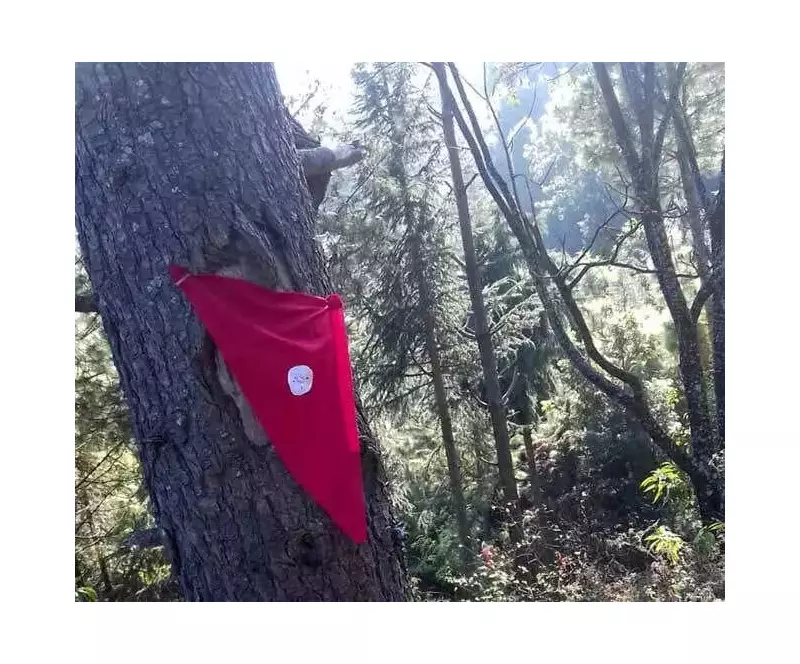
A prime example is found in the Phulei Jageshwar van panchayat in Almora's Jageshwar area. The community has recently dedicated its forest to goddess Kotgadi Bhagwati for the next five years. The goal is clear: to enable natural regeneration and curb illegal logging. Villagers have marked the forest boundaries with religious flags, reinforcing the belief that divine justice will deter encroachment and destruction.
A Pause for Nature to Heal
Gokul Prasad, the sarpanch of Phulei Jageshwar van panchayat, outlined their plan. "The forest will remain closed during this period to minimise human interference," he stated. "When human intervention is reduced, forests heal themselves. This decision will help biodiversity recover and protect the forest for future generations." This approach underscores a profound understanding of ecological self-recovery.
Climate Crisis Adds Urgency to Ancient Wisdom
The revival of this practice has gained new urgency in the face of escalating climate change impacts. The Himalayan region is witnessing erratic rainfall, drying water sources, and alarming biodiversity loss. In response, several van panchayats and village assemblies in districts like Almora, Bageshwar, Champawat, and Pithoragarh are enforcing strict norms. These include prohibitions on tree cutting and hunting, restrictions on outsider entry, and ensuring forests remain undisturbed as sacred land.
This centuries-old model of conservation, blending reverence with practical protection, is proving to be a resilient and culturally potent tool. It empowers mountain communities to be the primary custodians of their environment, using the powerful language of faith to secure a sustainable future for the region's critical ecosystems.