

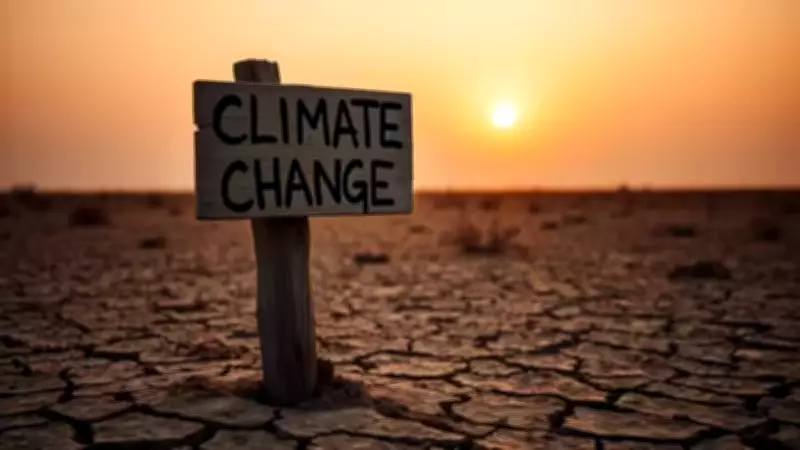
A newly formed independent pan-European Commission on Climate and Health has formally called upon the World Health Organisation (WHO) to declare the climate-health crisis a global public health emergency. The commission's urgent plea centers on the pan-European region, where temperatures are increasing at twice the global average rate, according to WHO data. The primary objective of this commission is to spur immediate action on the underlying factors driving the climate crisis, which it argues has reached a level that warrants the highest health alert. The message is unequivocal: the climate crisis should be designated a 'public health emergency of international concern' (PHEIC).
Commission Leadership and Call to Action
The commission, chaired by former Icelandic Prime Minister Katrín Jakobsdóttir and convened by WHO Regional Director for Europe Hans Henri P. Kluge, has published its Call to Action. The group comprises former heads of government, leaders of international bodies, ministers, and civil society representatives from across the 53 countries that make up the WHO European Region. Previously, PHEICs have been declared for diseases such as COVID-19 and Mpox. However, the commission notes that such a declaration for the climate crisis would be ineffective without large-scale, coordinated international healthcare initiatives.
Urgency and Expert Opinions
Jakobsdóttir emphasized the severity of the situation in an interview with The Guardian, stating, 'The climate crisis may not be a pandemic, but it's still a public health emergency that threatens humanity's very health and survival. And if we don't act more quickly and comprehensively, many millions more people could die or face life-changing illness.' Andrew Haines, Professor of Environmental Change and Public Health at the London School of Hygiene & Tropical Medicine and the commission's chief scientific adviser, added, 'WHO has already recognised that climate change is a major threat to global health. What we're asking for is a step further.'

Seventeen Recommendations Across Four Domains
The commission has proposed 17 recommendations spanning four key domains: recognizing climate change as a threat to health security, transforming health systems, scaling up local action, and reforming the economic and financial systems that drive the climate crisis. The report stresses that the issue must be addressed by multiple ministries, including defense, energy, and finance. In recent decades, geopolitical tensions have led European governments to prioritize traditional security spending without recognizing that climate change itself is a major security threat.
Response from WHO Regional Director
Responding to the recommendations, Hans Kluge, WHO Regional Director for Europe, said, 'The conflicts in Ukraine and the Middle East have clearly shown what fossil fuel dependency really means, not just higher bills, but strained or broken health systems, disrupted food and fuel supplies, and societies under pressure.' He underscored the link between fossil fuel reliance and vulnerabilities exposed by geopolitical shocks.
Health Impacts of Fossil Fuels
Every year, hundreds of thousands of people in the European region die from air pollution caused by the combustion of fossil fuels. The commission has urged governments to cease subsidizing fossil fuels, which are directly responsible for approximately 600,000 premature deaths annually in the region alone. Jakobsdóttir remarked, 'European governments are subsidising the very industries responsible for their own citizens' premature deaths. We need health leaders to really step into the climate debate and not just be on the receiving end of it.'
Commercial Actors and Public Health
Anna Gilmore, Professor of Public Health and Co-Director of the Centre for 21st Century Public Health (C21PH) at the University of Bath, highlighted the role of commercial actors: 'Commercial actors, including the fossil fuel, ultra-processed food, alcohol and tobacco industries, deploy misleading science, regulatory capture and lobbying to protect their markets at the expense of public and planetary health.'

Need for Immediate Action
The commission warns that the cost of delayed action may far exceed the cost of early mitigation and adaptation. Instead of subsidizing fossil fuels, which contribute to GDP as economic output, governments should invest in clean and renewable energy sources. Geopolitical shocks have exposed how dependence on fossil fuels makes societies fragile economically, politically, and in terms of health.
Outdated International Health Regulations
The current International Health Regulations, designed by WHO for time-bound epidemics, are considered too outdated to address the persistent climate crisis. The framework does not adequately handle large-scale crises and treats the issue as background noise rather than an immediate, escalating threat.
Additional Recommendations
The report also calls for measures to tackle disinformation, greater use of national climate-health impact assessments, and recognition that climate change is a mental health crisis. It urges healthcare systems to become more resilient to climate hazards, noting that the healthcare sector accounts for 5% of global emissions. Haines pointed out, 'Every country needs to be aware of where its health facilities are situated, how likely they are to be flooded, and how they would deal with an extreme and prolonged heatwave.' He added that hospitals are often built on floodplains and are frequently not energy efficient.
Accountability and Community-Led Initiatives
Hospitals should reduce their greenhouse gas emissions and adopt climate-friendly procurement practices. An accountable framework that combines questioning and evaluation should be implemented. Learning from successful community-led initiatives in cities can promote knowledge exchange at the local level through a 'learning by doing' approach.





