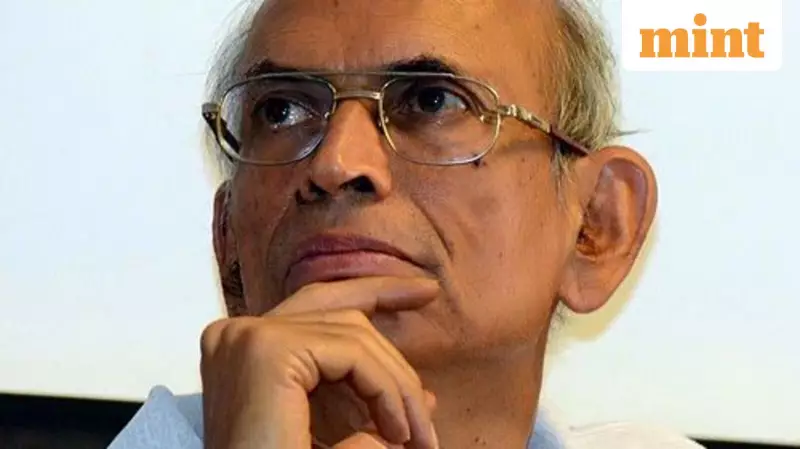
The Indian environmental movement has lost one of its most foundational voices with the passing of Madhav Dhananjaya Gadgil. The pioneering ecologist and academic, widely hailed as the 'father of modern Indian ecology,' died at his residence in Pune on January 7, 2026. He was 84.
The Architect of India's Ecological Consciousness
Madhav Gadgil, born in 1942, was not just a scientist but a public intellectual who tirelessly worked to bridge the gap between rigorous ecological research and community-led governance. His most enduring institutional legacy is the Centre for Ecological Sciences at the Indian Institute of Science (IISc), which he founded. Under his guidance, the centre grew into a premier hub for environmental studies in India.
Gadgil's philosophy was rooted in the belief that sustainable conservation could only be achieved through decentralised management, empowering local communities who live in symbiosis with their environment. This principle guided much of his work and advocacy over a career spanning several decades.

The Gadgil Committee Report: A Watershed Moment
Nationally, Gadgil became a household name after chairing the Western Ghats Ecology Expert Panel (WGEEP) in 2010. The committee's comprehensive report, popularly known as the Gadgil Committee or Gadgil Commission report, proposed stringent protective measures for the ecologically fragile mountain range.
The recommendations were both celebrated and contested. Environmentalists praised the report for its scientific integrity and proactive approach to preserving one of the world's richest biodiversity hotspots. However, it also sparked intense debate from state governments, industries, and other stakeholders concerned about potential restrictions on development and economic activities in the region. The report remains a critical reference point in all discussions concerning the Western Ghats and environmental policy in India.
A Legacy of Awards and Global Recognition
Madhav Gadgil's contributions were recognised with some of the highest honours nationally and internationally. The Indian government honoured him with the Padma Shri in 1981 and the Padma Bhushan in 2006. His global stature was affirmed with prestigious awards like the Volvo Environment Prize and the Tyler Prize for Environmental Achievement.
In a fitting capstone to his lifelong dedication, the United Nations Environment Programme honoured him with the Champions of the Earth award in 2024. Gadgil also served the nation in an advisory capacity as a member of the Scientific Advisory Council to the Prime Minister of India.
His passing marks the end of an era for India's green movement. Gadgil leaves behind a formidable legacy of scientific excellence, principled advocacy, and an unwavering commitment to teaching India to view its natural heritage through a lens of respect and sustainable coexistence. The debates he ignited and the institutions he built will continue to shape the country's environmental discourse for generations to come.