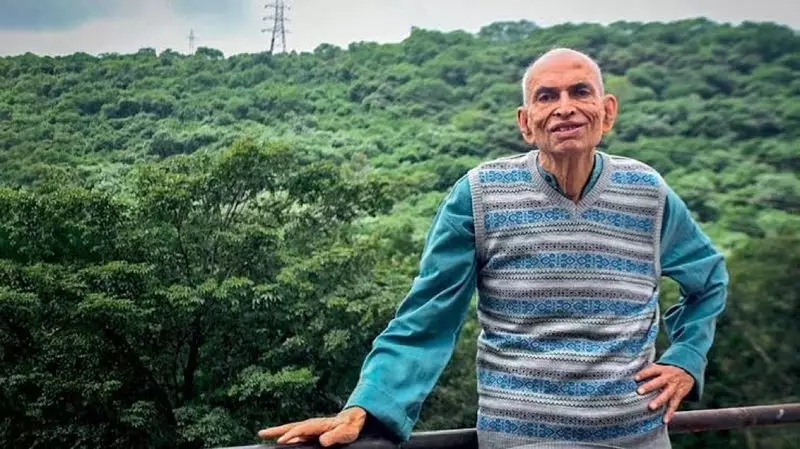
The Indian scientific and environmental community is in mourning following the passing of one of its most distinguished voices. Renowned ecologist Professor Madhav Gadgil died on Tuesday evening in Pune. He was 83 years old.
A Life Dedicated to Ecology and Conservation
Prof. Madhav Gadgil was a towering figure in the field of environmental science in India. Born on May 24, 1942, his academic journey was illustrious. He earned his doctorate from Harvard University and served as a faculty member at the prestigious Indian Institute of Science (IISc) in Bengaluru for many years. His contributions went far beyond the classroom, shaping national policy and public discourse on conservation.
He was the founder of the Centre for Ecological Sciences at IISc, an institution that became a hub for groundbreaking environmental research. For his exceptional work, Prof. Gadgil was honoured with the Padma Shri award in 1981 and the Padma Bhushan in 2006, two of India's highest civilian awards. He was also an elected fellow of several elite scientific academies, including the Indian National Science Academy and The World Academy of Sciences.

The Legacy of the Gadgil Committee Report
Perhaps his most widely recognized public contribution was chairing the Western Ghats Ecology Expert Panel (WGEEP) in 2011. The committee, popularly known as the Gadgil Committee, was tasked with assessing the ecological status of the fragile Western Ghats mountain range and recommending measures for its protection.
The panel's report, submitted in 2011, was both celebrated and controversial. It recommended classifying the entire Western Ghats region into three zones of varying ecological sensitivity, with the strictest regulations on development, mining, and deforestation in the most sensitive areas. The report advocated for a decentralized, community-driven approach to governance, empowering local bodies to manage their ecological resources.
While environmentalists hailed it as a visionary and necessary blueprint for conservation, the report faced strong opposition from various state governments and industrial interests who argued it would hinder economic development. The central government later formed a second committee under Dr. K. Kasturirangan, which proposed a diluted version of the recommendations. The debate over the implementation of the Gadgil report remains a pivotal issue in India's environmental policy landscape.
A Scholar and Public Intellectual
Beyond the committee report, Madhav Gadgil was a prolific writer and a fearless public intellectual. He authored numerous scientific papers and books, making complex ecological concepts accessible to the general public. He consistently emphasized the intrinsic link between biodiversity and the well-being of local communities.
His work championed the cause of sustainable development long before it became a global mantra. He argued passionately for the wisdom of traditional ecological practices and warned repeatedly about the perils of unchecked exploitation of natural resources. His insights were crucial in studies related to forest management, water resources, and the conservation of species.
The news of his demise was confirmed by family sources. He is survived by his wife and two children. The final rites are expected to be performed in Pune. Tributes have begun pouring in from scientists, environmental activists, former students, and policymakers across the country, all acknowledging the irreplaceable void left by his passing.
The death of Prof. Madhav Gadgil marks the end of an era for Indian environmentalism. His rigorous science, principled stands, and unwavering commitment to protecting India's natural heritage have left an indelible mark. As the nation continues to grapple with the challenges of climate change and ecological degradation, his work and warnings are more relevant than ever.