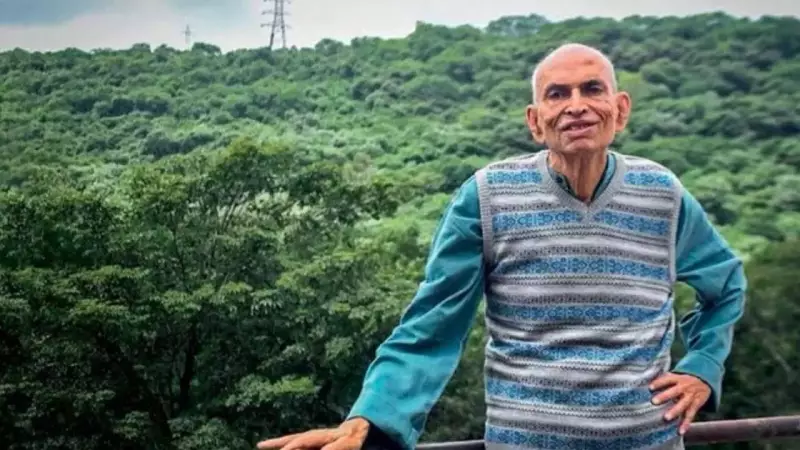
The environmental community in India and globally is in mourning following the passing of eminent ecologist Madhav Gadgil. The noted scientist, celebrated for his lifelong dedication to the conservation of the Western Ghats, died in Pune on Thursday after a brief illness. He was 83 years old.
A Life Dedicated to Ecology
Family sources confirmed that Gadgil breathed his last late on Wednesday night at a hospital in Pune. His demise marks the end of an era for ecological research and conservation advocacy in India. Gadgil's work was not confined to academia; it actively shaped national conversations on balancing development with environmental protection.
In a crowning recognition of his efforts, the United Nations honoured him in 2024 with the prestigious Champions of the Earth award. This accolade is the UN's highest environmental honour, and it celebrated Gadgil's seminal and enduring contributions to preserving the Western Ghats, a UNESCO World Heritage site and a global biodiversity hotspot.

Architect of the Gadgil Committee Report
Madhav Gadgil's name became synonymous with the protection of the Western Ghats when he chaired the government-appointed Western Ghats Ecology Expert Panel (WGEEP). The committee, popularly known as the Gadgil Committee, undertook a rigorous study of the profound impacts of population pressure, climate change, and development activities on this ecologically fragile mountain range.
The panel's comprehensive report, submitted in 2011, recommended stringent measures to regulate industrial and mining activities, advocating for a graded approach to protection. While its recommendations sparked intense debate and were not fully implemented, the report remains a foundational document for ecological planning in the region, highlighting Gadgil's foresight and commitment to science-based policy.
An Enduring Legacy for India's Environment
The passing of Madhav Gadgil leaves a significant void in India's environmental discourse. He was a fearless voice who combined scientific rigor with a deep concern for sustainable living. His work extended beyond the Western Ghats, influencing broader policies on biodiversity, forest rights, and community-led conservation.
Gadgil's legacy is multifaceted:
- Scientific Authority: His research provided an irrefutable scientific basis for conserving ecologically sensitive zones.
- Policy Influence: The Gadgil Committee report continues to be a critical reference point for courts, activists, and policymakers.
- Global Recognition: The UN Champions of the Earth award underscored the international significance of his work.
As tributes pour in from across the scientific and environmental communities, Madhav Gadgil is remembered not just for the reports he authored, but for the consciousness he raised about the irreplaceable value of India's natural heritage. His life's work stands as a powerful reminder of the urgent need to protect our planet's vital ecosystems for future generations.