

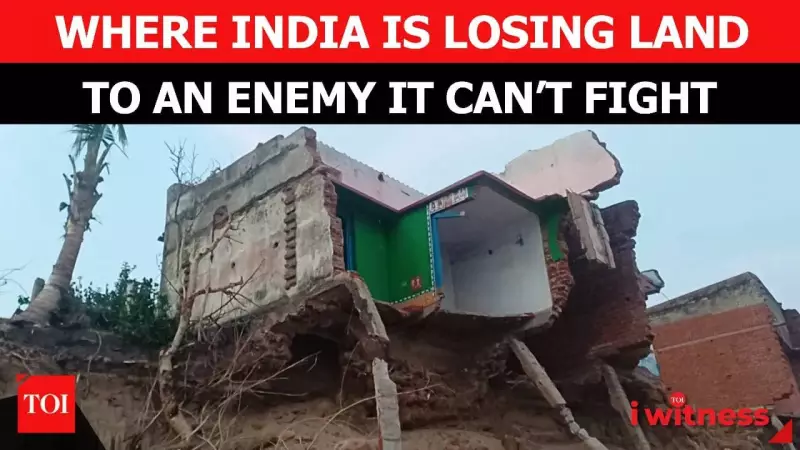
East Coast Crisis: Rising Seas Erase Villages, Traditions and Livelihoods
The relentless sea continues its assault on India's eastern shoreline. A staggering 6,907 kilometers of coast now stand under direct threat from advancing waters. This environmental crisis displaces thousands of families each year. Their homes, their livelihoods, and their cherished memories vanish beneath the waves.
Vanishing Heritage Along the Shoreline
Communities along the east coast watch helplessly as their world disappears. Traditional fishing villages crumble into the sea. Ancient temples and cultural sites face submersion. Generations of family history get washed away with every high tide. The emotional toll matches the physical destruction.
Fisherfolk lose their boats and nets to the encroaching waters. Farmers find their fields turning saline and unproductive. Entire neighborhoods relocate inland, leaving behind empty spaces where vibrant communities once thrived.

Natural Vulnerability Meets Human Acceleration
Sandy geomorphology makes the East Coast naturally susceptible to erosion. Loose sediments offer little resistance to powerful ocean currents. However, human activities dramatically worsen this natural process.
Massive dam constructions upstream reduce sediment flow to the coast. Port developments and coastal infrastructure disrupt natural sand movement. Groundwater extraction causes land subsidence. These interventions create a perfect storm for accelerated shoreline retreat.
Climate change adds another layer of complexity. Rising sea levels and increasing storm intensity push the ocean further inland. What once seemed like a distant threat now arrives at people's doorsteps.
Searching for Sustainable Solutions
The critical question remains unanswered. Should we let nature take its course, accepting inevitable displacement? Or can we develop sustainable interventions that protect both people and ecosystems?
Some experts advocate for managed retreat strategies. They suggest relocating vulnerable communities to safer ground. Others propose innovative engineering solutions like artificial reefs and beach nourishment projects.
Coastal vegetation restoration shows promise in some areas. Mangroves and other salt-tolerant plants can stabilize shorelines naturally. These green barriers absorb wave energy and trap sediments.
Policy makers face difficult choices. They must balance immediate human needs with long-term environmental sustainability. The clock ticks for thousands who become climate refugees in their own country.
Community participation emerges as crucial for any solution. Local knowledge about tidal patterns and seasonal changes proves invaluable. Traditional practices sometimes offer insights modern science overlooks.
The east coast crisis demands urgent attention. It represents not just an environmental challenge but a profound human tragedy. As palaces of memory sink beneath the waves, India searches for answers that honor both people and planet.






