

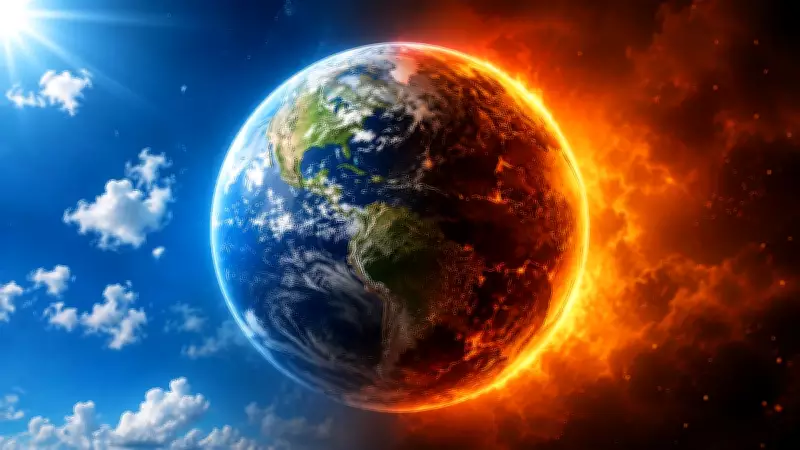
Earth May Breach 1.5°C Limit by 2030, Scientists Warn
A new study led by scientists from 56 institutions across 17 countries has issued a stark warning: the planet is on track to breach the critical 1.5 degrees Celsius warming limit by 2030. The research, published on June 11, 2026, estimates that human-induced warming has already reached 1.37 degrees Celsius in 2025.
The study, which analyzes the latest climate data and models, highlights the accelerating pace of global warming. The single-year average human-induced warming of 1.37°C in 2025 is a significant increase from previous years, bringing the world dangerously close to the threshold set by the Paris Agreement. The 1.5°C limit is considered a tipping point beyond which the risks of extreme weather, sea-level rise, and ecosystem collapse increase dramatically.
Key Findings
- Human-induced warming reached 1.37°C in 2025, up from 1.28°C in 2024.
- The rate of warming has accelerated over the past decade, driven by continued greenhouse gas emissions.
- Without drastic reductions in emissions, the 1.5°C limit could be breached as early as 2030.
- The study involved 56 institutions from 17 countries, making it one of the most comprehensive assessments of human-induced warming.
The scientists emphasize that the remaining carbon budget—the amount of CO2 that can be emitted while still having a chance to limit warming to 1.5°C—is rapidly shrinking. Current emission trends suggest that the budget will be exhausted within the next few years.

Implications and Urgency
Exceeding the 1.5°C limit would have severe consequences, including more frequent and intense heatwaves, droughts, floods, and storms. It would also accelerate the melting of polar ice caps and glaciers, leading to higher sea levels that threaten coastal communities worldwide.
The study calls for immediate and aggressive action to reduce greenhouse gas emissions, including a rapid transition to renewable energy, improvements in energy efficiency, and the protection and restoration of natural carbon sinks like forests and wetlands.
As the world grapples with the reality of a warming planet, the findings serve as a stark reminder of the urgency to act. The window to avoid the worst impacts of climate change is closing fast, and the next few years will be critical in determining the future of the planet.






