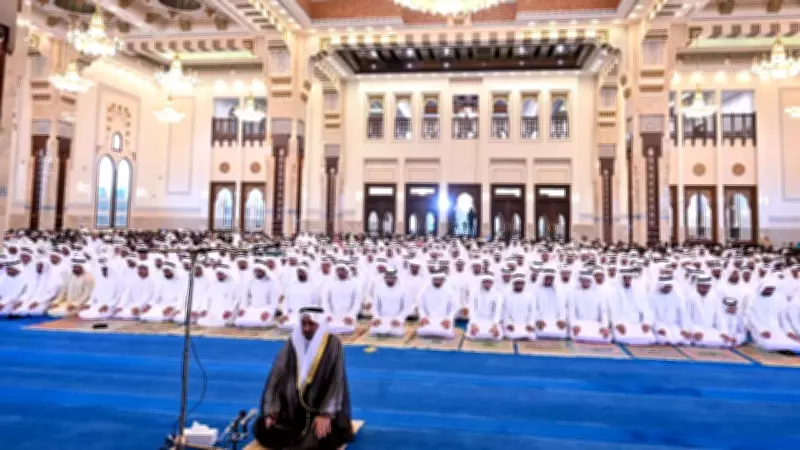
Dubai Prepares for Large-Scale Eid ul Fitr 2026 Prayer Network
Dubai is gearing up for one of its most extensive and meticulously coordinated Eid ul Fitr prayer gatherings in recent memory. Authorities have confirmed that over 900 mosques across the emirate will host prayers, marking a significant logistical and spiritual undertaking. This year's celebrations, however, introduce a notable shift in format, balancing tradition with evolving regional realities.
Citywide Prayer Network and Timing
According to official announcements, Eid ul Fitr prayers in Dubai are scheduled for 6:40 AM on Friday, March 20, 2026, following the completion of Ramadan. This uniform timing ensures synchronization across all mosques, fostering a sense of collective worship on a citywide scale. The wide distribution of prayers across more than 900 locations is not merely for convenience; it is a deliberate strategy to prevent overcrowding, facilitate smoother movement of worshippers, and maintain overall safety and order.
Shift from Open Grounds to Mosques Only
In a significant departure from tradition, Dubai, along with other Gulf nations including the UAE, Kuwait, and Qatar, has restricted Eid ul Fitr prayers to mosques only. Large open-air gatherings, such as those typically held at Eidgahs, have been suspended. This decision is rooted in the broader regional context, where heightened security concerns due to ongoing geopolitical tensions, including conflicts involving Iran, the US, and Israel, have prompted authorities to prioritize controlled environments over expansive, open congregations.

Mosques, with their defined capacities and structured entry systems, offer a more manageable setting for large gatherings. While this change may alter the familiar sight of sprawling prayer grounds, the essence of the celebration remains intact, now organized with enhanced security measures.
Safety and Preparedness Measures
Behind the scenes, authorities have placed a strong emphasis on safety and preparedness. Coordination between religious bodies and emergency response teams is in full swing to manage the expected massive turnout. Guidelines have been issued urging worshippers to arrive early to avoid congestion, follow instructions from mosque officials, and maintain orderly movement within prayer spaces.
The decentralization of prayers across hundreds of mosques itself serves as a critical safety measure, reducing risks associated with large, concentrated gatherings. This approach reflects a broader Gulf-wide trend, where countries are adapting traditional practices to ensure peace and security during times of uncertainty.
Community Cohesion and Spiritual Experience
Despite the structural changes, initiatives like coordinated takbeerat (Eid chants) and mosque-wide announcements will create a unified spiritual experience across Dubai. From neighborhood mosques to major prayer centers, the sound of Eid Takbeerat will resonate simultaneously, turning the entire city into a shared space of devotion. This synchronization underscores Dubai's commitment to community cohesion, even within a regulated environment.
For residents, this year's Eid ul Fitr may feel different, with more localized celebrations and smaller, community-based prayer experiences. Yet, the core elements of congregational prayer, community connection, and spiritual reflection remain unchanged. In many ways, the shift may bring the celebration closer to home, with neighborhood mosques becoming the focal points of festivity.
Strategic Adaptation to Modern Challenges
Dubai's decision to host Eid Al Fitr prayers across more than 900 mosques is both ambitious and strategic. It highlights the emirate's ability to manage large-scale events with precision, emphasizing a safety-first approach. This evolution from previous years, where open-air Eidgahs were common, signals a shift towards structured and resilient public event management.
Large-scale gatherings are increasingly designed with flexibility in mind, whether due to health concerns, security risks, or logistical challenges. This adaptation is not about limiting celebrations but about reimagining them safely, ensuring that traditions can endure in a changing world.