

Dubai Catholic Churches Suspend All Masses During Holy Week Over Security Concerns
In an unprecedented move, Catholic churches across Dubai have suspended all masses and parish activities effective Friday, April 3, 2026. This decision follows official safety directives issued by authorities amid heightened regional tensions and security concerns. The suspension comes during Holy Week, the most significant period in the Christian calendar, traditionally marked by the largest congregations of the year.
Church Closures Disrupt Sacred Observances
Church authorities confirmed the suspension was taken in the interest of public safety and community wellbeing. They have urged worshippers to avoid visiting church premises and instead participate in prayer services from their homes. This sudden development has significantly disrupted Good Friday and Easter observances, prompting a varied response from different parishes.
Some churches have shifted to virtual platforms to maintain spiritual connections, while others have cancelled services entirely. The timing adds profound significance to the closures, as Holy Week commemorates the crucifixion and resurrection of Jesus Christ, events central to Christian faith.

Major Parishes Implement Different Approaches
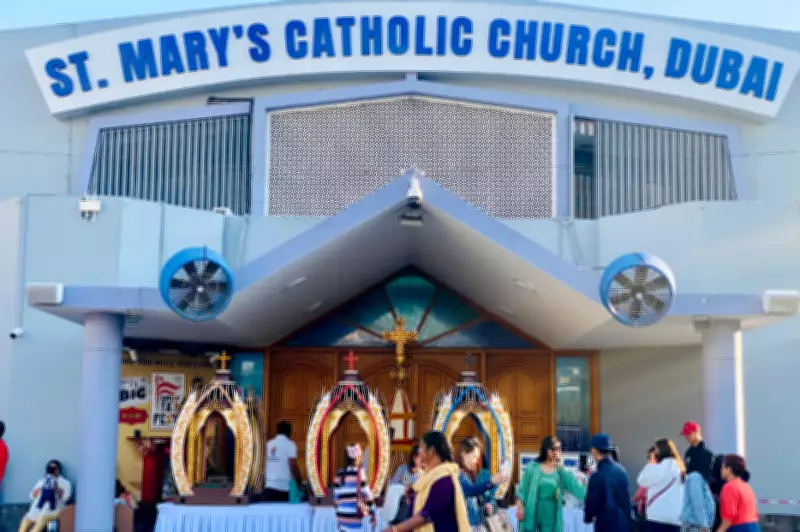
Among the most affected institutions are two of Dubai's largest and busiest Catholic parishes. St. Mary's Catholic Church in Oud Metha has confirmed its premises will remain closed to the public. The church has moved its traditional Good Friday masses, typically held at 3pm and 6pm, to online platforms via official channels.
In contrast, St. Francis of Assisi Catholic Church in Jebel Ali has taken a stricter approach. This parish announced the complete cancellation of all masses and parish activities without offering livestream alternatives. Parish communications emphasized that the suspension would remain in place until further notice, strictly following directives received from authorities.
Broader Precautionary Measures Across Christian Communities
The closures extend beyond Catholic institutions, reflecting a broader precautionary response across Christian communities in Dubai. Several other churches across the emirate have either shifted services online or halted activities altogether. This coordinated action demonstrates the seriousness with which religious institutions are treating the current security situation.
Security Context Behind the Suspensions
The suspension of masses is directly linked to the ongoing regional security situation. The United Arab Emirates has witnessed a series of attempted missile and drone attacks in recent weeks. While authorities confirmed that air defence systems successfully intercepted multiple threats, they have simultaneously tightened precautionary measures to minimize risks associated with large public gatherings.
Church leaders echoed these concerns in their announcements, stating that the decision aligns with government advisories aimed at ensuring resident safety during this sensitive period. The move underscores a wider strategy to temporarily limit crowd-heavy events while the situation continues to be closely monitored by security agencies.
Impact on Dubai's Christian Community
In Dubai, churches typically accommodate thousands of worshippers during Holy Week, often organizing multiple services to manage the substantial crowds. This year represents one of the rare instances where widespread suspensions have affected peak religious observances in the city. The faithful have been asked to mark the occasion quietly at home, creating an unprecedented Holy Week experience for Dubai's Christian community.
Church officials have encouraged parishioners to remain spiritually connected through personal prayer and, where available, digital services. This shift represents a significant adaptation for a community accustomed to gathering in large numbers during this sacred period.
Uncertain Timeline for Resumption
Currently, no specific timeline exists for resuming in-person masses. Church authorities have indicated they will communicate updates as soon as they receive further guidance from relevant government bodies. The situation remains fluid, with decisions being coordinated between parish leadership and local authorities.

Notably, there have been no widespread reports of similar closures across all emirates at this time. The Apostolic Vicariate of Southern Arabia, which oversees Catholic churches in the region, has not issued a unified directive. This suggests that decisions are currently being taken at the parish level in coordination with local authorities rather than as a regional mandate.
For now, Dubai's churches remain closed, and the city's Christian community is navigating a Holy Week marked by caution, reflection, and prayer from home rather than traditional communal gatherings. The situation continues to evolve as authorities monitor security developments in the region.





