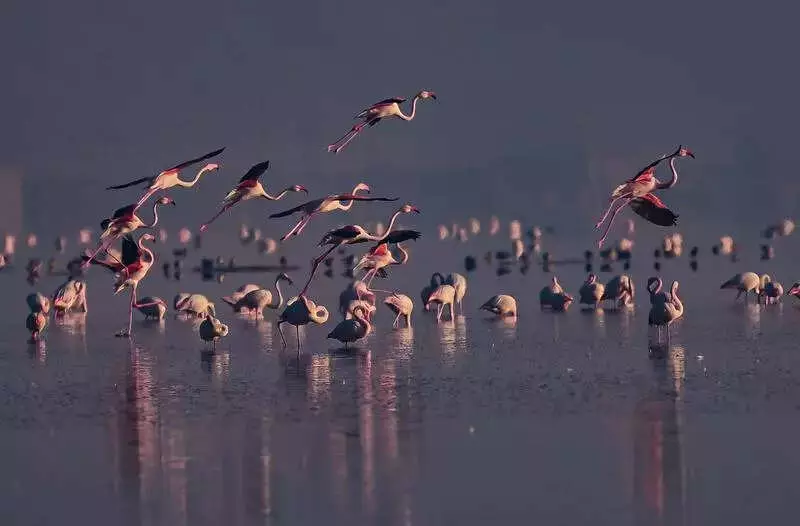
In a bid to capture stunning social media content, wildlife photographers and videographers at Rajasthan's Sambhar Lake are causing significant distress to the very migratory birds they aim to photograph. The relentless pursuit of viral videos, often shot using buzzing drones, is disrupting the natural life cycle of flamingos and other avian visitors at this critical wetland.
Viral Videos at a Cost: Flamingos Scared into Flight
The serene salt flats of Sambhar Lake, a designated Ramsar site of international importance, have become an unlikely stage for disruptive photography. Flocks of elegant pink flamingos, basking in the sun or feeding in the shallow waters, are frequently chased and forced into panicked flight by drones operated by individuals seeking the perfect aerial shot. While the resulting videos, showcasing a striking contrast of pink birds against white salt and blue water, may gather thousands of likes online, conservationists warn they come at a grave cost to the birds' wellbeing.
Renowned ornithologist and author Harkirat Singh Sangha emphasized the severity of the issue. He explained that Sambhar Lake attracts both Greater and Lesser flamingos, which are protected under Schedule II and Schedule IV of the Wildlife (Protection) Act, 1972. "Drones flying over feeding and resting birds force them to flee, causing stress and disrupting their natural life cycle. Scientific studies confirm that such interference negatively impacts their daily activities," Sangha stated.

Forest Department Steps In with Drone Ban Order
The circulation of alarming clips on platforms like Instagram and Facebook, showing flocks scattering in fear from drones, finally spurred the Rajasthan Forest Department into action. The department has now issued an order banning all drone flights over Sambhar Lake without prior permission.
The official order notes that the lake witnesses the arrival of large numbers of flamingos and other migratory birds during winter. It explicitly states that any disturbance to their breeding, nesting, and foraging is a punishable offence under the wildlife act. V Ketan Kumar, Deputy Conservator of Forests, warned that individuals, NGOs, production houses, or commercial operators found violating the ban will face legal action under Section 51 of the Act, and their equipment, including drones, will be seized. He added that field officials have been directed to ensure strict compliance.
Partial Enforcement and Calls for Stricter Action
Despite the prohibition, enforcement on the ground has been only partially effective. Reports indicate that people continue to arrive at the lake with drones, highlighting a gap between the rule and its implementation. Environmentalist Dau Lal Bohra criticized the photographers' "growing obsession for online visibility," stating, "Greedy photographers just have one thing in their mind: to get the best pictures or videos at any cost. The situation needs to be properly contained."
While nature enthusiasts have welcomed the drone ban, they unanimously stress the need for more active and vigilant enforcement. There is a growing call for the Forest Department to act decisively against violators to protect the fragile ecological ritual of migration at this vital saline wetland. The challenge remains to balance the enthusiasm for wildlife photography with the imperative of ethical conservation and the legal protection granted to these graceful birds.