

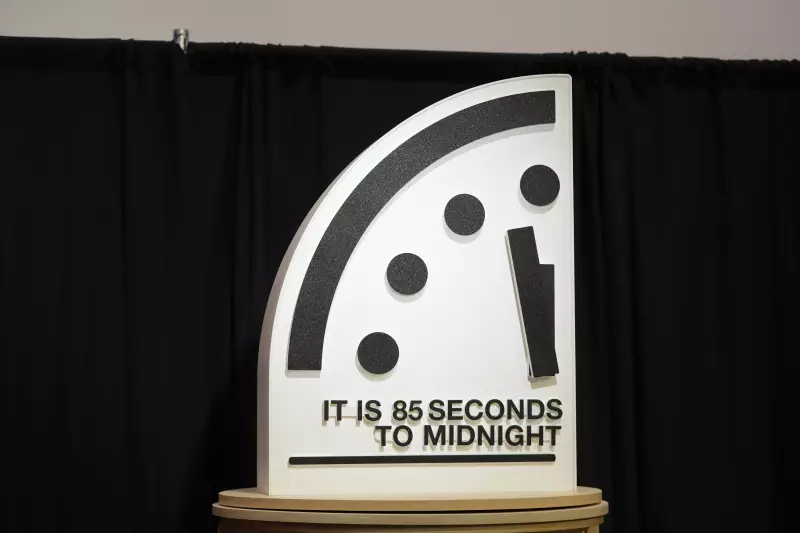
Doomsday Clock Moves Four Seconds Closer to Midnight, Signaling Heightened Global Risk
The symbolic Doomsday Clock, maintained by the Bulletin of the Atomic Scientists, has been adjusted to reflect a more perilous global situation. In a significant update, the clock has moved four seconds closer to midnight, now standing at 90 seconds to midnight. This adjustment marks one of the most alarming positions in the clock's history, underscoring escalating threats to humanity.
What the Doomsday Clock Represents
The Doomsday Clock is a metaphorical device created in 1947 to illustrate how close the world is to a global catastrophe, with midnight representing the point of apocalypse. It is set annually by a board of scientists and experts, including Nobel laureates, based on an assessment of various existential risks. The clock's movement is a stark warning to policymakers and the public about the urgency of addressing critical issues.
Key Factors Behind the Adjustment
The decision to move the clock forward by four seconds was driven by multiple converging threats that have intensified in recent times. Experts cited several primary concerns:

- Nuclear War Risks: Ongoing geopolitical tensions, particularly involving nuclear-armed nations, have heightened the potential for conflict. The proliferation of nuclear weapons and the erosion of international arms control agreements contribute to this risk.
- Climate Change Impacts: The failure to meet global climate targets and the increasing frequency of extreme weather events pose a severe threat to ecosystems and human survival. Scientists warn that inadequate action could lead to irreversible damage.
- Biological and Technological Dangers: The rise of emerging technologies, such as artificial intelligence and biotechnology, along with the persistent threat of pandemics, adds to the complexity of global risks. Misuse or accidents in these fields could have catastrophic consequences.
Historical Context and Current Implications
Historically, the Doomsday Clock has fluctuated based on global events. For instance, it was set at 17 minutes to midnight in 1991 after the end of the Cold War, reflecting a period of reduced tension. In contrast, the current setting of 90 seconds to midnight is among the closest it has ever been to midnight, rivaling levels seen during the height of the Cold War. This indicates that the world is facing a multifaceted crisis that requires immediate and coordinated action.
The Bulletin of the Atomic Scientists emphasizes that this adjustment is not just a symbolic gesture but a call to action. They urge governments, organizations, and individuals to prioritize diplomacy, strengthen international cooperation, and invest in sustainable solutions to mitigate these risks. The clock serves as a reminder that humanity's future hinges on our ability to address these challenges proactively.
Looking Ahead: What Can Be Done?
To move the Doomsday Clock back from midnight, experts recommend several steps:
- Enhance Diplomatic Efforts: Foster dialogue and negotiations to reduce nuclear arsenals and resolve conflicts peacefully.
- Accelerate Climate Action: Implement and exceed commitments under international agreements like the Paris Accord to curb greenhouse gas emissions.
- Strengthen Global Health Security: Improve preparedness for pandemics and regulate emerging technologies to prevent misuse.
- Promote Public Awareness: Educate communities about these risks to build pressure for policy changes and individual responsibility.
In conclusion, the movement of the Doomsday Clock by four seconds closer to midnight is a sobering indicator of the world's precarious state. It highlights the interconnected nature of global threats and the urgent need for collective action to safeguard our planet and future generations.






