

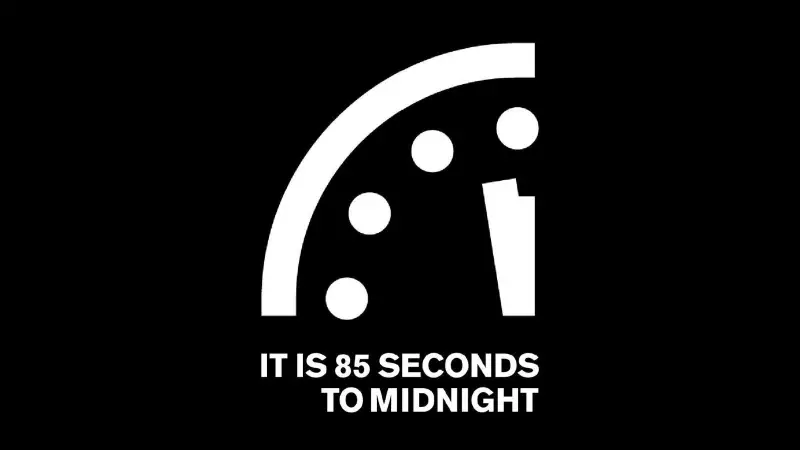
Doomsday Clock Ticks Closer to Midnight: Humanity Faces Unprecedented Threats
In a stark warning to humanity, scientists have moved the symbolic Doomsday Clock to just 85 seconds before midnight for 2026, marking the closest it has ever been to global catastrophe in modern history. This bleak assessment reflects growing concerns over escalating wars, climate failures, rising nationalism, and the breakdown of international cooperation.
What is the Doomsday Clock?
The Doomsday Clock is maintained by The Bulletin of the Atomic Scientists, a nonprofit organization founded by Albert Einstein and other eminent scientists after World War II. Each year, this group evaluates how close the world is to a man-made disaster that could threaten human survival, with midnight representing global destruction.
When first introduced during the Cold War, the clock primarily focused on nuclear weapons threats. Over the decades, its setting has changed multiple times. The safest moment occurred in 1991 when the clock stood at 17 minutes to midnight following significant nuclear arms reductions. Since then, it has steadily moved forward as new dangers have emerged.

Why the Clock Moved Closer to Midnight
According to the Bulletin's latest assessment announced on Tuesday, several critical factors contributed to moving the clock to its most alarming position:
- Escalating Global Conflicts: Scientists pointed to Russia's ongoing war in Ukraine, clashes between India and Pakistan in May, and military strikes by the United States and Israel on Iran in June. Each conflict raises the chances of escalation involving nuclear-armed states.
- Climate Crisis Inadequacy: National and global responses to climate change remain deeply inadequate. Scientists criticized recent United Nations climate conferences for failing to commit strongly to phasing out fossil fuels or enforcing strict carbon emission monitoring.
- Rising Nationalism and Authoritarianism: Growing nationalism and authoritarian rule are making global problems harder to solve. Tensions between major powers like the United States, China, and Russia continue to worsen, with long-standing agreements and shared norms crumbling.
- Breakdown of Global Cooperation: The willingness of nations to work together is fading, replaced by a dangerous "winner-takes-all" mindset in global politics.
Scientists' Urgent Warning
Alexandra Bell, president and chief executive of the Bulletin, emphasized that "catastrophic risks are rising, cooperation is falling, and time is running out." While acknowledging the seriousness of the situation, Bell stressed it is not hopeless and urged governments and citizens to push for urgent action before it's too late.
Daniel Holz, chair of the Bulletin's science and security board, warned that humanity's biggest challenges require trust and cooperation across borders. "A world divided into 'us versus them' makes everyone less safe," Holz stated during the announcement ceremony.
Some Progress Amidst the Gloom
The Bulletin did recognize some encouraging advancements in 2024. Renewable energy, particularly solar and wind power, continued expanding rapidly. For the first time, renewable and nuclear sources together generated more than 40 percent of the world's electricity.
However, scientists cautioned that this progress remains far too slow to offset the growing damage caused by climate change. Efforts to combat global warming have been hampered by policy decisions made by major economies.
Expanding Concerns Beyond Nuclear Threats
In recent years, scientists have expanded their concerns beyond nuclear war to include:
- Climate change and environmental degradation
- Advances in biotechnology with potential for misuse
- The rapid rise of artificial intelligence and its implications
- Emerging technologies that could destabilize global security
With the clock now closer to midnight than ever before, the scientists' message is clear: humanity is running out of time to change course. The Doomsday Clock serves as both a warning and a call to action for global leaders and citizens alike to address these multiplying threats before they lead to irreversible catastrophe.






