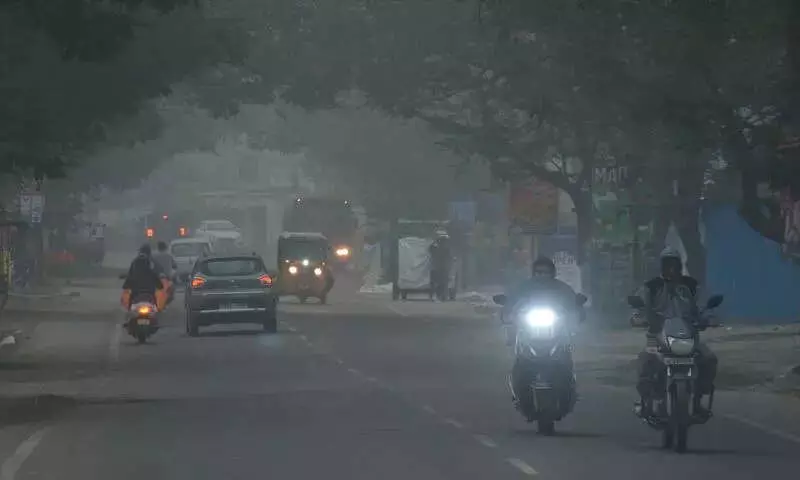
Residents across Telangana were greeted by a thick, hazy shroud on Friday morning as a dense fog blanket descended upon the state. The phenomenon significantly reduced visibility, particularly in the eastern, central, and southern regions, disrupting early morning routines.
Widespread Disruption Across Districts
The fog's impact was most severe in several districts where visibility dropped to extremely low levels during the early hours. Khammam, Bhadradri-Kothagudem, Mahabubabad, Suryapet, Warangal, and Mulugu were among the worst affected. In many areas, the upper-level fog persisted well into the late morning, creating a persistent haze.
This foggy condition follows a recent shift in weather patterns. Just days prior, parts of the state, especially in the north and east, experienced a cold wave with minimum temperatures dipping to as low as 6°C. However, as the cold spell receded, temperatures began to climb and moisture levels increased, creating the perfect conditions for widespread fog formation.

Temperature Trends and Official Forecast
According to data recorded on Friday, minimum temperatures across Telangana showed variation. Kumuram Bheem Asifabad recorded the lowest at 12.5°C. Districts like Adilabad, Kamareddy, Vikarabad, and Jayashankar Bhupalpally saw minimums between 13°C and 14°C. The state capital, Hyderabad, registered a minimum temperature of 16.8°C.
An official from the India Meteorological Department (IMD) provided the outlook, stating, "The maximum and minimum temperatures are likely to hover around 29°C and 18°C, respectively." This indicates a relatively warmer phase compared to the preceding cold days.
Understanding the Weather Shift
The current fog is a direct consequence of the rapid transition from a cold wave to warmer, more humid conditions. The increase in moisture content in the atmosphere, combined with specific wind patterns and cooler night temperatures, leads to condensation and the formation of fog. While it creates picturesque mornings, it poses challenges for transportation and can affect daily schedules.
Authorities advise commuters, especially those using road and air transport, to exercise caution during early morning hours when visibility is at its poorest. The IMD continues to monitor the situation, and residents are advised to stay updated with the latest weather bulletins.