Delhi's January Air Quality Stays in 'Very Poor' Zone Despite Higher Rainfall
After a cold and wet January, Delhi is set to experience a warmer and drier February, according to predictions from the India Meteorological Department (IMD). An analysis of Central Pollution Control Board (CPCB) data reveals that the monthly average Air Quality Index (AQI) for January reached 307.6, marginally higher than the 305.7 recorded in January of the previous year. This figure aligns closely with AQI levels from January 2023 (311) and January 2017 (304), suggesting that winter pollution in the capital has largely plateaued this season.
Pollution Trends and Meteorological Factors
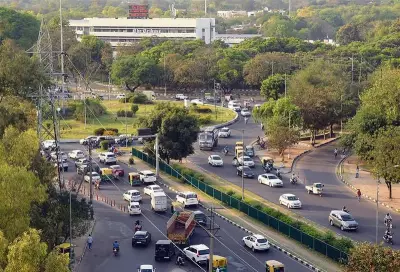
Despite witnessing above-normal rainfall of 25.01 mm, which is 33% higher than the seasonal normal of 19.1 mm, Delhi's air quality remained firmly in the "Very Poor" category. This rainfall was the highest for January since 2022, when 88.5 mm was recorded. However, the air quality did not see significant improvement, as emissions from vehicles, industrial units, construction dust, and biomass burning continued to dominate, exacerbated by low winds and temperature inversions.
While the air quality was cleaner than some of the most polluted Januaries on record—such as 2016 with an average AQI of 370 and 2024 with 355—the persistent "Very Poor" status highlights ongoing challenges in pollution control. On Saturday, Delhi recorded an AQI of 315, up from 253 on Friday, indicating fluctuating but consistently poor air conditions.

Temperature Patterns and IMD Forecast for February
January saw notable temperature trends, with the monthly average minimum temperature at 6.8°C, the highest since 2022 (8.2°C), and the monthly average maximum at 20.1°C. The month recorded only four cold wave days, the lowest frequency in six years. Looking ahead, the IMD forecasts that this trend will continue into February, with above-normal day and night temperatures expected across Northwest India, including Delhi.
Dr Mrutyunjaya Mohapatra, Director General of IMD, explained, "Maximum temperature will be higher because of fewer active western disturbances. Without significant rainfall activity, nights and days will remain warmer." The IMD's monthly outlook predicts below-normal rainfall for Northwest India in February, with less than 78% of the long-period average, and a similar deficit expected nationwide, except in some regions.
Air Quality Outlook and Broader Implications
According to the Indian Institute of Tropical Meteorology, the AQI is expected to remain in the 'Very Poor' category until February 3, with conditions likely to range from 'Very Poor' to 'Poor' over the following six days. This forecast underscores the ongoing struggle with air pollution in Delhi, even as meteorological conditions shift towards warmer and drier weather.
The combination of stagnant pollution sources and changing climate patterns poses significant health and environmental risks for residents. As Delhi braces for a warmer February, attention remains on efforts to mitigate emissions and improve air quality amidst these challenging conditions.