In a remarkable environmental turnaround, Delhi has recorded its best average air quality for the January to November period in eight years, marking a significant achievement in the city's ongoing battle against pollution.
Significant Improvement in Air Quality Metrics
The Commission for Air Quality Management (CAQM) reported that Delhi's average Air Quality Index (AQI) between January 1 and November 30 stood at 210, representing the most favorable reading since 2016. This improvement becomes particularly noteworthy when compared to the same period in previous years, with the average AQI recorded at 256 in 2016, 239 in 2017, 231 in 2018, 215 in 2019, 223 in 2020, 228 in 2021, and 220 in 2022.
The CAQM analysis reveals that 2023 has shown consistent improvement across multiple air quality parameters. The period from January to November witnessed 206 days with AQI readings in the 'satisfactory' to 'moderate' categories, a substantial increase from the 159 days recorded during the same timeframe in 2016. Conversely, the number of days with 'poor' to 'severe' AQI categories decreased significantly to 119 days in 2023, compared to 168 days in 2016.

Winter Pollution Control Measures Yield Results
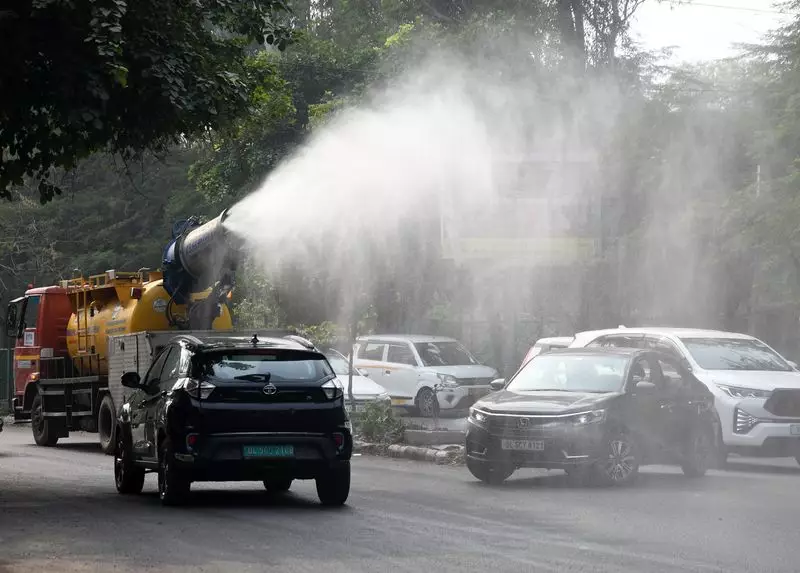
The improvement in Delhi's air quality can be largely attributed to the comprehensive implementation of the Graded Response Action Plan (GRAP) and other targeted interventions by the CAQM. The commission has been actively monitoring and enforcing pollution control measures across the National Capital Region (NCR), focusing on major pollution sources including vehicular emissions, industrial pollution, dust from construction sites, and agricultural residue burning.
During the critical winter months, CAQM implemented strict measures under Stage III of GRAP when AQI levels threatened to enter the 'severe' category. These interventions included restrictions on construction activities, enhanced public transportation services, and intensified enforcement against pollution violations. The commission's data indicates that these proactive measures have contributed significantly to preventing the air quality from deteriorating to the levels witnessed in previous years.
Comparative Analysis Shows Consistent Progress
The air quality monitoring data reveals a consistent pattern of improvement over recent years, with 2023 emerging as the best performing year in nearly a decade. The CAQM report highlights that the improvement has been particularly noticeable during the winter months, traditionally the most challenging period for air quality management in the region.
The reduction in farm fire incidents in neighboring states has also played a crucial role in this improvement. Better coordination between state governments and effective implementation of alternative crop residue management methods have contributed to fewer instances of stubble burning, which has historically been a major contributor to Delhi's winter pollution.
Environmental experts caution that while the improvement is encouraging, sustained efforts and continued vigilance are essential to maintain this positive trajectory. The CAQM has emphasized the need for year-round action rather than seasonal interventions, with a focus on addressing all major pollution sources systematically.
This significant improvement in Delhi's air quality represents a major environmental milestone for the city and demonstrates the effectiveness of coordinated pollution control measures when implemented consistently and enforced rigorously across the National Capital Region.