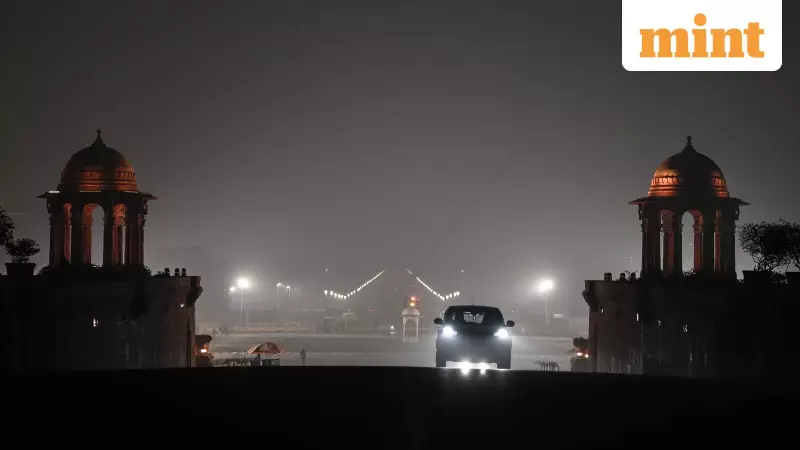
Delhi's Environment Minister, Manjinder Singh Sirsa, announced on Thursday, January 1, that the national capital has witnessed its best air quality in eight years during 2025. This statement addresses recent critiques of the Delhi government's environmental policies, highlighting a tangible positive shift.
Significant Drop in Pollution Levels
Presenting concrete data, Sirsa revealed that the annual average concentration of PM2.5—the most harmful fine particulate matter—declined from 104 micrograms per cubic metre in 2024 to 96 in 2025. Similarly, levels of the coarser PM10 pollutants fell from 212 to 197 micrograms per cubic metre over the same period. The Minister attributed this success to a steadfast, science-based action plan.
"Delhiites gave us the mandate to serve, and we made clean air our foremost pledge. The record good AQI days in 2025 prove that science-led action works wonders," Sirsa stated emphatically.

A Year of More Breathable Days
An official release provided a detailed breakdown of the air quality improvements. Delhi experienced nearly 200 days in 2025 where the Air Quality Index (AQI) remained below 200, indicating a 15% improvement compared to the average of the preceding four years.
Out of these 200 better-quality days, a remarkable 79 days were classified as either 'good' (AQI 0-50) or 'satisfactory' (AQI 51-100) as per the Central Pollution Control Board (CPCB) standards. The period from January to November saw an average AQI of 187, marking the best performance in eight years, excluding the anomalous pandemic year of 2020.
Perhaps the most encouraging statistic is the sharp reduction in severely polluted days. In 2025, Delhi endured only eight 'severe' air quality days, the lowest number in recent memory.
Multi-Pronged Strategy Behind the Gains
The Delhi government, after assuming office in February of the previous year, launched a comprehensive assault on pollution sources. Their strategy simultaneously targeted:
- Vehicular emissions through stricter enforcement and promotion of cleaner fuels.
- Dust pollution via mechanised road sweeping, anti-smog guns, mist sprayers, and rigorous monitoring of construction sites with penalties for violations.
- Industrial emissions and waste management practices.
Officials stated that the administration also explored innovative measures like cloud seeding trials and open challenges for new pollution-mitigation technologies to complement enforcement actions.
The Road Ahead for Cleaner Air
Looking forward to 2026, the government plans to consolidate these gains. The focus will be on stricter implementation of the Graded Response Action Plan (GRAP), piloting new technological solutions, and fostering greater citizen participation in the fight for clean air. The progress in 2025 sets a new benchmark, proving that sustained, multi-sectoral efforts can yield significant environmental benefits for India's capital.