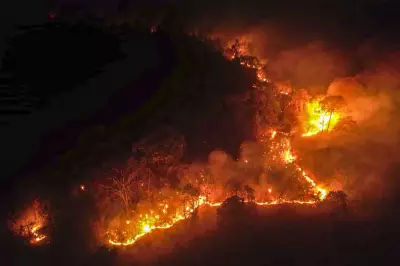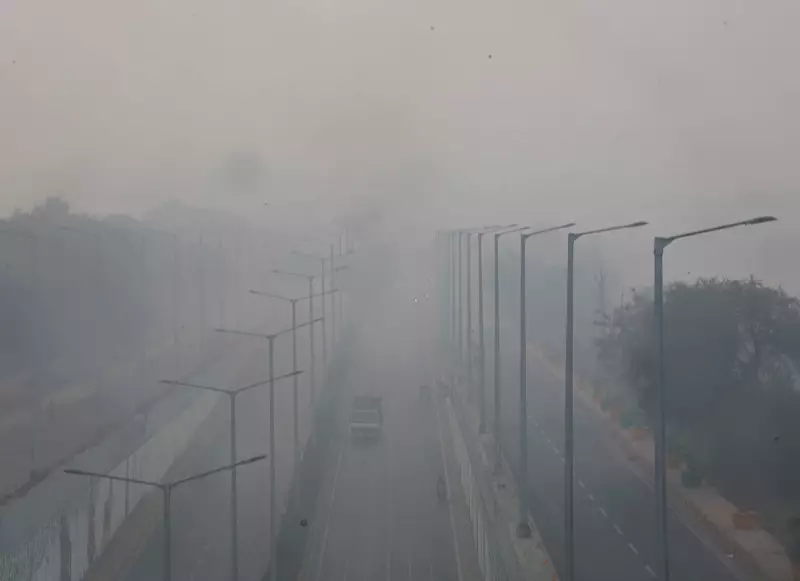
This past winter in Delhi-NCR presented a grim and persistent paradox. Despite the enforcement of anti-pollution measures and a significant dip in farm fires—the lowest recorded in five years—the region's air quality index (AQI) repeatedly plunged into the 'Very Poor' and 'Severe' categories. This alarming trend has triggered the most visible public outcry in recent years, underscoring a critical failure of the current piecemeal approach and setting the stage for a decisive challenge in 2026.
The Winter That Exposed Systemic Failures
The public frustration became impossible to ignore. It manifested in protests at India Gate in November and followed Delhi Chief Minister Rekha Gupta to an event with football legend Lionel Messi, where she was met with chants of "AQI, AQI." Simultaneously, a wave of petitions landed in the Supreme Court, urging the judiciary to declare the crisis a national public health emergency.
This outcry persisted even as the city relies on a source apportionment study that is seven years old and desperately needs updating. Independent research consistently shows that Delhi's pollution nightmare is not confined to winter months. Residents are exposed to a dangerous cocktail of emissions year-round, stemming from traffic, industry, waste burning, household fuels, and dust from roads and construction sites. The central question for 2026 is whether the region can finally move beyond short-term, winter-centric emergency responses to implement sustained, measurable reductions across all these sectors.

The 2026 Target: A Daunting Gap Between Goals and Reality
Under the National Clean Air Programme (NCAP), Delhi and several other cities are mandated to achieve a 40% reduction in PM10 levels by 2026. However, a stark assessment by the Centre for Research on Energy and Clean Air (CREA) reveals a troubling shortfall. Since the programme's launch, Delhi has managed to reduce PM10 by only about 12% over six years, leaving a massive gap to bridge in a very short time.
A recent World Bank assessment on pollution in the Indo-Gangetic Plain pinpointed key reasons for the slow progress. It highlighted that the transport sector contributes between 10% and 40% of PM2.5 pollution, making it the single largest source in cities like Delhi. The report links this to ageing vehicle fleets, a surge in private vehicle usage, and significant gaps in public transport infrastructure.
Experts Call for a Fundamental Overhaul
Anumita Roychowdhury, Executive Director of Research and Advocacy at the Centre for Science and Environment (CSE), emphasized the need for a radical shift in perspective. "We cannot talk about air quality management in isolation without understanding how it is impacting people's health. The approach to air quality management has to alter fundamentally," she stated.
Roychowdhury stressed that fixing the fundamental systems across all key pollution sectors is non-negotiable. "We have a clear idea of the sources, so each and every sector requires a target. Delhi requires another 60% reduction to meet the national clean air standard for PM2.5. There is a real need to leapfrog and build solutions," she added, highlighting the scale of the challenge beyond the NCAP's PM10 goals.
The path forward is clear but arduous. Meeting the 2026 targets will demand more than seasonal bans and reactive measures. It requires a comprehensive, data-driven, and rigorously enforced year-round strategy that tackles pollution at every source, from vehicles and industries to construction and waste management. The health of millions in the capital region depends on this systemic change.