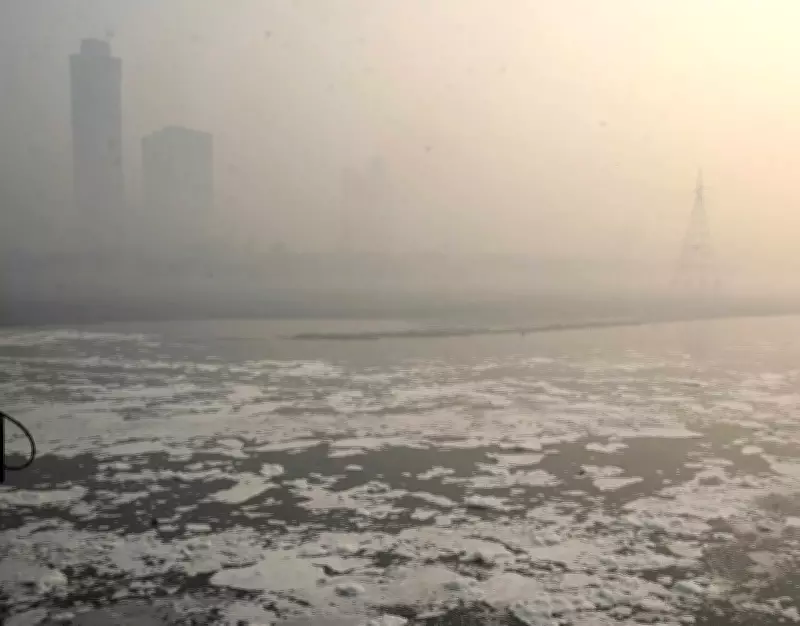
Delhi Government Launches Real-Time Yamuna River Pollution Monitoring Initiative
In a significant move to combat water pollution, the Delhi government is deploying 41 online monitoring stations (OLMS) for real-time surveillance of the Yamuna River and its major tributary drains. This project, awarded via tender in March, is scheduled for completion by the end of April, marking a pivotal step in the administration's broader strategy to rejuvenate the heavily polluted river.
Strategic Deployment and Operational Details
Of the total stations, six will be strategically positioned along critical segments of the Yamuna River, while the remaining 35 will focus on monitoring major drains that discharge into it. Delhi Environment Minister Manjinder Singh Sirsa emphasized that this initiative is foundational to the government's cleanup campaign, stating, "This will bring transparency. Data is crucial for cleaning up the river and controlling the pollution load. Through real-time monitoring, we will be able to figure out the fault lines and fix accountability."
The monitoring system will continuously track key parameters including temperature, flow rate, pH levels, biological oxygen demand (BOD), chemical oxygen demand (COD), total suspended solids (TSS), total nitrogen (TN), total phosphorus (TP), ammonium, dissolved oxygen, and conductivity. However, officials clarified that fecal coliform, a primary indicator of raw sewage, will not be measured by the OLMS and will instead be monitored manually, with manual checks continuing alongside automated operations.

Historical Context and Implementation Challenges
Previous attempts to establish similar monitoring systems in 2024 and 2025 saw tenders floated but remained inconclusive. The current project includes a comprehensive five-year operation and maintenance plan, ensuring uninterrupted data transmission to the Delhi Pollution Control Committee (DPCC) server. Real-time data generation is expected to commence in May, mirroring the public accessibility model used for air quality and noise pollution data on the DPCC platform.
An official highlighted the benefits, noting, "The data will be transparent and accessible. It will help us monitor the water quality of the river and drains, as well as track fluctuations in major parameters in real time." The six river monitoring locations are Palla, ISBT bridge, ITO, Nizamuddin bridge, Okhla barrage, and Asgarpur.
Addressing Pollution Hotspots and Data Gaps
Currently, DPCC collects water samples monthly at eight locations along the Yamuna, but Wazirabad, a key site for Delhi's drinking water supply, is notably absent from this list. Officials explained that Wazirabad is monitored by the Delhi Jal Board, though this data is not publicly available. The river enters Delhi at Palla and experiences significant flow reduction at Wazirabad due to water diversion for consumption. Between Wazirabad barrage and the ISBT bridge, pollution peaks as the Najafgarh drain merges with the river, contributing approximately 80% of the Yamuna's pollution load in Delhi.
Historical data underscores the severity of the issue. In 2018, the National Green Tribunal-appointed Yamuna Monitoring Committee reported that a mere 2% stretch of the river, spanning 22 kilometers, accounted for 76% of the total pollution load. Following a 2019 tribunal directive, DPCC began sharing monthly data, with reports on drains and sewage treatment plants available since then.
This new monitoring network aims to provide actionable insights to tackle these persistent challenges, fostering a data-driven approach to environmental management and public health protection in the capital.