In a decisive move to combat the capital's chronic air quality crisis, the Delhi government has announced that two critical restrictions under the Graded Response Action Plan (GRAP-4) will become permanent fixtures. The announcement was made by Delhi Environment Minister Manjinder Singh Sirsa on Saturday.
Permanent Anti-Pollution Measures Enforced
The first permanent rule mandates that no petrol will be dispensed to any vehicle without a valid Pollution Under Control Certificate (PUCC). This "No PUC, No Fuel" policy will remain in effect until further orders, ensuring regular compliance checks for vehicular emissions.
The second measure permanently restricts the entry of vehicles from other states that do not comply with the stringent Bharat Stage VI (BS6) emission standards. "Vehicles from outside Delhi that are below BS6 will also be restricted from entering the city," Minister Sirsa stated, targeting a major source of trans-boundary pollution.

Current Air Quality and Government Vigilance
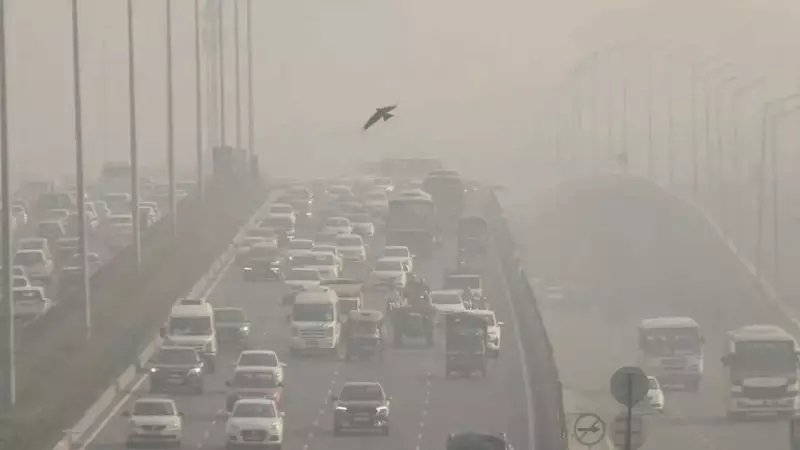
The decision comes as Delhi's air quality remains a serious concern. On Saturday evening, the Air Quality Index (AQI) recorded by the Central Pollution Control Board (CPCB) touched 390, firmly in the 'Very Poor' category. A thick layer of smog and fog has enveloped the city, trapping pollutants, reducing visibility, and disrupting daily life.
Authorities are also enforcing Stage III restrictions of GRAP, which include limitations on construction and certain industrial activities. Sirsa highlighted that the government is closely monitoring weather patterns, including a Western Disturbance that could lead to adverse conditions. "The possibility of bad weather is being indicated. Therefore, we are continuously monitoring the situation," he said, emphasizing the priority to reduce public hardship.
Health experts have advised children, the elderly, and individuals with respiratory ailments to limit outdoor activities and use protective masks.
Cabinet Approves Green Infrastructure Projects
In a related development, the Delhi Cabinet, chaired by Chief Minister Rekha Gupta, has approved significant projects to strengthen the city's environmental governance.
A fund of Rs. 100 crore has been allocated for the rejuvenation of water bodies across Delhi. The city has approximately 1,000 water bodies, with 160 under direct government management. "The rejuvenation of Delhi’s water bodies will play a crucial role in pollution control. The chief minister has directed that full financial support be provided to complete this work within the year," Sirsa explained.
Furthermore, the Cabinet greenlit the establishment of Delhi's first E-Waste Park at Holambi Kalan. The 11.5-acre facility will be built on a 100% circular, zero-waste model with strict pollution-control protocols. Sirsa described it as a landmark project, stating, "This will be India’s first state-of-the-art e-waste facility built on zero pollution and zero wastage principles. The plant will fully recycle and reuse water through an advanced recirculation system."
These combined actions signal a shift towards institutionalizing long-term solutions alongside emergency measures to tackle Delhi's perennial pollution challenge.